


Home
Pregnancy, Breastfeeding, and Pumping: The Ultimate Guide for Moms
Can I Breast Pump for 30 Minutes? The Complete Guide to Optimal Pumping Duration
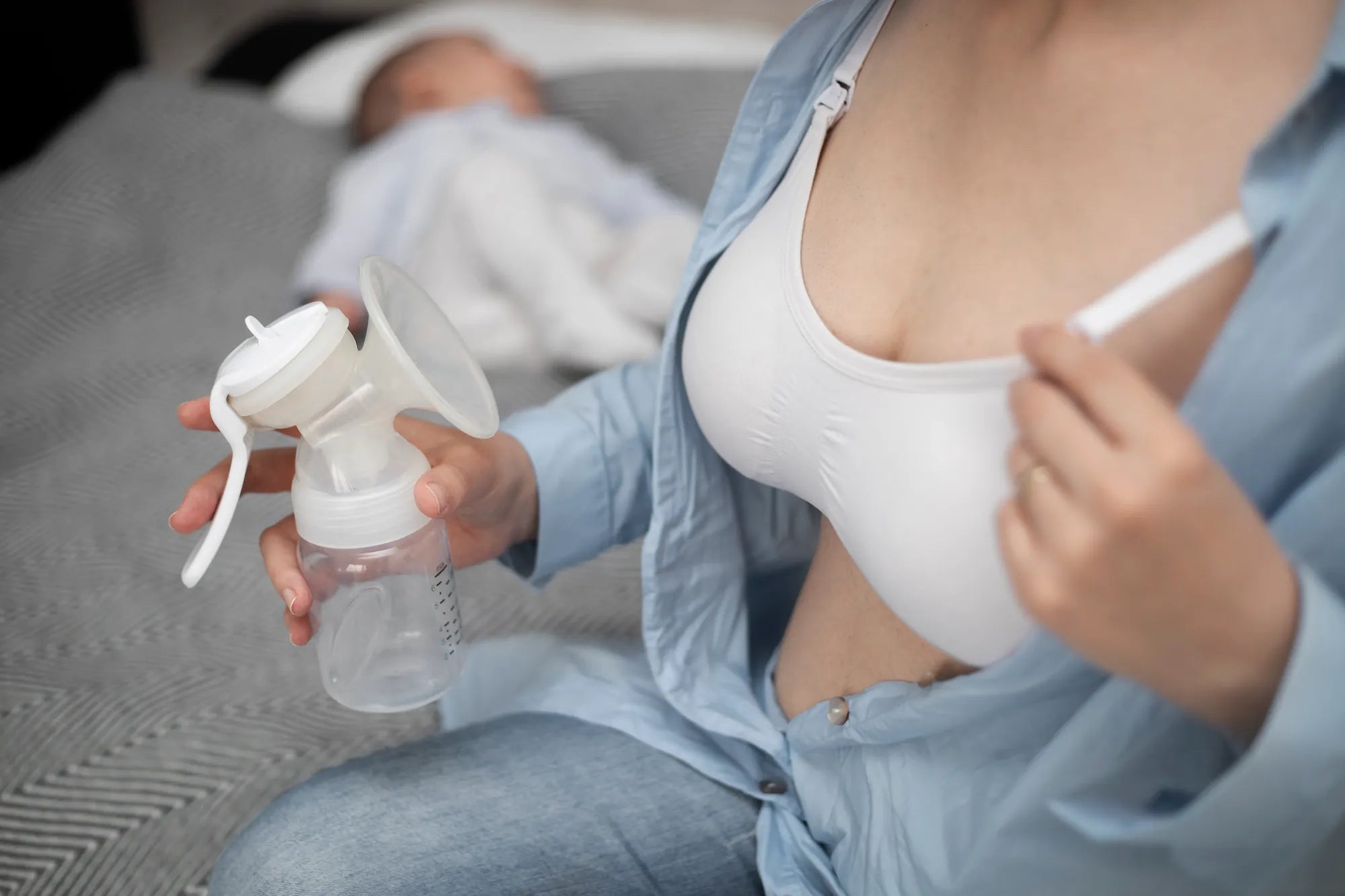
Can I Breast Pump for 30 Minutes? The Complete Guide to Optimal Pumping Duration
Introduction to Breast Pumping Duration
You're settling into your pumping routine, watching the minutes tick by, and a question forms: Can I breast pump for 30 minutes? Is that too long, or not long enough? This uncertainty is completely normal. The duration of a pumping session isn't one-size-fits-all; it's a personalized rhythm that depends on your body, your baby, and your goals.
This article provides everything you need to know about pumping for 30 minutes and finding your optimal session length. We'll dissect the common guidelines, explore the physiological reasons behind them, and offer scenario-based advice for exclusive pumpers, working moms, and everyone in between. Understanding the 'why' behind the timing can transform pumping from a chore into an efficient, effective part of your day.
As a trusted maternal and baby care brand, MomMed specializes in innovative products like wearable breast pumps that support your journey. Our goal is to equip you with knowledge and tools, like the MomMed S21 Wearable Pump, to make informed decisions for you and your baby.
Understanding the "30-Minute" Guideline: Where It Comes From
The recommendation to pump for about 15-20 minutes per breast, totaling 30-40 minutes, is rooted in breast physiology. It's designed to mimic an effective breastfeeding session where a baby typically feeds for 15-20 minutes on each side. This timeframe generally allows for the complete milk ejection reflex and adequate milk removal.
Breastfeeding works on a supply-and-demand system. When milk is removed efficiently and frequently, your body gets the signal to produce more. The 30-minute benchmark aims to provide enough time for this process. During a session, you'll usually experience one or more let-downs—the reflex that releases milk from the alveoli into the ducts.
It's crucial to understand that milk flow isn't constant. You'll often see a faster flow in the first 10-15 minutes as foremilk (thinner, higher in lactose) is released, followed by a slower trickle as hindmilk (richer, higher in fat) is drawn out. The latter part of the session is vital for getting that calorie-dense hindmilk and signaling to your breasts that they should continue full production.
Therefore, the 30-minute guideline isn't arbitrary. It's a research-informed starting point developed by lactation experts to ensure most mothers can achieve a full feeding cycle. However, treating it as an absolute rule for every person at every stage can be counterproductive.
Factors That Influence Your Ideal Pumping Time
Your Baby's Age and Feeding Patterns: In the early weeks postpartum, you're establishing supply. Longer or more frequent sessions may be necessary. For an older baby with a predictable routine, session length might stabilize.
Your Milk Supply Status: Are you building, maintaining, or supplementing? A mother working to increase a low supply might need different strategies than one with an oversupply who is pumping for comfort or storage.
Your Pump's Efficiency: Not all pumps are created equal. A hospital-grade double electric pump will often remove milk more quickly and completely than a manual pump. The fit of your breast shield (flange) is also critical; an improper fit can drastically reduce output and efficiency, potentially requiring longer sessions to achieve drainage.
Your Individual Physiology: This is the most personal factor. Your milk ejection reflex speed, breast storage capacity, and response to the pump's suction pattern are unique. Some mothers have multiple, quick let-downs; others have one slower, sustained let-down. Your ideal time is the one that works for your body.
Is Pumping for 30 Minutes Right for You? Scenarios Explained
To answer "Can I breast pump for 30 minutes?" effectively, let's apply the guideline to real-life situations. Your pumping goals define your ideal session structure.
The Exclusive Pumper
For mothers who exclusively pump (EP) to provide all their baby's milk, complete and regular drainage is paramount. For most exclusive pumpers, a session of 30 minutes is standard and often necessary. This ensures you're not just removing the readily available milk but also signaling your body to maintain a full supply.
Exclusive pumpers typically follow a schedule that mimics a baby's feeding frequency, often 8-12 times per 24 hours in the early months. Sticking to a full 30 minutes (or sometimes longer, if milk is still flowing) helps prevent issues like clogged ducts and ensures the baby receives both foremilk and hindmilk. Consistency in session length is as important as frequency for maintaining supply in the EP journey.
The Occasional or Bottle-Feeding Mom
If you're primarily breastfeeding but pumping for an occasional bottle, your session length may vary. If you're pumping right after a feed to build a stash, 10-15 minutes might be sufficient to collect an ounce or two. If you're pumping to replace a missed feeding entirely, aiming for a full 20-30 minute session is wise to keep your supply consistent for that time of day.
The key here is to pump until the flow stops and your breasts feel soft, not necessarily watching the clock. For many, this happens before 30 minutes. Your goal is comfort and collecting the needed amount without overstimulating your supply unnecessarily.
The Power Pumper: A Different Approach
Power pumping is a specific technique used to boost milk supply, often described as "cluster pumping." It is not simply pumping for a straight 60 minutes. A common power pumping schedule is: 20 minutes pumping, 10 minutes rest, 10 minutes pumping, 10 minutes rest, 10 minutes pumping.
This one-hour pattern mimics a baby's cluster feeding and can help increase prolactin levels. It's a temporary strategy, not a daily routine. This highlights a crucial point: sometimes, strategic variation in session timing is more effective than rigidly adhering to a single duration like 30 minutes.
Maximizing Efficiency Within Your Pumping Session
Whether you pump for 15, 30, or 40 minutes, efficiency is key. An effective session in less time is always the goal. Here’s how to ensure every minute counts.
The Role of a High-Quality, Hands-Free Pump
Technology can dramatically impact efficiency. A wearable, hospital-grade pump like the MomMed S21 Double Wearable Breast Pump is engineered for performance and comfort. Its hands-free design allows you to relax, which is scientifically proven to aid the let-down reflex. Stress and tension can inhibit milk flow.
The MomMed S21 features adjustable suction levels and cycle patterns, allowing you to find the perfect setting that mimics your baby's nursing rhythm. This personalized comfort, combined with its ultra-quiet, BPA-free construction, helps create an optimal environment for milk removal, potentially making a 30-minute session more productive and less stressful.
Pre-Pump Rituals for a Faster Let-Down
Prepare your body to release milk. Apply a warm compress to your breasts for a few minutes before pumping. Gently massage your breasts in a circular motion toward the nipple. Stay hydrated by drinking a glass of water.
Mental triggers are powerful. Look at a photo or video of your baby, smell an item of their clothing, or simply close your eyes and think of them. These actions stimulate oxytocin, the hormone responsible for milk ejection, helping you achieve let-down faster and potentially reducing the time needed for effective drainage.
Recognizing "Empty" vs. "Drained"
Your breasts are never truly "empty"; milk production is continuous. A more practical goal is "well-drained." Signs of a well-drained breast include: milk flow has slowed to an occasional drop or drip, your breasts feel noticeably softer and less full, and they may feel lighter.
Pumping for 30 minutes often ensures you reach this well-drained state. If you consistently feel firm lumps or fullness after a 30-minute session, it may indicate incomplete drainage, signaling a need to check flange fit, pump settings, or consider a slightly longer session or additional massage.
Signs You Might Need to Adjust Your Pumping Time
Your body gives clear feedback. Listen to it to fine-tune your session length beyond the general 30-minute guideline.
Signs You May Need to Pump LONGER (More Than 30 Minutes):
- Persistent feelings of fullness, tightness, or engorgement shortly after finishing a session.
- Recurring clogged ducts or mastitis, which can indicate stagnant milk.
- Your milk supply is dropping despite regular pumping sessions.
- You consistently see a second or third let-down with a strong milk stream after the 25-minute mark.
Signs You May Pump for SHORTER Time (Less Than 30 Minutes):
- You reliably achieve your output goal (e.g., a full bottle for baby) within 15-20 minutes, and flow has completely stopped.
- You experience significant nipple soreness, blanching (turning white), or damage from prolonged pumping.
- You feel "over-drained," leading to sharp, shooting pains (vasospasms) in your nipples after pumping.
- Pumping for the full 30 minutes feels unnecessarily long and is causing burnout or dread.
Data and Comparison: Session Length vs. Output Patterns
Understanding the typical pattern of milk flow during a session can help set realistic expectations and inform your timing decisions. The following table outlines general patterns observed during a standard double-pumping session for a mother with an established supply. Individual experiences will vary.
| Session Phase | Typical Timeframe | Milk Flow & Output | Key Goal of This Phase |
|---|---|---|---|
| Initial Let-Down & Peak Flow | Minutes 1-10 | Rapid, steady streams. Can yield 50-70% of total session volume. | Remove the bulk of available foremilk and trigger subsequent let-downs. |
| Sustained Draining | Minutes 10-25 | Slower, intermittent flow or trickles. Yields remaining volume, including richer hindmilk. | Ensure complete drainage to signal continued production and access higher-fat milk. |
| Final Drops & Draining | Minutes 25-30+ | Occasional drops or drips. Minimal additional volume for most. | Confirm breasts are well-drained and soft. For some, a final let-down may occur here. |
This pattern illustrates why stopping at 15 minutes might mean leaving a significant portion of milk, particularly the calorie-dense hindmilk, behind. Conversely, pumping for 45 minutes when flow stopped at 20 may only lead to nipple stress with little benefit. The 30-minute mark often captures the complete cycle.
Frequently Asked Questions (FAQ)
Q: Can I pump for 30 minutes on one breast only?
A: Yes, single-side pumping is sometimes necessary, such as when dealing with a significant supply asymmetry, a painful clogged duct on one side, or if you're nursing on the other. However, to maintain overall supply, ensure you pump the other breast at its next scheduled time. Don't routinely neglect one side, as this can signal your body to reduce production in that breast.
Q: What if no milk comes out after 10 minutes of pumping?
A> First, don't panic. Stop the pump for a moment. Try a let-down trigger: take deep breaths, massage your breasts, apply warmth. Then restart on a gentle, rapid "stimulation" mode. Check your flange fit—an incorrect size is a common cause of poor output. Ensure you're not dehydrated. If this persists over multiple sessions, consult an International Board Certified Lactation Consultant (IBCLC).
Q: Is it bad to pump for 45 minutes or an hour straight?
A: It's not inherently "bad," but it's often unnecessary and can be counterproductive. Prolonged pumping can cause nipple trauma, edema (swelling), and significant discomfort. For increasing supply, increasing the frequency of sessions (e.g., adding an extra session per day) is usually more effective than extending one session to an hour. Always prioritize nipple health.
Q: How do I know if my flanges are the right size?
A> Your nipple should move freely in the tunnel without rubbing the sides. Only the nipple and a small amount of areola should be drawn in. After pumping, your nipple should not be blanched white, misshapen, or have a ring of swollen tissue at its base. MomMed pumps come with multiple flange size options, and their website offers detailed fitting guides. An incorrect size is a primary reason for low output and pain, making a 30-minute session ineffective.
Q: Should I always pump for 30 minutes if I'm using a wearable pump like the MomMed S21?
A> The same physiological principles apply. The MomMed S21 is a hospital-grade pump designed for efficiency. Start with the 30-minute guideline. Use its features—like the massage mode to initiate let-down and the adjustable suction—to optimize output. Pay attention to your body's signals of drainage (softness, slowed flow) rather than the clock alone. The comfort and convenience of a wearable pump can make a 30-minute session feel easier, but the duration should still be based on your output and comfort.
Conclusion: Listening to Your Body and Your Baby
The question, "Can I breast pump for 30 minutes?" ultimately finds its answer in the harmony between established guidelines and your unique physiology. The 30-minute benchmark is an excellent starting point—a research-backed framework designed to ensure complete drainage and consistent milk production. Use it as your guide, not your governor.
Your most reliable indicators are your own body and your baby's satisfaction. Breasts that feel soft and comfortable after pumping, a steady milk supply that meets your baby's needs, and healthy, pain-free nipples are the true measures of success. Whether that requires 25, 30, or 35 minutes is a personal detail.
Equip yourself with tools that support this intuitive approach. MomMed is committed to this journey, creating products like the award-winning S21 Wearable Pump that combine hospital-grade performance with unparalleled comfort and freedom, helping you make efficient, effective pumping a seamless part of motherhood.
Trust your instincts, monitor your output and comfort, and don't hesitate to seek support from a lactation consultant for personalized advice. For reliable, innovative tools designed with a mother's real life in mind, shop the MomMed collection at mommed.com for all your breastfeeding and pregnancy needs.