


Home
Pregnancy, Breastfeeding, and Pumping: The Ultimate Guide for Moms
Can a Breast Pump Stimulate Labor? Exploring the Connection
Can a Breast Pump Stimulate Labor? Exploring the Connection
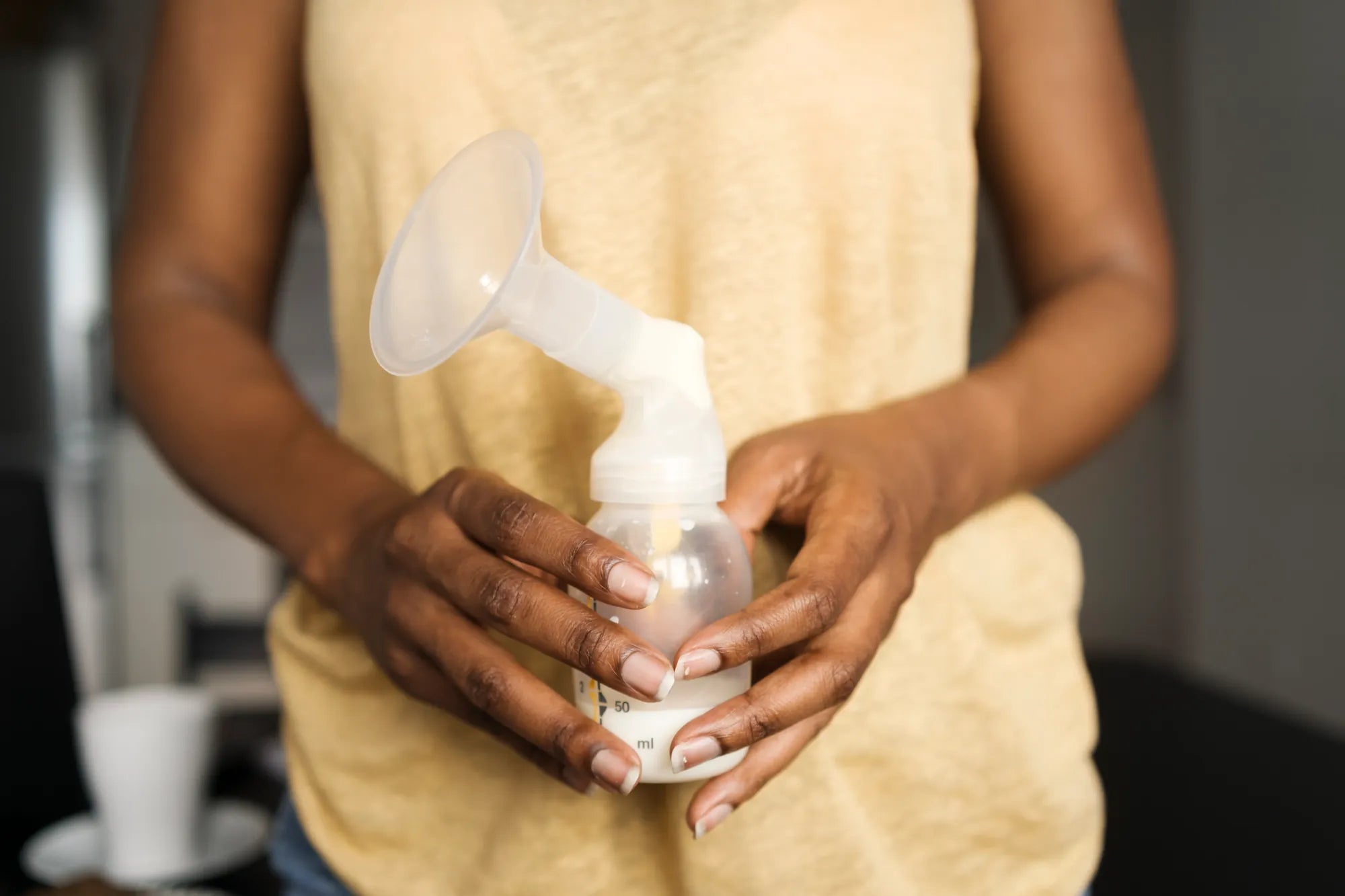
Many expectant mothers approaching their due date wonder: Can a breast pump stimulate labor? This question arises from a natural desire to meet their baby and from anecdotal stories shared online. Exploring the connection between nipple stimulation and labor onset requires a careful, evidence-based approach that prioritizes maternal and fetal safety above all else. This article will dissect the physiology, review the research, and provide clear guidelines, ensuring you have accurate information to discuss with your healthcare provider.
Understanding the Physiology: Oxytocin and Uterine Contractions
The core mechanism linking breast pumping to potential labor stimulation is the hormone oxytocin. Often called the "love hormone," oxytocin plays a pivotal role in childbirth, bonding, and lactation. Nipple stimulation, whether from a baby, hand expression, or a breast pump, triggers its release from the pituitary gland.
Once released into the bloodstream, oxytocin binds to receptors in the uterine muscle, causing it to contract. This is the exact same biological process that initiates and sustains labor contractions naturally. In a clinical setting, synthetic oxytocin (Pitocin) is frequently administered intravenously to induce or augment labor, demonstrating the powerful effect this hormone has on the uterus.
The theory behind using a breast pump for labor induction is that it provides consistent, mechanical stimulation to the nipples. This stimulation is designed to mimic a baby's suckling, thereby prompting the body to produce its own oxytocin. The goal is to create contractions that become regular, progressive, and ultimately lead to cervical dilation and effacement.
It's crucial to understand that this is not a gentle nudge but a direct intervention into a complex hormonal cascade. The body's response can be unpredictable, and the intensity of contractions generated may not follow the natural, gradual ramp-up of spontaneous labor. This underscores why medical guidance is non-negotiable.
Examining the Clinical Evidence: What Research Reveals
Scientific studies on nipple stimulation for labor induction have yielded mixed but insightful results. A notable Cochrane Review, a gold standard for evaluating medical evidence, has analyzed multiple trials on the subject. The review suggests that nipple stimulation may reduce the need for formal medical induction with synthetic oxytocin, particularly for women with a favorable cervix who are past their due date.
However, the evidence is not robust enough to recommend it as a standard practice. The studies often involve small sample sizes and specific, low-risk populations. Furthermore, research typically examines structured, timed sessions of manual nipple stimulation rather than the use of a commercial electric or wearable breast pump, which can vary greatly in suction patterns and intensity.
The American College of Obstetricians and Gynecologists (ACOG) does not list nipple stimulation via breast pump as a recommended method for labor induction. Their guidelines focus on medical and surgical methods administered in a controlled hospital environment. The lack of formal endorsement highlights the procedure's experimental nature and potential risks outside of a research or closely monitored setting.
It is also vital to distinguish between correlation and causation. Many women who try pumping at 40 or 41 weeks may go into labor shortly after, but they were also biologically very ready. It can be difficult to determine if the pump was the catalyst or if labor was simply imminent. This ambiguity is why personal anecdotes, while powerful, should not replace medical advice.
Potential Benefits and Significant Risks
In very specific, provider-supervised scenarios, there might be perceived benefits. For a low-risk pregnancy that is post-term (past 41 weeks) with a cervix that is already beginning to soften and dilate (a "ripe" cervix), gentle stimulation might help encourage the body to transition into active labor. It can also be a way for some women to feel proactive in their care while avoiding more invasive medical induction methods.
However, the risks associated with unsupervised pumping for labor induction are substantial and can be dangerous:
- Uterine Hyperstimulation: This is the primary risk. Pumping can cause contractions that are too long, too strong, or too close together. This can lead to fetal distress by reducing the baby's oxygen supply, potentially necessitating an emergency cesarean delivery.
- Preterm Labor: Using a breast pump before a pregnancy is full-term (39 weeks) can potentially trigger premature labor, which carries significant health risks for the newborn.
- Nipple Damage and Pain: Incorrect use or excessive pumping can cause soreness, cracking, or bleeding of the nipples, creating problems for breastfeeding initiation after birth.
- Unpredictable Labor Progression: Induced contractions may not follow the effective pattern of natural labor, leading to a prolonged, exhausting, and ineffective labor that stalls, increasing the likelihood of other interventions.
Absolute Contraindications: When to Never Attempt This
There are numerous pregnancy conditions where attempting to stimulate labor with a breast pump is absolutely unsafe and contraindicated. This list is not exhaustive, and a consultation with your OB-GYN or midwife is essential.
- Any History of Preterm Labor or Cervical Insufficiency: The risk of triggering early labor is too high.
- Placenta Previa or Vasa Previa: Contractions could cause catastrophic bleeding.
- Multiple Pregnancy (Twins, Triplets, etc.): These pregnancies have a higher risk of complications and often require specialized delivery planning.
- Previous Uterine Surgery: This includes a prior classical C-section or myomectomy, due to the risk of uterine rupture.
- Certain Maternal Medical Conditions: Such as preeclampsia, heart disease, or active genital herpes.
- Any Signs of Fetal Compromise: Such as decreased fetal movement, abnormal growth, or a non-reassuring non-stress test (NST).
- If Your Water Has Broken (PROM): Introducing any stimulation without immediate medical supervision increases the risk of infection.
If your pregnancy is classified as high-risk for any reason, this method should not be considered. The safety of you and your baby is paramount.
How Breast Pumping Compares to Other Natural Methods
Many natural induction methods are discussed in pregnancy circles. It's helpful to understand how pumping compares in terms of mechanism and evidence.
| Method | Proposed Mechanism | Level of Evidence | Key Considerations |
|---|---|---|---|
| Breast Pump/Nipple Stimulation | Direct release of endogenous oxytocin. | Moderate, but with clear risks of hyperstimulation. | Requires medical approval; intensity is controllable but can be excessive. |
| Sexual Intercourse | Semen contains prostaglandins; orgasm releases oxytocin. | Low to moderate; generally considered safe for low-risk pregnancies. | Often advised against if water has broken or with placenta previa. |
| Evening Primrose Oil | Converted by the body to prostaglandins to ripen the cervix. | Anecdotal; not consistently supported by robust studies. | Can cause gastrointestinal upset; quality and dosage vary. |
| Acupuncture/Acupressure | Stimulation of specific points to promote hormonal balance and cervical ripening. | Growing evidence for its supportive role, especially for cervical ripening. | Should be performed by a practitioner trained in prenatal care. |
| Spicy Food/Castor Oil | Irritation of the bowel to stimulate the uterus (castor oil). | Very low; can cause severe cramping, diarrhea, and dehydration. | Castor oil is not recommended by most medical professionals due to side effects. |
As the table shows, breast pumping is one of the more direct physiological interventions, which is why its risks are correspondingly more significant than methods like walking or acupuncture.
The MomMed Philosophy: Safety and Support for the Right Stage
At MomMed, a trusted maternal and baby care brand, our core mission is to support mothers with safe, innovative, and reliable products. Our award-winning breast pumps, like the S21 Double Wearable Breast Pump, are engineered with BPA-free, food-grade silicone for baby safety and designed for comfort and efficiency. However, their primary and intended purpose is for postpartum milk expression.
We believe in empowering moms with accurate information. While the physiology connecting nipple stimulation and contractions is real, using one of our pumps for labor induction falls outside their designed use and carries inherent risks. We strongly advocate that any decision to attempt to stimulate labor should be made in partnership with a healthcare provider who can assess your individual pregnancy status.
Our commitment is to your entire journey. From early detection with our highly accurate pregnancy test kits to the postpartum period with our wearable pumps and nursing accessories, we provide tools for the stages where they are proven to be safe and beneficial. We prioritize education that helps moms avoid potentially harmful practices while embracing those that support healthy outcomes.
Innovation at MomMed focuses on solving real problems for new mothers—like offering discreet, hands-free pumping with the S21 to help maintain milk supply and provide freedom after the baby arrives. This postpartum period is when a quality pump truly shines, aiding in establishing and sustaining a successful breastfeeding relationship.
Antenatal Expression of Colostrum: A Related but Different Practice
A practice that is sometimes confused with labor stimulation is Antenatal Colostrum Expression (ACE). This involves hand-expressing small amounts of colostrum—the first, nutrient-rich milk—in the final weeks of pregnancy, typically after 36-37 weeks and only with medical approval.
The goal of ACE is not to induce labor but to collect colostrum for potential use after birth, which can be especially beneficial for mothers with diabetes, babies with anticipated feeding difficulties, or those planning a cesarean section. It is performed using gentle hand expression, not a breast pump, for short periods (like 5-10 minutes per side).
Even this gentle practice requires a green light from your provider, as the mild oxytocin release could potentially cause contractions. However, when done correctly under guidance, it is generally considered low-risk for progressing pregnancies and can provide a valuable head start on breastfeeding. This highlights the nuance: the tool (hand vs. pump) and the intent (collection vs. induction) create different risk profiles.
FAQ: Your Pressing Questions Answered
Q: Can I use a breast pump at 38 or 39 weeks to try to go into labor?
A: No, this is not advisable. A pregnancy is not considered full-term until 39 weeks. Inducing labor before this, without a compelling medical reason, poses unnecessary risks to the baby, who is still undergoing crucial development in the lungs and brain. Any form of induction should only be considered at or after 39 weeks, and only under direct medical supervision.
Q: What if my doctor gives me permission? How would I do it?
A: If your provider approves and monitors the process, they will give you specific instructions. This might involve pumping for a set duration (e.g., 15 minutes on one breast, then 15 on the other, with breaks) while monitoring fetal movement and contraction patterns. You would likely need to be in or near a medical setting. Never proceed without these explicit, personalized instructions.
Q: Is it safe to use my MomMed pump if I'm having Braxton Hicks contractions?
A: For the purpose of labor stimulation, no. Braxton Hicks are "practice" contractions, and adding oxytocin stimulation can intensify them unnecessarily. If you are using your pump for approved antenatal colostrum collection, you should stop if contractions become regular or painful and contact your provider.
Q: When is it 100% safe to start using my breast pump?
A: The safest time to begin using your MomMed wearable pump is after your baby is born and your milk "comes in," which is typically between days 2 and 5 postpartum. Before this, in the first few days, frequent direct breastfeeding or hand expression is usually recommended to establish supply. Your pump then becomes an invaluable tool for building a freezer stash, allowing others to feed the baby, and providing you with flexibility.
Q: Can pumping help if my labor has stalled?
A: This is a technique sometimes used in hospital settings under the direct care of a midwife or obstetrician. They may suggest using a hospital-grade pump to help strengthen contractions during a stall in active labor. This is a clinical decision made with continuous fetal monitoring in place. Do not attempt this at home if labor stalls; seek professional medical care immediately.
Partnering with Your Care Team for a Healthy Birth
The desire to meet your baby and navigate the final days of pregnancy is completely understandable. While the connection between breast pump use and labor stimulation is rooted in physiology, it is not a safe or recommended DIY method. The potential for uterine hyperstimulation and fetal distress transforms a well-intentioned action into a serious risk.
Your most important tool is open communication with your OB-GYN or midwife. Discuss your desires, your pregnancy's status, and any natural methods you're curious about. They can provide guidance tailored to your unique situation. If induction becomes medically recommended, they will oversee the safest method in the appropriate setting.
Remember, the purpose of a high-quality breast pump from a brand like MomMed is to support your breastfeeding success after your baby's safe arrival. Our S21 Wearable Pump is designed for that postpartum journey—offering comfort, discretion, and efficiency when you need to express milk. Trust in the natural timing of your body and your medical team's expertise for labor onset, and look forward to using your pump for its intended, wonderful purpose: nourishing your newborn.
Shop the MomMed collection at mommed.com for all your breastfeeding and pregnancy needs, from our award-winning wearable pumps to reliable test kits and baby care essentials, designed to support you safely at every stage.