


Startseite
Pregnancy, Breastfeeding, and Pumping: The Ultimate Guide for Moms
How to Know if Breast is Empty After Pumping: A Comprehensive Guide
How to Know if Breast is Empty After Pumping: A Comprehensive Guide
That nagging doubt—"Did I get it all?"—is a universal experience for pumping moms. Understanding how to know if breast is empty after pumping is crucial not just for peace of mind, but for maintaining milk supply, preventing clogs, and ensuring your baby gets enough. This guide moves beyond guesswork, offering a clear, evidence-based framework. We'll integrate insights from lactation science and the practical feedback provided by modern pump technology, like MomMed's award-winning wearable breast pumps, to help you decode your body's signals with confidence.
Understanding Breast Milk Production and "Emptying"
The first step is redefining "empty." Breasts are not storage tanks that fill and deplete completely. They are dynamic factories operating on a supply-and-demand system. Milk is produced continuously, with synthesis rates increasing when the breast is fuller and slowing as it empties.
Therefore, a clinically "empty" breast doesn't exist in lactation. The goal is effective drainage: removing a sufficient volume of milk to trigger continued production, meet your baby's nutritional needs, and relieve fullness. This process hinges on the milk ejection reflex, or let-down, where oxytocin causes tiny muscles around the milk-producing cells to contract, pushing milk into the ducts.
A successful pumping session typically involves stimulating one or more let-downs to access the bulk of the available milk. Effective emptying means you've triggered these let-downs and removed the milk that was readily available at that time. New milk production will already be underway.
Recognizing this biological reality alleviates pressure. Your aim isn't to extract every last possible drop, but to efficiently drain the breast to a point that sustains your supply and comfort. This mindset shift is foundational for interpreting the physical signs we'll explore next.
Key Signs Your Breast is Effectively Drained After Pumping
Instead of looking for a single definitive sign, combine multiple observations to build a reliable picture. Here is your actionable checklist for determining effective milk removal.
Physical Sensations in Your Breast
The most reliable indicator is how your breast feels. Before pumping, a full breast often feels firm, heavy, and possibly taut or tender. As milk is removed, you should feel a distinct change.
A well-drained breast will feel noticeably softer, lighter, and more pliable. The tissue should feel less dense when you gently press or squeeze it. Many mothers describe a sensation of relief or a decrease in internal pressure. This softening is a primary signal that a significant volume of milk has been removed.
It's important to assess the entire breast, especially the outer and upper areas (toward your armpit), where milk ducts extend. Sometimes, a lingering firm patch might indicate a duct that hasn't fully drained, guiding you to use hands-on techniques.
Over time, you'll learn your personal "baseline" of post-pump softness. This tactile feedback is a powerful tool that becomes more intuitive with each session.
Changes in Milk Flow During the Pumping Session
Observing the flow pattern is like watching a real-time progress bar. A typical session with an efficient pump follows a predictable rhythm, which MomMed pumps are designed to support with their patterned suction modes.
Initially, after let-down is triggered, milk will flow in rapid streams or sprays, filling the bottle relatively quickly. This is the peak flow period, usually lasting several minutes. As the available milk in the ducts diminishes, the flow will slow to a steady drip.
The key sign of effective emptying is when these active drips become sporadic—one drip every few seconds—and then stop completely, even with continued pumping and suction. You may see tiny droplets forming on the flange or nipple but not dropping into the bottle.
If you switch back to stimulation mode or use breast compression and a second let-down occurs, the stream-drip-stop cycle will repeat. When no further let-downs are stimulated despite technique changes, your session is likely complete.
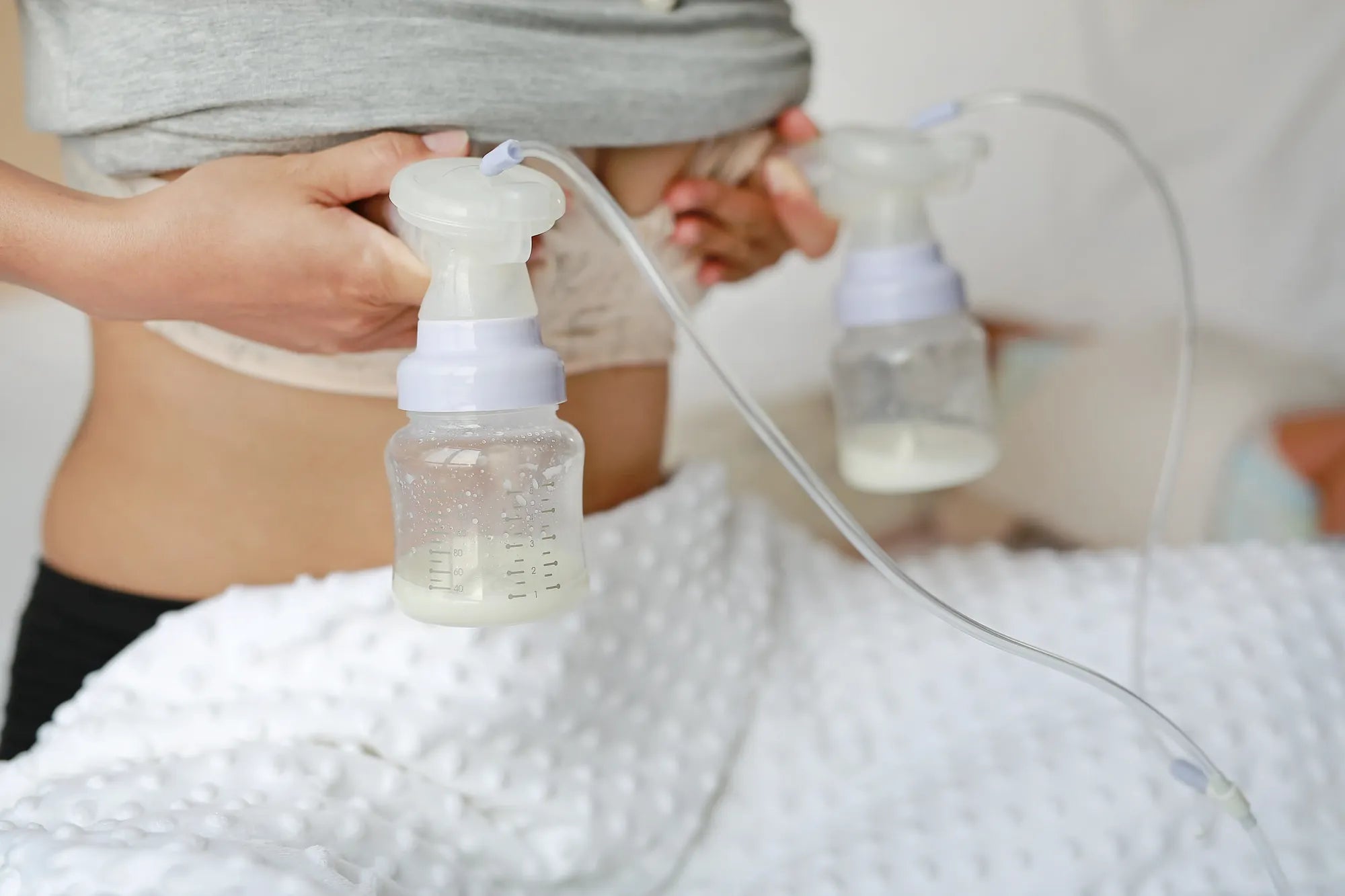
Visual Cues from Your Pump and Bottle
Your equipment offers clear visual data. During peak flow, milk will swirl and flow quickly into the collection bottle. As the breast drains, the movement in the flange (the tunnel part) changes.
You'll see milk droplets forming slowly on the nipple and then trickling down the sides of the flange instead of shooting straight in. Eventually, this visible movement ceases. The total output volume is a data point, but not the sole indicator, as it varies daily based on hydration, time of day, and stress levels.
However, a sudden, significant drop in your usual output over several sessions might warrant attention to pump parts, flange fit, or schedule. Consistency in observing the pattern of flow is more valuable than fixating on the exact ounces every time.
What NOT to Rely On: Common Misconceptions
Dispelling myths is critical to reducing anxiety and focusing on true signals. Here are common pitfalls to avoid.
Myth 1: A Specific Output Volume Means Empty. Milk production fluctuates. A session yielding 2 oz. can represent as complete an emptying for your body at that moment as a 5 oz. session at another time. Comparing output between sessions or to other moms is unhelpful. Focus on the percentage of your breast's current capacity removed, not the absolute amount.
Myth 2: Breasts Must Feel "Flabby" or Completely Soft. Breast tissue composition varies. Some women's breasts always retain some firmness due to glandular tissue. Effective emptying is about the change in firmness from start to finish, not achieving a specific level of softness. The goal is a noticeable reduction in fullness.
Myth 3: Pumping for a Set Time Guarantees Emptiness. While 15-20 minutes per breast is a common guideline, it's not a rule. Some moms empty quickly in 10 minutes; others need 30 with multiple let-downs. Let your breast's signals (softening, flow stoppage) dictate the session length, not the clock. A pump with customizable settings, like MomMed's, allows you to adapt the session to your body's rhythm.
Myth 4: No More Drips Means All Milk is Gone. As explained, milk production is continuous. "No more drips" means the milk readily available in the ducts post-let-down has been removed. More milk is always being made, but at a slower rate once the breast is drained. This is normal and healthy.
How the Right Breast Pump Can Help You Gauge Emptiness
Technology is a powerful ally. A high-quality, efficient breast pump doesn't just extract milk; it provides the consistent performance and feedback needed to learn your emptying patterns. MomMed designs pumps with this intuitive understanding in mind.
Consistent, Adjustable Suction for Effective Let-Downs
Effective emptying requires efficiently stimulating the milk ejection reflex. MomMed breast pumps feature multiple, customizable modes: a rapid, gentle stimulation mode to trigger let-down and a slower, deeper expression mode to mimic a baby's nutritive sucking.
The ability to adjust suction strength allows you to find the perfect, comfortable setting that maximizes flow without pain. This consistent, patterned suction is engineered to encourage multiple let-downs in a single session, which is key to accessing more of your milk and achieving that feeling of thorough drainage.
The Advantage of Hands-Free, Comfortable Pumping
Stress and discomfort can inhibit oxytocin, hindering let-down. MomMed's wearable pumps, like the award-winning S21 Double Wearable, are designed for ultimate comfort and discretion. Made with soft, BPA-free, food-grade silicone, they fit securely inside your bra, freeing your hands.
This hands-free design allows you to relax, move gently, or even use breast compression techniques easily. Enhanced relaxation promotes better oxytocin release, leading to more effective milk ejection and, consequently, more complete emptying. The ultra-quiet motors further reduce stress, helping you tune into your body's physical cues.
Observing Your Session with a Discreet Design
Being tethered to a wall outlet or a bulky pump base can make it difficult to observe flow patterns. The compact, self-contained nature of a wearable pump like the MomMed S12 or S21 allows you to easily glance down at the collection bottles and flanges during your session.
You can directly see when streams turn to drips and when flow ceases, all while going about light activities. This direct visual feedback, combined with physical sensations, accelerates your learning curve for understanding your personal "empty" signals.
Tips for Maximizing Milk Removal During Pumping
Combine your pump's technology with these evidence-based techniques to ensure the most thorough drainage possible.
Practice Hands-On Pumping (Breast Compression)
This is the single most effective technique to add. Before and during pumping, use your hands to gently massage your breast from the chest wall toward the nipple. When flow slows to drips, use a steady, gentle compression—like squeezing a tube of toothpaste—while the pump is still suctioning.
This manual pressure helps move milk from the outer ducts toward the nipple, often stimulating another small let-down or extracting an extra 0.5-1 oz. Release the compression when flow stops, then massage and try again. This is easily done with a hands-free wearable pump.
Ensure Proper Flange Fit
An incorrect flange (breast shield) size is a leading cause of poor drainage, discomfort, and low output. The nipple should move freely in the tunnel without rubbing, and only a small amount of areola should be drawn in during suction.
Flange size is not static; it can change over your breastfeeding journey. MomMed provides detailed sizing guides and offers multiple flange sizes to ensure a perfect, efficient fit. A proper fit ensures optimal suction is applied to the milk ducts, not just the nipple, for effective milk removal.
Consider Your Pumping Strategy: Double Pumping and Switch Pumping
Double pumping (pumping both breasts simultaneously) saves time and leverages your body's hormonal response more effectively, often leading to higher total output and better drainage. Using a double pump like the MomMed S21 is ideal for this.
For moms struggling with supply or wanting to thoroughly empty, "switch pumping" can help. Pump both sides for 10-15 minutes, then take a 10-minute break to hydrate and relax, then pump both sides again for another 10 minutes. This break can allow for another let-down reflex to build, accessing more milk.
Comparing Pumping Indicators: A Quick Reference
| Indicator | Sign of Effective Emptying | What to Be Cautious Of |
|---|---|---|
| Breast Sensation | Noticeably softer, lighter, pliable tissue; relief of pressure. | Expecting complete "flatness"; ignoring lingering firm patches. |
| Milk Flow | Flow changes from streams to drips, then stops completely. | Stopping the session while milk is still actively spraying or streaming. |
| Pump Output | Consistent with your personal range for that time of day. | Using volume alone as the metric; comparing daily totals obsessively. |
| Pumping Time | Session ends based on flow/softness, typically 15-25 mins. | Arbitrarily stopping at a set time despite strong flow or fullness. |
| Visual Cues | No active droplets falling into bottle for 1-2 minutes. | Confusing residual moisture in the flange for active milk flow. |
Frequently Asked Questions (FAQ)
Q: My milk stops flowing after 10 minutes. Should I keep pumping?
A: First, try switching back to stimulation mode for a minute or two and incorporate breast compression. This can trigger a second let-down. If, after 2-3 minutes of this with no renewed flow, your breasts feel softer, it's likely okay to stop. The session duration is guided by output and sensation, not just time.
Q: One breast always produces less. Does that mean it's not empty?
A: Not necessarily. Breast asymmetry in milk production is extremely common. Effective emptying is about draining that specific breast's available capacity. If the lower-producing breast feels soft and flow has stopped, it is likely empty relative to its own output. Focus on the signs from each breast individually.
Q: How does using a wearable pump like MomMed's affect knowing when I'm empty?
A: Wearable pumps like MomMed's S21 provide efficient, hospital-grade suction in a discreet package. Their consistent performance ensures effective stimulation for let-downs. The quiet operation and comfort help you relax and better tune into the physical sensation of softening. Additionally, the easy visibility of the collection bottles allows you to clearly observe the slowing and stopping of milk flow, giving you clear visual confirmation.
Q: I can still hand-express a few drops after pumping. Did I not empty?
A: Being able to hand-express a few drops or even a small squirt after pumping is completely normal and does not indicate a failed session. It reflects the continuous production of milk. As long as your breast feels significantly softer and active flow into the pump has ceased, you have achieved effective drainage.
Q: If my breasts don't feel full before pumping, how do I know I'm emptying?
A: As your supply regulates (often around 6-12 weeks), the intense feeling of fullness may subside. Your indicators then rely more heavily on the flow pattern during pumping. Watch for the distinct let-down sensation (if you feel it) and the visual progression from streams to drips to stoppage. The post-pump softness will still be present, just from a less dramatic starting point.
Conclusion
Mastering the skill of recognizing when your breast is empty after pumping transforms uncertainty into confidence. It's a holistic process that combines trusting the physical evidence—the softening, the change in flow—with the supportive feedback of reliable technology. By moving away from rigid rules and towards an understanding of your body's unique patterns, you empower your breastfeeding journey. Remember, effective drainage is the goal, not perfection. For a pumping experience designed to provide clarity, comfort, and efficiency, explore the tools that support this understanding. Shop the MomMed collection at mommed.com for all your breastfeeding and pregnancy needs, and let our innovative, mom-centric designs help you navigate every session with greater assurance and peace of mind.