


Startseite
Pregnancy, Breastfeeding, and Pumping: The Ultimate Guide for Moms
Do You Need a New Breast Pump with Each Pregnancy? A Complete Guide
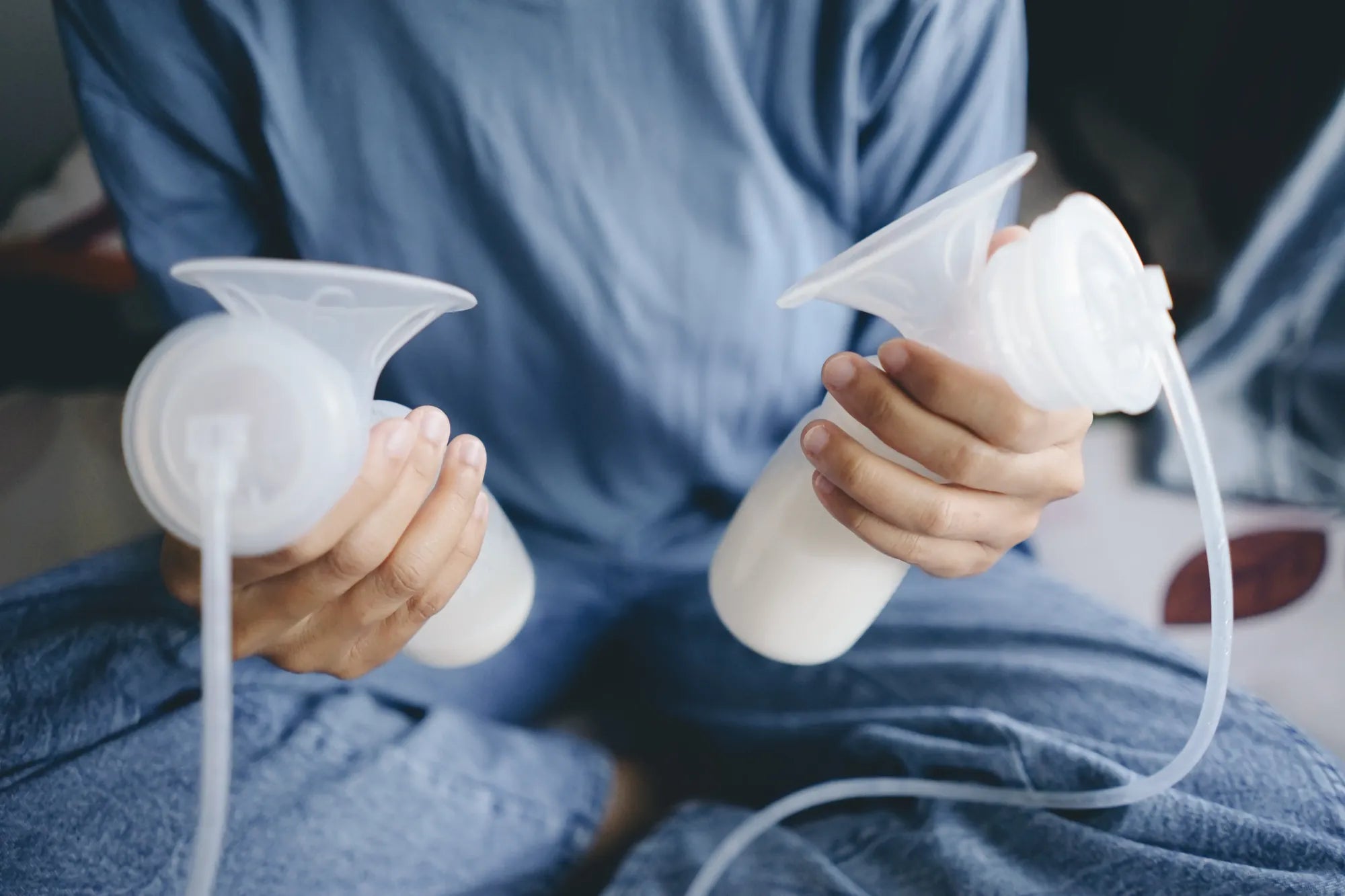
Do You Need a New Breast Pump with Each Pregnancy? A Complete Guide
Introduction: The Breast Pump Dilemma for Growing Families
You're expecting another baby, and your trusty breast pump from your first child is sitting in the closet. A practical voice says, "It worked perfectly before, so why not use it again?" Yet, a cautious whisper asks about hygiene, motor wear, and whether it's truly safe. The core question, "Do you need a new breast pump with each pregnancy?" is more nuanced than a simple yes or no.
This decision hinges on multiple factors: the type and age of your pump, its usage history, and significant advancements in breastfeeding technology. For many mothers, the breast pump is a critical tool for feeding their baby and maintaining their milk supply, making its reliability and safety non-negotiable.
This guide will dissect the evidence, weigh the pros and cons, and provide a clear framework for your choice. We'll also explore how brands like MomMed, a trusted maternal and baby care brand, design products with the evolving journey of motherhood in mind, offering innovative solutions like wearable pumps for busy moms with multiple children.
Your pumping experience should support your new reality, whether that means refreshing your old setup or embracing new technology for greater freedom and efficiency.
Understanding Breast Pump Longevity: Key Factors to Consider
Breast pumps are durable medical devices, but they are not immortal. Their suitability for a subsequent pregnancy depends on a combination of mechanical integrity and hygienic safety. Think of it like a car: the engine (motor) might still run, but you'd always replace the tires (parts that wear out) and the oil (for hygiene) before a new, long journey.
Ignoring these factors can lead to reduced milk output, discomfort, or even contamination. The primary elements determining a pump's second-life viability are its classification, its mechanical history, and the state of its components.
The Type of Pump: Hospital-Grade vs. Personal Use
The fundamental distinction lies in the pump's design intention. Hospital-grade multi-user pumps are built for durability across many users. They feature a closed-system design that prevents milk from entering the motor and tubing, and they are typically rented from hospitals or medical supply companies. These are engineered for thousands of hours of use.
In contrast, personal-use pumps, whether electric, wearable, or manual, are designed for a single user over their breastfeeding journey. The motor has a finite lifespan, often measured in hours of total use. Manufacturers typically design these pumps to last for 1-2 years of regular use, which may or may not span multiple pregnancies.
Using a pump intended for a single user across multiple children is essentially extending it beyond its designed lifecycle. This doesn't automatically mean it will fail, but its efficiency and suction strength may diminish, potentially impacting milk supply.
Age and Usage History of Your Pump
Time and wear matter. A pump used for 12 months with your first child and then stored for three years is in a different state than one used for 3 months and stored for one year. The motor's internal components, like diaphragms and seals, can degrade with both use and age, even while in storage.
Suction strength is paramount for effective milk removal and signalin g your body to produce more. A worn-out motor may struggle to maintain consistent, rhythmic suction, leading to longer pumping sessions with lower output. Furthermore, battery life in cordless or wearable models diminishes over time and with recharge cycles.
Technology also evolves rapidly. Pumps from five years ago likely lack the efficiency, comfort settings, and quiet operation found in today's models. What was once a top-tier pump may now be outperformed by newer, more mother-centric designs.
Hygiene and Replacement Parts: The Non-Negotiable Rule
This is the most critical and non-debatable factor. Every single part that comes into contact with breast milk or your body must be replaced for a new baby. This is not a recommendation; it is a mandatory safety and hygiene practice.
These parts include flanges (breast shields), duckbill valves, backflow protectors, membranes, silicone diaphragms, bottles, and tubing. Even with meticulous cleaning and sterilization, microscopic milk residue can embed in these materials. Over time, plastics can degrade and silicone can become less pliable, harboring bacteria or mold that is invisible to the naked eye.
Using old parts risks contaminating your milk, which is especially dangerous for a newborn's immature immune system. Furthermore, worn-out valves and membranes are the most common cause of a perceived loss of suction, not the motor itself. Replacing these often restores a pump to like-new performance.
Weighing the Pros and Cons: Reusing vs. Investing in a New Pump
To make an informed decision, let's objectively evaluate the arguments for and against reusing your existing personal-use pump. The right choice balances financial, practical, and emotional considerations unique to your family's situation.
The Case for Using Your Existing Pump
Cost Savings: The most apparent advantage. A quality double electric pump is a significant investment. Reusing the motor unit and only purchasing new personal parts (a "replacement kit") can save hundreds of dollars. This is a compelling reason for many families budgeting for a new child.
Familiarity and Comfort: You know this pump. You've mastered its settings, rhythms, and quirks. There's no new learning curve during the already challenging postpartum period. The mental comfort of using a known, trusted tool shouldn't be underestimated.
Environmental Consideration: Reducing waste by extending the life of a durable good is an environmentally responsible choice. Opting to replace only the necessary consumable parts, rather than the entire unit, aligns with sustainable practices.
The Case for Getting a New Pump
Technological Advancements: The innovation in breast pumps over the last few years has been revolutionary. The rise of true wearable, cordless pumps has changed the game for mothers, especially those with other children. Imagine pumping hands-free while making lunch for your toddler or helping with homework. Newer pumps also offer more personalized, comfortable suction patterns, ultra-quiet motors, and better battery life.
Guaranteed Performance and Safety: A new pump comes with a fresh motor under warranty, ensuring optimal suction and efficiency from day one. It eliminates any doubt about hidden wear, degraded materials, or outdated safety standards. This peace of mind is invaluable.
Opportunity to Upgrade Your Experience: Your needs may have changed. A bulky plug-in pump that worked when you were on maternity leave may not suit a mom who is now chasing a toddler. Upgrading to a wearable pump like the MomMed S21 Double Wearable Breast Pump can offer the freedom and flexibility your new, busier lifestyle demands.
Insurance Coverage: Under the Affordable Care Act in the U.S., many health insurance plans are required to provide a breast pump at no cost for each pregnancy. This often removes the financial barrier to obtaining a new, high-quality pump with every baby.
The MomMed Advantage: Engineered for Your Evolving Journey
At MomMed, we understand that motherhood is a journey with different chapters. Our product philosophy centers on creating reliable, innovative, and safe solutions that adapt to your life, whether it's your first baby or your third. We specialize in wearable breast pumps, pregnancy tests, and baby care essentials designed to support moms at every stage.
Built to Last: Durable, Hospital-Grade Performance
MomMed pumps are engineered with robust, high-quality motors designed for extended personal use. While they are personal-use pumps, we build them to the demanding standards that ensure reliable performance throughout a full breastfeeding journey and potentially beyond, with proper care. The focus is on consistent, effective suction that helps establish and maintain milk supply, a critical factor whether it's your first or fourth child.
Durability means less worry about motor fade. Our pumps undergo rigorous testing for motor lifespan and suction consistency, providing a trustworthy foundation for your feeding routine. This reliability is why thousands of moms across the US and Europe trust MomMed for their breastfeeding needs.
Innovation for Modern Moms: The Wearable Freedom
The arrival of a new baby doesn't pause life for your older children. This reality inspired our award-winning wearable technology. The MomMed S21 Double Wearable Breast Pump is a prime example of innovation designed for the modern, multi-tasking mother.
Its compact, cordless, and cups-in-bra design grants true hands-free mobility. You can pump discreetly and quietly while managing household tasks, working, or caring for your toddler. With multiple stimulation and expression modes, and adjustable suction levels, it's designed for both comfort and efficiency, mimicking a baby's natural nursing pattern to help with let-down and output.
For a mother navigating a subsequent pregnancy, this freedom isn't a luxury; it's a tool for survival and balance, allowing her to meet her new baby's needs without neglecting her other children or herself.
Uncompromising Safety: BPA-Free and Hygienic by Design
Safety is non-negotiable. Every MomMed product that contacts skin or milk is crafted from food-grade, BPA-free silicone and plastics. This commitment ensures no harmful chemicals leach into your precious breast milk. Our closed-system design prevents milk from entering the tubing or motor, a critical feature for hygiene and pump longevity.
We also make it easy to maintain this safety standard. Genuine MomMed replacement part kits are readily available. This allows you to confidently refresh your pump for a new baby by replacing all wearables parts—flanges, valves, backflow protectors, ducts, and bottles—ensuring a completely sanitary system. Compatibility across our product lines means you can often mix and match parts as your needs evolve.
Practical Checklist: How to Decide for Your Family
Follow this step-by-step guide to systematically evaluate your situation and make the best decision.
Step 1: The Initial Inspection. Retrieve your old pump. Check the motor unit for any visible damage, cracks, or frayed cords. Listen to the motor; does it sound strained, louder, or different than you remember? Check the battery life if it's a portable model.
Step 2: The Suction Test. Reconnect the pump with any old tubing (for testing only). Attach a flange and perform a suction test on your arm or hand. Does it feel as strong as it used to? Is the rhythm consistent? Note that suction will feel optimal only with brand-new valves and membranes.
Step 3: The Parts Audit & Cost Analysis. Make a list of EVERY part that touches milk or your body. This includes: flanges (correct size may change post-pregnancy), duckbill valves, backflow protectors, silicone membranes, bottles, caps, and tubing. Price out a complete "replacement kit" from the manufacturer.
Step 4: The Research & Comparison. Now, research the cost of a new pump that fits your current lifestyle—perhaps a wearable model. Compare that total cost to the cost of the replacement parts kit + using your old motor. Consider the value of new technology, a warranty, and guaranteed performance.
Step 5: The Insurance Check. Contact your health insurance provider. Ask: "Do you cover a new breast pump for each pregnancy? What models are available to me at low or no cost?" This single call could make the decision for you.
Step 6: The Comfort & Lifestyle Reflection. Be honest about your daily life. Will an old, corded pump work while you're managing multiple children? Would the flexibility of a wearable pump significantly improve your mental health and ability to multitask?
Data-Driven Insights: Comparison Table
| Consideration | Reusing Old Pump (New Parts Only) | Purchasing a New Pump |
|---|---|---|
| Upfront Cost | Lower (Cost of replacement parts kit) | Higher (Full unit cost, but may be $0 via insurance) |
| Performance Guarantee | Uncertain; depends on motor wear | Optimal; new motor under warranty |
| Hygiene & Safety | Safe only if ALL milk-contact parts are new | Inherently safe with all-new components |
| Technology & Features | Limited to old pump's capabilities | Access to latest innovations (wearable, quiet, app-connected) |
| Convenience & Lifestyle Fit | May be less suited to busy, on-the-go mom | Can choose a model tailored to current needs (e.g., hands-free) |
| Environmental Impact | Lower waste (extends product life) | Higher waste, but some brands offer recycling programs |
Frequently Asked Questions (FAQ)
Q1: Can I use a breast pump that was given to me by a friend or family member?
A: This depends entirely on the pump type. A hospital-grade, multi-user rental pumppersonal-use pump is not. Even with all new parts, the motor's lifespan and hygiene of the internal motor system are concerns. The CDC strongly advises against sharing personal-use pumps due to the risk of contamination. If you consider it, you must use brand-new parts and consult the manufacturer's guidelines.
Q2: How do I know for sure if my pump motor is too weak or worn out?
A: The most reliable sign is a noticeable drop in milk output during your usual pumping sessions, assuming you have new valves/membranes and correct flange fit. Other signs include: the motor sounds labored or louder; it takes much longer to achieve a let-down; suction feels inconsistent or weaker on the highest setting compared to your memory. When in doubt, it's a sign to replace.
Q3: Does insurance really cover a new pump for a second or third baby?
A: In many cases, yes. Most insurance plans that complied with the Affordable Care Act provide coverage for a breast pump for each pregnancy. You are often eligible for a new pump once per year. The specific timing (before or after birth) and the models covered vary by insurer, so a direct inquiry is essential.
Q4: Are MomMed replacement parts compatible with older MomMed pump models?
A: MomMed designs its product ecosystem with compatibility in mind. Many core parts, like our duckbill valves and backflow protectors, are standardized across our electric and wearable pump lines. However, always check the specific product page or manual for your pump model to confirm part numbers and ensure a perfect fit for optimal performance and safety.
Q5: My flange size changed between pregnancies. Is that normal?
A: Absolutely. Breast tissue, nipple size, and shape can change during and after each pregnancy and breastfeeding journey. Using an incorrectly sized flange is a leading cause of pain, low output, and nipple damage. It is crucial to remeasure your nipple diameter (not the areola) at the start of each new breastfeeding chapter and purchase the correct flange size, whether you are using new parts or a new pump.
Conclusion: Empower Your Choice with Knowledge and Confidence
The answer to "Do you need a new breast pump with each pregnancy?" is personalized. The motor of a well-cared-for, personal-use pump might be viable for a second child, but only if it passes rigorous inspection and testing. The non-negotiable rule is that all parts contacting milk must be brand new for the health of your newborn.
Your decision should ultimately prioritize a safe, efficient, and comfortable pumping experience that aligns with your present life. For many mothers, the significant advancements in wearable pump technology offer such a profound improvement in quality of life and multitasking ability that upgrading becomes the clear choice. It's an investment in your well-being and your ability to seamlessly integrate feeding your new baby into the beautiful chaos of a growing family.
Whether you choose to refresh your existing setup with genuine replacement parts or embrace the freedom of a next-generation wearable pump, make your choice from a place of informed confidence. You deserve a pumping journey that supports you, every step of the way.
Ready to evaluate your options? Shop the MomMed collection at mommed.com for all your breastfeeding and pregnancy needs, from our award-winning S21 Wearable Pump to complete hygiene kits and expert resources designed to support you through every stage of motherhood.