


Startseite
Pregnancy, Breastfeeding, and Pumping: The Ultimate Guide for Moms
Can't Pump Milk from Engorged Breast: A Complete Guide to Relief
Can't Pump Milk from Engorged Breast: A Complete Guide to Relief
Introduction: Understanding the Challenge of Pumping from an Engorged Breast
Feeling like you can't pump milk from an engorged breast is a uniquely frustrating and painful experience for a breastfeeding mother. You feel the intense pressure and fullness, you know the milk is there, yet your pump seems utterly ineffective. This situation goes beyond simple fullness; it's a physiological roadblock where the very swelling that signals milk production actively prevents its release.
Understanding why this happens is the first step toward effective relief. Engorgement isn't just about milk volume—it's about tissue edema and inflammation that mechanically hinders milk flow. This guide will demystify the causes, provide a clear, actionable plan to get milk flowing again, and offer strategies for long-term management and prevention, empowering you to navigate this common challenge with confidence.
What is Breast Engorgement? Beyond Simple Fullness
Breast engorgement is a condition of significant swelling and inflammation in the breast tissue, often occurring in the early postpartum days as mature milk comes in (around days 3-5) or any time milk removal is consistently insufficient. It's crucial to distinguish it from the normal, heavier fullness felt before a feeding.
True engorgement involves two components: an increase in milk volume *and* increased blood flow and lymphatic fluid in the breast tissue. This combination causes the tissue to become hard, warm, and painful, often extending into the armpit area. The areola—the darker area around the nipple—can become so firm and swollen that it's difficult for a baby to latch or for a pump flange to form an effective seal.
Common symptoms include breasts that feel hard, tight, shiny, and are uniformly tender or painful. The nipple may appear flattened or taut. Some mothers experience a low-grade fever (often called "milk fever"), which should be monitored as it can be an early sign of developing mastitis if accompanied by flu-like symptoms and a red, wedge-shaped area on the breast.
Recognizing these signs early is key. While initial engorgement is normal, prolonged, severe engorgement can lead to complications like plugged ducts, mastitis, and a temporary drop in milk supply due to the pressure on milk-producing cells.
Why Your Pump Won't Work: Top Causes of Pumping Difficulty During Engorgement
When you can't pump milk from an engorged breast, it's not a failure of your body or your pump. It's a mechanical problem caused by the physical state of the breast. The pump's function is to create a vacuum to draw the nipple and milk out. Engorgement directly interferes with this process in several specific ways.
The primary issue is that the swollen tissue physically compresses the network of milk ducts, especially those closer to the nipple. Imagine trying to drink a thick milkshake through a pinched straw—the liquid is present, but the pathway is obstructed. The pump's suction alone cannot overcome this internal compression without first softening the areolar tissue.
Compressed Milk Ducts and Swollen Areola
The areola's swelling is particularly problematic. A pump flange needs a soft, pliable areola to form a proper seal and allow the nipple to move freely back and forth, stimulating the nerves that trigger let-down. A rock-hard areola prevents this seal, allows air leaks, and immobilizes the nipple. The suction then acts on the swollen tissue rather than effectively on the nipple and ducts, often causing more pain and swelling without extracting milk.
Flattened or Inverted Nipples
Severe engorgement can temporarily cause even typically everted nipples to retract or flatten against the hard breast tissue. A pump cannot latch onto a flattened surface. It needs a nipple protrusion to create the necessary tunnel for milk to flow through. This is why techniques to draw the nipple out *before* pumping are a critical first step.
Incorrect Pump Settings and Flange Fit
In desperation, a common mistake is to crank the pump to its highest suction setting. On an engorged breast, this is counterproductive. High, aggressive suction on already swollen and tender tissue increases inflammation, causes pain (which inhibits oxytocin and let-down), and can damage capillaries. Furthermore, engorgement can temporarily change your nipple diameter, meaning your usual flange size may be too tight, adding to the compression.
Your Step-by-Step Action Plan: Solutions to Get Milk Flowing Again
This sequential plan is designed to reduce swelling, initiate let-down, and enable your pump to work effectively. The goal is gentle persuasion, not forceful extraction.
Step 1: Pre-Pump Warmth and Gentle Stimulation
Begin with warmth applied to the breasts for 5-10 minutes before attempting to pump. Use a warm, moist washcloth, a heating pad on a low setting, or take a warm shower. The heat promotes vasodilation, encouraging blood flow and helping to loosen the milk within the ducts. Follow this with very gentle breast massage. Using the flats of your fingers, make light, circular motions starting at the chest wall and moving toward the nipple, but avoid the hard, swollen areola at this stage.
Step 2: Reverse Pressure Softening (RPS) – A Crucial Technique
Reverse Pressure Softening is a game-changer for engorgement. Developed by lactation expert Jean Cotterman, it involves applying gentle, steady pressure *around* the base of the nipple to temporarily push the interstitial swelling (edema) back into the breast, creating a softer "landing zone."
How to do RPS: Place two or three fingers from each hand forming a ring around the base of your nipple. Apply steady, gentle inward pressure toward your chest wall. Hold for 1-2 minutes. You should see the areola soften and the nipple may become more prominent. This creates the pliable tissue needed for a pump or baby to latch effectively.
Step 3: Hand Expression to Initiate Let-Down
Before attaching the pump, spend 2-3 minutes hand-expressing. Position your thumb and forefinger about an inch behind the nipple (on the softened areola after RPS). Press back toward your chest, then compress your fingers together, and finally roll them forward. The aim is not to empty the breast but to elicit your milk ejection reflex (let-down) and remove just enough milk to further soften the areola. The first few sprays signal success.
Step 4: Strategic Pumping with MomMed Wearable Pumps
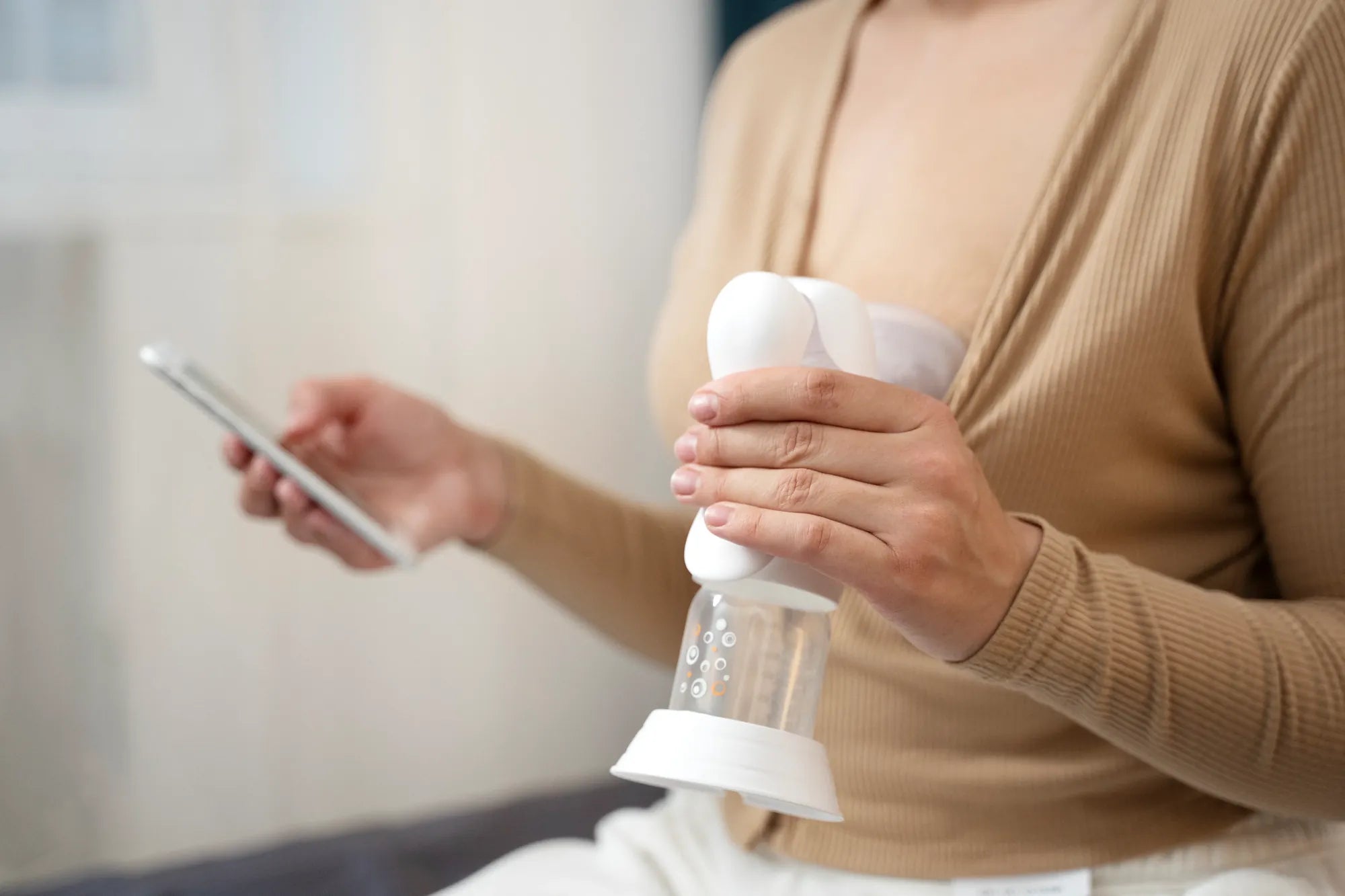
Now attach your pump. Start with the stimulation or massage mode on a low-to-medium suction setting. The goal is comfort. High suction is your enemy here. MomMed wearable pumps, like the award-winning S21 model, are particularly well-suited for this scenario due to their multiple, adjustable suction levels (typically 9 levels) and modes.
The hands-free, in-bra design is a critical advantage. It allows you to use both hands to continue gentle breast compression and massage *during* the entire pumping session. This manual compression helps overcome duct compression from the inside, working in tandem with the pump's rhythm. Pump for 10-15 minutes, or until you feel significant softening and relief, even if output seems low initially. The priority is reducing edema to restore normal function.
Data and Comparison: Manual Expression vs. Pumping vs. Wearable Pumps for Engorgement
Choosing the right tool for engorgement management can significantly impact your comfort and success. The following table compares the primary methods, highlighting why modern wearable pumps offer a superior integrated solution.
| Method | Effectiveness for Engorgement | Key Advantages | Key Limitations for Engorgement |
|---|---|---|---|
| Manual Expression | High for initial softening & let-down. | Ultimate control for areolar softening (RPS). No equipment needed. Gentle. | Can be tiring for full relief. Less efficient for draining multiple ducts simultaneously. Requires learned skill. |
| Traditional Electric Pump (Plug-in) | Moderate to High, *after* softening. | Powerful, consistent suction. Often higher maximum output. | Cumbersome, loud. Requires sitting still near outlet. Difficult to do hands-on compression while holding flanges. |
| Wearable Pumps (e.g., MomMed S21) | High for integrated management. | Hands-free operation is crucial for continuous massage/compression. Portable & discreet. Ultra-quiet motors reduce stress. Hospital-grade performance in a compact design. BPA-free, food-grade silicone for safety. | Battery life limits session length (though most last multiple sessions). Initial investment. |
As shown, wearable pumps like the MomMed S21 uniquely combine effective, powerful suction with the critical ability to use hands-on techniques simultaneously. This synergy makes them an excellent tool not just for everyday use, but specifically for managing the complex challenge of engorgement.
Prevention and Long-Term Management: Avoiding Future Engorgement
While treating acute engorgement is vital, preventing its severe recurrence is the ultimate goal. Consistent, effective milk removal is the cornerstone of prevention.
Feed or Pump Frequently and Consistently
In the early weeks, aim for 8-12 feeds or pumping sessions in 24 hours. Don't go longer than 3-4 hours between sessions, even overnight. If you're exclusively pumping, establish a consistent schedule. If you feel fullness building between scheduled sessions, a short, gentle pump or hand expression can prevent it from escalating to full engorgement. When weaning, do so gradually by slowly dropping sessions over time.
Ensure a Proper, Deep Latch (If Breastfeeding)
A shallow latch is a primary cause of ineffective milk transfer, leading to residual milk and engorgement. Ensure your baby takes a large mouthful of breast, not just the nipple. Their chin should be indented into the breast, lips flanged, and you should hear or see swallowing. If you suspect latch issues, consulting an International Board Certified Lactation Consultant (IBCLC) is a highly recommended investment.
Use Cold Compresses and Anti-Inflammatories for Relief
Between feeds or pumps, use cold therapy to reduce swelling and inflammation. Apply cold packs, bags of frozen peas, or specialized gel packs to the breasts for 15-20 minutes. Many moms find chilled cabbage leaves surprisingly effective—the shape conforms to the breast and compounds in the cabbage may have anti-inflammatory properties. Over-the-counter ibuprofen (always consult your doctor first) is an anti-inflammatory that can significantly reduce edema and pain associated with engorgement, making milk removal easier.
FAQ: Quick Answers for Frustrated Moms
Q: How long does it take for engorgement to ease?
A: With proactive management using the steps above (warmth, RPS, hand expression, gentle pumping), you should feel noticeable relief within 24-48 hours. The severe, painful hardness should subside, though breasts may remain full. Complete resolution aligns with establishing a regular feeding/pumping rhythm.
Q: Can engorgement lead to mastitis? What are the warning signs?
A> Yes, untreated severe engorgement is a common precursor to mastitis, as stagnant milk and compressed ducts can lead to infection. Warning signs include: flu-like symptoms (fever over 101°F, chills, body aches), a red, hot, wedge-shaped area on the breast, and increasing pain. If you suspect mastitis, contact your healthcare provider immediately, as antibiotics are often needed.
Q: My pump flange usually fits. Why doesn't it work now?
A> Engorgement causes temporary tissue swelling, increasing your nipple diameter and areola density. Your standard flange may now be too tight, compressing the nipple and restricting movement. Re-measure your nipple diameter during an engorged state or consider using a slightly larger flange size until the swelling subsides. MomMed pumps come with multiple flange sizes for this reason.
Q: Is it safe to use my MomMed wearable pump on engorged breasts?
A> Absolutely, and it can be particularly helpful. The key is to follow the preparatory steps (RPS, hand expression) and start on a low, comfortable suction setting in massage mode. The hands-free design is a major benefit, allowing for essential breast compression during pumping. Ensure all parts, made from BPA-free, food-grade silicone, are clean and correctly assembled.
Q: Should I just stop pumping if nothing comes out?
A> No, but change your approach. If you attach the pump and get no milk after 2-3 minutes on a comfortable setting, detach it. Go back to Step 2 (Reverse Pressure Softening) and Step 3 (Hand Expression). Re-attempt pumping after you've manually triggered let-down and see milk flow. The pump is a tool to maintain flow after you start it, not always to initiate it during severe engorgement.
Conclusion: Regain Control and Find Comfort
The feeling that you can't pump milk from an engorged breast is a temporary, though distressing, obstacle with clear physiological causes and solutions. Remember the core principle: you must soften the areola and trigger let-down *before* the pump can work effectively. Techniques like Reverse Pressure Softening and hand expression are not optional extras; they are the essential keys that unlock the engorged breast.
Equipping yourself with the right knowledge and tools transforms this challenge. A pump that supports your management—like a hands-free, adjustable wearable pump from MomMed—allows you to combine technology with hands-on care, the most effective strategy for relief. Your journey is supported by innovation designed for real maternal experiences. You have the power to navigate this, find relief, and continue providing for your baby with greater comfort and confidence.
Find the supportive tools designed for every step of your breastfeeding journey. Shop the MomMed collection at mommed.com for all your breastfeeding and pregnancy needs, from our award-winning S21 Wearable Pump to comfortable nursing bras and essential baby care items.