


Inicio
Pregnancy, Breastfeeding, and Pumping: The Ultimate Guide for Moms
How Much Pumped Breast Milk to Feed: A Comprehensive Guide for Confident Bottle-Feeding
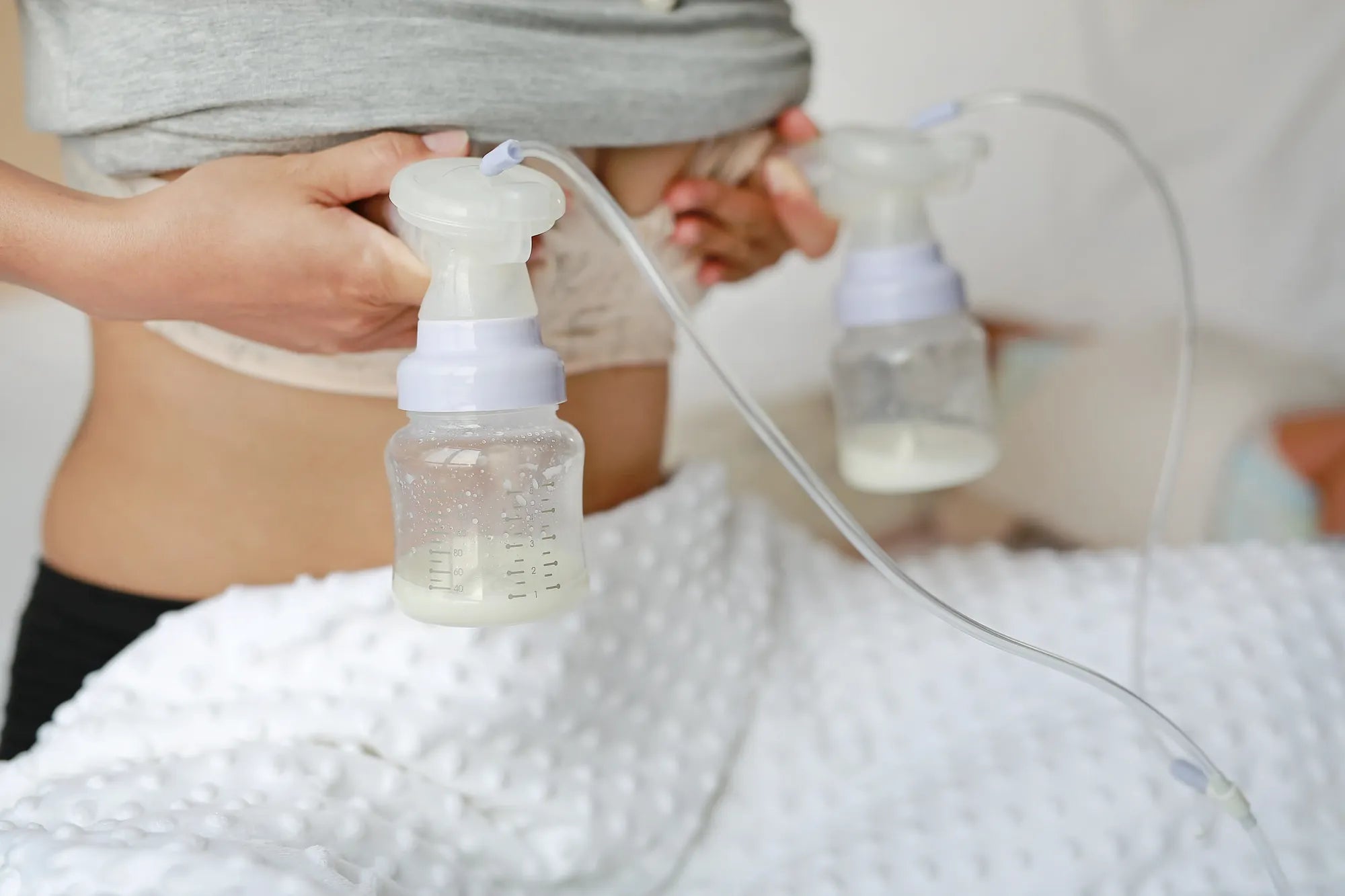
How Much Pumped Breast Milk to Feed: A Comprehensive Guide for Confident Bottle-Feeding
Figuring out how much pumped breast milk to feed your baby can feel like a high-stakes guessing game. You've poured time and effort into expressing each precious ounce, and the question of whether it's too much or too little looms over every bottle. This guide cuts through the uncertainty. We'll provide clear, data-driven guidelines and practical strategies to help you determine the right amount for your unique baby, transforming feeding from a source of stress into an act of confident connection. As a trusted brand in maternal care, MomMed understands this journey. Our wearable breast pumps are designed to make expressing milk more comfortable and convenient, giving you one less thing to worry about so you can focus on the feeding bond.
Understanding Your Baby's Stomach Size and Growth
A baby's stomach isn't designed to hold large volumes immediately. Visualizing its growth is key to understanding feeding amounts. On day one, a newborn's stomach is roughly the size of a cherry, holding only about 5-7 mL (or a teaspoon). This tiny capacity explains why frequent, small feeds are not just normal but essential in the early days.
By day three, the stomach expands to about the size of a walnut, holding 22-27 mL (or just under an ounce). At one week, it's closer to the size of an apricot, with a capacity of 45-60 mL (1.5-2 ounces). This gradual expansion aligns perfectly with the typical increase in a mother's milk production, moving from nutrient-rich colostrum to more voluminous mature milk.
By the time a baby is one month old, their stomach is about the size of a large egg, comfortably holding 80-150 mL (2.5-5 ounces) per feed. This growth pattern underscores a critical principle: there is no single "right" amount that applies to all babies. Intake is a moving target that evolves with your baby's development, weight, and individual metabolism.
Following a simple day-by-day guide can provide initial reassurance. For the first three days, expect feeds of just a few milliliters of colostrum every 1-3 hours. From weeks one to two, intake typically ranges from 45-90 mL (1.5-3 oz) per feed, offered 8-12 times in 24 hours. From one to six months, while frequency may decrease, the volume per feed increases to meet growing energy needs, generally plateauing at around 90-180 mL (3-6 oz) per feeding.
Key Signs of Hunger and Fullness
Observing your baby's cues is more reliable than any chart. Early hunger signs include stirring, rooting (turning head with open mouth), and bringing hands to mouth. Mid-hunger cues are more active: stretching, increased physical movement, and sucking on fists. Late hunger cues, like crying and agitation, mean baby is very hungry and may be harder to settle for a feed.
Signs of fullness, or satiety cues, are equally important to prevent overfeeding. These include slowing or stopping sucking, turning the head away from the bottle ("bottle refusal"), spitting out the nipple, and becoming relaxed or falling asleep with open hands. A baby who closes their mouth firmly or arches their back is signaling they are done.
Paced bottle feeding, which mimics the slower, more interactive flow of breastfeeding, helps babies better regulate their intake. To practice this, hold baby semi-upright and hold the bottle horizontally so milk only fills the nipple when baby sucks. Pause every few minutes or when you see early satiety cues. This method allows baby's brain to register fullness and gives them control, reducing spit-up and gas.
Responding to these cues, rather than insisting a bottle be finished, teaches babies to trust their internal hunger and fullness signals—a vital skill for lifelong healthy eating habits. It respects their individual appetite, which can vary from feed to feed, just like an adult's.
Calculating Milk Needs: General Guidelines and Formulas
While cues are paramount, calculation formulas offer a helpful starting point for estimating daily needs, especially for parents who pump exclusively. These guidelines are based on extensive pediatric research into infant caloric and nutritional requirements. It's crucial to remember they provide a daily total range, which should be divided across the number of feeds your baby naturally takes.
The most important metric to pair with these calculations is your baby's growth. Consistent weight gain along their personal percentile curve on a standardized growth chart is the ultimate indicator they are getting enough. These formulas are tools, not prescriptions, and should always be used in consultation with your pediatrician, who can tailor advice to your baby's health and development.
Using these calculations can be particularly empowering for pumping parents. It helps you set realistic goals for your pumping sessions and understand how much to store for future feeds. It demystifies the process, turning "how much pumped breast milk to feed" from an abstract worry into a manageable equation.
The Weight-Based Rule
The most common and straightforward calculation is the weight-based rule. For infants up to about six months old (before significant solid food intake), the general guideline is 2.5 ounces of breast milk per pound of body weight per day. In metric measurements, this is approximately 150-200 mL per kilogram of body weight per day.
This rule accounts for the fact that a larger baby requires more calories than a smaller one. Here are clear examples: An 8-pound (3.6 kg) baby would need about 20 ounces (590 mL) per day (8 lbs x 2.5 oz = 20 oz). A 10-pound (4.5 kg) baby would need about 25 ounces (740 mL) daily. A 12-pound (5.4 kg) baby would need about 30 ounces (887 mL) per day.
To find the average amount per feed, simply divide the daily total by the typical number of feeds. For example, a 10-pound baby needing 25 ounces daily who feeds 8 times would take roughly 3.1 ounces per feed. This average allows for some feeds to be smaller and some larger.
The Age-Based Averages
Age-based averages provide another useful reference point, especially when considered alongside the weight-based rule. These averages reflect the typical plateau in milk intake that occurs after the first month, as breast milk composition changes and baby's growth rate slightly slows.
The following table outlines typical daily intake ranges for exclusively breastfed babies from one to six months. Note the overlap and consistency from month to month, emphasizing that a steady intake is normal.
| Baby's Age | Average Daily Intake (oz) | Average Daily Intake (mL) | Typical Feed Frequency |
|---|---|---|---|
| 1 Month | 19 - 24 oz | 560 - 710 mL | 8-12 times |
| 2 Months | 22 - 28 oz | 650 - 830 mL | 7-9 times |
| 3 Months | 23 - 30 oz | 680 - 887 mL | 6-8 times |
| 4 Months | 24 - 32 oz | 710 - 946 mL | 6-8 times |
| 5 Months | 24 - 32 oz | 710 - 946 mL | 5-8 times |
| 6 Months* | 24 - 32 oz | 710 - 946 mL | 5-8 times |
*At 6 months, solid foods are introduced, but breast milk remains the primary source of nutrition. Milk intake may begin to very gradually decrease as solid food intake increases over the following months.
These ranges are broad for a reason. A baby at the 5th percentile for weight will naturally consume less than a baby at the 95th percentile, even if they are the same age. The table serves as a sanity check; if your baby's intake is consistently and significantly outside these ranges, it's a topic to discuss with your pediatrician, but being on the lower or higher end is often just a reflection of their unique size and metabolism.
Navigating Feeding Variables: It's Not Just About Ounces
Real-world feeding is messy and variable. Understanding the factors that influence how much pumped breast milk to feed helps you adapt to your baby's needs without second-guessing every decision. These variables explain why two babies of the same age and weight might have different feeding patterns.
Metabolism is a major factor. Some babies are simply more efficient at extracting calories from milk or have a higher basal metabolic rate, requiring more frequent or larger feeds. Activity level also plays a role; a very alert, active baby may burn more calories than a sleepier peer. Even temperament can influence feeding—a distractible baby might take smaller, more frequent feeds, while a focused baby might take larger, less frequent ones.
Health and developmental stages cause temporary shifts. A baby fighting off a minor cold may feed more for comfort and hydration, while one experiencing teething pain might temporarily take less. Developmental leaps can disrupt sleep and feeding patterns, leading to days of seemingly insatiable hunger or disinterest in the bottle.
This variability is normal. The goal is not rigid consistency but an overall pattern of adequate intake and healthy growth over time. Tracking feeds and diapers for a few days can reveal your baby's personal rhythm, which is far more valuable than matching a textbook average.
Baby-Led vs. Schedule-Led Feeding
The philosophy behind feeding significantly impacts volumes. Baby-led or responsive feeding is the gold standard recommended by organizations like the AAP and WHO, especially for breastfed babies. This means watching for hunger cues and offering a feed whenever they appear, day or night. The baby determines the timing, duration, and, to a large extent, the volume of the feed (with the parent watching for fullness cues). This approach supports the baby's self-regulation and ensures intake meets immediate needs, which can fluctuate.
Schedule-led feeding involves offering feeds at predetermined intervals (e.g., every 3 hours). While some families find structure helpful, it risks ignoring a baby's hunger cues if they appear early or pressuring a baby to eat if they aren't hungry when the schedule says it's time. For breastfed babies, strict schedules can also impact milk supply, as frequent, on-demand removal is the primary driver of production.
For pumping parents, a hybrid approach is often practical. You may pump on a relatively consistent schedule to maintain supply but feed the baby responsively from the bottle. This means you might prepare a common amount (like 4 ounces) but let the baby decide how much of that bottle they actually want at each feeding, without coercion to finish it.
The Impact of Pumping and Bottle Dynamics
The mechanics of bottle-feeding differ from breastfeeding and can influence intake. Bottle nipples have a fixed flow rate. A fast-flow nipple can deliver milk faster than a baby can comfortably manage, potentially leading to overfeeding as the baby drinks quickly to keep up with the flow, bypassing natural satiety signals. It can also cause gagging, spit-up, and a preference for the easier bottle over the breast.
Choosing a slow-flow nipple labeled for "newborn" or "0m+" and practicing paced bottle feeding are essential countermeasures. This is why MomMed designs its bottles and accessories with controlled flow rates, supporting a feeding pace that aligns with a baby's natural physiology. The goal is to make the bottle a tool that supports the breastfeeding relationship, not undermines it.
Your pumping efficiency directly affects how much milk you have available to feed. An effective, comfortable pump that empties the breasts well helps protect your milk supply. Wearable pumps like the MomMed S21 Double Wearable Breast Pump offer discreet, hands-free convenience, making it easier to pump more frequently or during times you otherwise couldn't. Maintaining a robust supply through efficient pumping gives you the flexibility to always offer your baby enough milk, whether they're going through a growth spurt or you're building a freezer stash for a return to work.
Data and Comparison: Breast Milk vs. Formula Feeding Volumes
Parents often compare notes, leading to confusion when a formula-fed baby seems to take larger volumes. It's important to understand the compositional differences that explain this variance. The following table provides a general comparison, though individual babies will always vary.
| Factor | Pumped Breast Milk Feeding | Formula Feeding |
|---|---|---|
| Typical Daily Volume (1-6 mo) | 24-32 oz (710-946 mL) - Plateaus around 1 month. | May increase more steadily, often reaching 32+ oz (946+ mL) by 6 months. |
| Feed Frequency | Often more frequent (8-12 feeds in early months, 5-8 later). | Often less frequent due to slower digestion. |
| Volume per Feed | May be smaller per feed (e.g., 3-5 oz). | Often larger per feed (e.g., 4-8 oz) from an earlier age. |
| Digestion & Hunger Cues | Digests faster (1.5-2 hours), leading to quicker return of hunger cues. | Digests slower (3-4 hours), leading to longer intervals between feeds. |
| Caloric Density* | Varies slightly per feed and mother, avg. ~20 cal/oz. | Consistently standardized, typically 20 cal/oz. |
*Note: While average calories are similar, the bioavailability of nutrients and the dynamic composition of breast milk mean a baby may need less volume to meet nutritional needs.
Why Amounts Might Differ
The core reason for volume differences is digestibility. Breast milk contains proteins (whey and casein) in a ratio that forms a softer, easier-to-digest curd in the stomach. It also contains digestive enzymes and bioactive components that aid the baby's own immature system. This allows for rapid digestion and absorption.
Formula, while nutritionally complete, is based on cow's milk or other proteins that form a tougher curd. It lacks these live digestive aids. Therefore, it takes an infant's system longer to break down, keeping them feeling full for a longer period. To meet the same caloric need over fewer feeds, each formula feed must be larger in volume.
This is not an indication that one is "better" than the other, but a crucial physiological explanation. A breastfed baby taking 3 ounces every 2 hours and a formula-fed baby taking 6 ounces every 4 hours may be consuming the same total daily calories—just on different schedules. Comparing the single-feed volume between the two is an apples-to-oranges comparison that can cause unnecessary anxiety.
Troubleshooting Common Concerns
Even with guidelines, worries persist. Addressing these head-on with evidence and actionable steps can restore confidence.
A frequent concern is the discrepancy between what is pumped and what baby eats. It is completely normal to pump less milk in a single session than your baby might take in a feed. Babies are more efficient at removing milk than most pumps. Your total daily pumping output is a better gauge of supply. Furthermore, feeding directly from the breast for some feeds while offering bottles for others is a common and healthy pattern that doesn't require matching volumes exactly.
Another worry is the changing color and consistency of pumped milk. Foremilk (the milk at the beginning of a feed or pumping session) can look thin and bluish, while hindmilk (at the end) is creamier and whiter. This is normal fat content variation. Over a 24-hour period, your baby receives a balanced mix, especially if you sometimes feed directly from the breast. Gently swirling (not shaking) a stored bottle of milk will re-integrate any separated fat.
Is My Baby Eating Too Much or Too Little?
Signs of Possible Overfeeding with a bottle include: consistently drinking very large volumes (e.g., regularly over 6 oz per feed before 3 months), frequent spit-up that resembles vomiting (projectile or large volume), gagging or coughing during feeds, excessive gassiness and discomfort, and rapid weight gain that crosses percentiles upward on the growth chart. Overfeeding often occurs when the bottle is held too horizontally (causing a fast flow) or when a caregiver encourages the baby to finish the bottle after they've shown fullness cues.
Signs of Possible Underfeeding include: consistently taking very little (e.g., less than 1.5 oz per feed after the newborn period), fewer than 6 wet diapers per day after day 5 (urine should be pale yellow, not dark), infrequent or hard stools, lethargy or excessive sleepiness, failure to regain birth weight by 2 weeks or poor weight gain thereafter, and constant hunger cues even after a feed. These signs warrant a prompt call to your pediatrician.
The definitive measure is not a single day's intake but growth over time. Your pediatrician will plot your baby's weight, length, and head circumference on a growth chart. Steady growth along a percentile line (even if it's the 10th or 90th) is the best indicator of adequate intake. Crossing percentiles significantly may require investigation.
Handling Growth Spurts and Appetite Changes
Growth spurts are periods of accelerated development where a baby's nutritional needs temporarily increase. Common timings are around 2-3 weeks, 6 weeks, 3 months, and 6 months, but they can vary. During a spurt, your baby may seem insatiable—a behavior known as cluster feeding. They may want to feed every hour or stay on the breast or bottle for very long periods.
For the pumping parent, this means your baby may drain bottles and still seem hungry. The solution is to offer more. Prepare an extra ounce or two for bottles during this time. You may also need to temporarily increase your pumping frequency to signal your body to produce more milk. This increased demand is how your supply adjusts to meet your baby's new needs. A wearable pump like the MomMed S12 can be invaluable here, allowing you to add a pumping session during your baby's nap or while doing light chores without being tethered.
Growth spurts typically last 2-3 days, sometimes up to a week. Trust the process, offer frequent feeds, and ensure you stay hydrated and nourished. Your supply will catch up, and feeding patterns will settle into a new normal, often with a slightly higher daily intake.
Optimizing Your Pumping Routine for Feeding Success
Your pumping strategy is the foundation of your feeding plan. Consistency is key for maintaining supply. Aim to pump as often as your baby typically feeds, which is usually 8-12 times in 24 hours in the early months, including at least one session overnight when prolactin levels are high. Even if you get less milk at a 3 a.m. pump, it's a critical signal to your body to keep producing.
Pump until the milk stops flowing, then continue for 1-2 minutes to provide additional stimulation. This ensures better drainage and a stronger supply signal. Double pumping (expressing from both breasts simultaneously) saves time and has been shown to yield a higher volume and richer fat content in the milk collected.
Proper flange fit is non-negotiable for comfort and efficiency. A flange that is too large or too small can reduce output and cause pain. MomMed pumps come with multiple flange sizes and a sizing guide because we know that a proper fit is the first step to effective milk removal. Your nipple should move freely in the tunnel without rubbing, with minimal areola being pulled in.
Managing your milk stash supports flexible feeding. Store milk in small amounts (2-4 oz) to avoid waste. Clearly label with the date. Use the "first in, first out" rule. Remember that milk storage guidelines are for quality and safety: 4 hours at room temp, 4 days in the fridge, and 6-12 months in a deep freezer. Having a well-organized stash reduces anxiety about having enough milk for the next feed.
FAQ: Your Top Questions Answered
Q: My baby drinks different amounts at each feed. Is that normal?
A: Absolutely. Just like adults, babies have varying appetites throughout the day. A common pattern is smaller, sleepier feeds in the early morning and larger, more alert feeds later in the day. This variability is normal and not a cause for concern as long as the total daily intake is generally sufficient and growth is on track.
Q: How do I know if the pumped milk I stored is still enough for one feed?
A: Storing in 2-4 oz portions is the best strategy to avoid waste. If you thaw a 3 oz bag and your baby is still hungry after finishing it, you can simply offer an additional ounce from another stored container. It's perfectly fine to combine milk from different pumping sessions as long as both have been cooled to the same temperature first (e.g., both are refrigerated).
Q: Does the type of breast pump affect how much milk I can offer my baby?
A: Yes, significantly. An efficient, comfortable, and effective pump helps you maintain a full milk supply. A pump that doesn't empty your breasts well or is painful to use can lead to decreased output over time. Wearable pumps like MomMed's S21, which are designed with hospital-grade suction patterns and BPA-free, food-grade silicone, allow for more frequent and convenient pumping sessions. This supports a robust and consistent milk supply, ensuring you always have plenty to offer your baby.
Q: My baby sometimes gulps a bottle and other times nibbles. What does this mean?
A: This is typical behavior and reflects different needs. Gulping often indicates strong hunger. Nibbling might mean they are thirsty, seeking comfort, or just topping off. Follow your baby's lead. If they are nibbling, they may only take an ounce for comfort. Respect that and don't pressure them to take more. Paced bottle feeding helps manage the gulping to prevent air intake and overfeeding.
Q: Should I worry if my baby takes less milk from a bottle than they do when nursing directly?
A: Not necessarily. It's very hard to measure intake at the breast, so you may overestimate how much they take during a nursing session. Babies are often more efficient at the breast and may get more milk in less time. As long as diaper output is good and weight gain is steady, the actual amount taken from a bottle is likely meeting their needs. The two feeding methods are different experiences for your baby.
Trust Yourself, Trust Your Baby
Determining how much pumped breast milk to feed is a learned skill, built on a foundation of knowledge, observation, and trust. Use the weight-based and age-based guidelines as a helpful starting point, but let your baby's hunger and fullness cues be your primary guide. Remember that variability is the rule, not the exception—differences from feed to feed and deviations from "averages" are normal parts of your baby's unique development.
Your partnership with your pediatrician, using growth charts as the ultimate metric, provides the safety net that allows you to feed with confidence. The journey of feeding your baby, whether at the breast or from a bottle filled with your expressed milk, is one of profound connection. It's about nourishment, comfort, and love.
At MomMed, we are committed to supporting every step of this journey. Our innovative, comfortable, and reliable products—from the award-winning S21 Wearable Breast Pump to our thoughtfully designed feeding accessories—are created to empower you. We provide the tools that help you maintain your milk supply and feed your baby with ease, so you can focus on what matters most: the bond you're building with every single feed.
Shop the MomMed collection at mommed.com for all your breastfeeding and pregnancy needs, and discover products designed to support your confidence at every stage of motherhood.