


Inicio
Pregnancy, Breastfeeding, and Pumping: The Ultimate Guide for Moms
Can I Use My Breast Pump to Induce Labor? Exploring the Facts & Safety
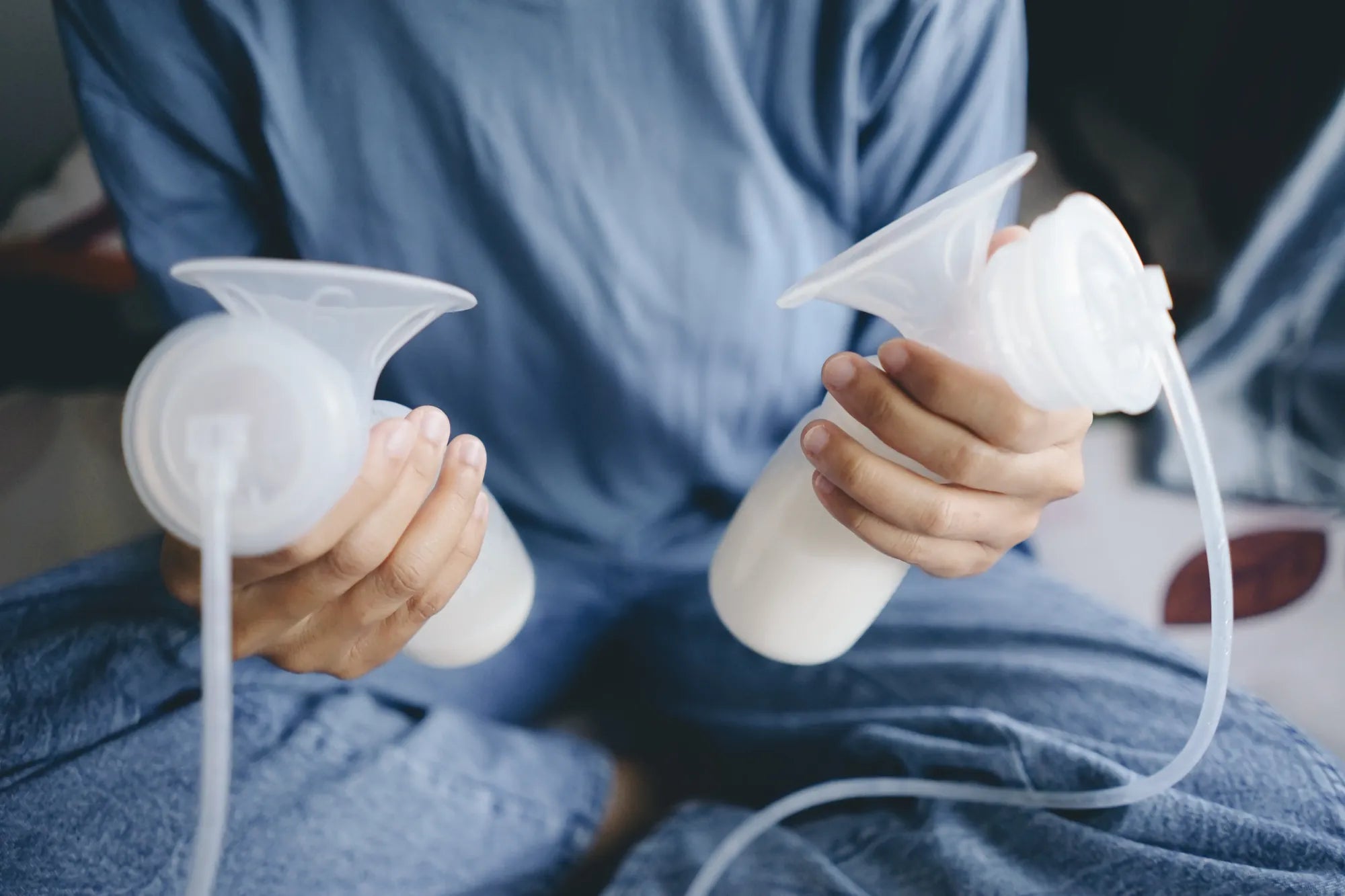
Can I Use My Breast Pump to Induce Labor? Exploring the Facts & Safety
You're past your due date, feeling incredibly pregnant, and searching for natural ways to get things moving. The question, "Can I use my breast pump to induce labor?" is a common and understandable one. This article will explore the facts, separating anecdotal hope from medical evidence, and detailing the significant risks involved. We will examine the physiological theory, review expert opinions and research, outline crucial safety warnings, and guide you toward the safe, intended uses of your breast pump in late pregnancy and beyond. Our goal is to provide you with the knowledge to make informed decisions in partnership with your healthcare provider.
The Physiology: Why Nipple Stimulation Is Linked to Labor
The theory connecting breast pumping to labor induction is rooted in basic human biology. Nipple stimulation triggers the release of oxytocin, often called the "love hormone." Oxytocin plays a dual role: it is responsible for the milk ejection reflex (let-down) during breastfeeding and is also the primary hormone that causes uterine contractions during labor.
This biological connection is why skin-to-skin contact and early breastfeeding are encouraged immediately after birth. The baby's suckling helps the uterus contract, reducing postpartum bleeding. The logic follows that if a baby's suckling releases oxytocin, then perhaps mechanical stimulation from a breast pump could do the same, potentially kickstarting labor.
Historically, various forms of natural induction have included nipple stimulation. It's a method mentioned in some older midwifery texts and passed through maternal advice networks. However, what is biologically plausible is not always medically advisable or effective without proper context and supervision.
The key distinction lies in control and timing. While the body's natural oxytocin release during labor is a complex, finely tuned process, forcing it via mechanical means can be unpredictable. This lack of control is at the heart of the safety concerns surrounding this practice.
Examining the Evidence: What Medical Research Actually Says
The medical community's view on using a breast pump to induce labor is cautious and nuanced. Some studies have investigated nipple stimulation as a method for cervical ripening, which is the process of softening and thinning the cervix before active labor begins.
A systematic review published in the Cochrane Database, a trusted source for medical evidence, found that nipple stimulation may reduce the incidence of postpartum hemorrhage and the need for formal medical induction. However, the authors noted the evidence was of low quality and emphasized the need for more rigorous research. They also cautioned about the risk of causing excessively long contractions.
Organizations like the American College of Obstetricians and Gynecologists (ACOG) do not list nipple stimulation via breast pump as a recommended method for self-induced labor. Medical induction in a hospital setting uses synthetic oxytocin (Pitocin), which is administered intravenously with continuous fetal monitoring. This allows medical professionals to control the dosage precisely and respond instantly to any signs of fetal distress or uterine overstimulation.
The consensus is clear: while the mechanism has a biological basis, using a breast pump to induce labor at home is not a reliable, safe, or recommended first-line method. It lacks the monitoring and control essential for the safety of both mother and baby. Any consideration of this technique should only occur under direct, explicit guidance from a healthcare provider in specific circumstances.
Critical Risks and Safety Warnings: Why "DIY Induction" Is Dangerous
Attempting to use your breast pump to induce labor without medical supervision carries serious, potentially life-threatening risks. Understanding these dangers is paramount for making a safe choice.
The most significant risk is uterine hyperstimulation or tetanic contraction. This occurs when the uterus contracts too frequently, too strongly, or for too long without adequate rest in between. A breast pump could theoretically cause a sustained, intense release of oxytocin, leading to contractions that don't relax properly.
Prolonged, tetanic contractions can severely compromise blood flow and oxygen to the baby, leading to fetal distress. This is an emergency situation requiring immediate medical intervention. At home, without electronic fetal monitoring, you cannot detect the signs of fetal distress, such as a dangerous change in the baby's heart rate.
Furthermore, inducing contractions before your body and baby are truly ready can lead to a long, exhausting, and ineffective labor that may still end in medical intervention. It can also increase the risk of uterine rupture in women with certain previous uterine surgeries. Critically, attempting this before 39 weeks of gestation can result in preterm birth, with all the associated health risks for a newborn.
When You Must Absolutely Avoid This Method
There are specific medical conditions where nipple stimulation for labor induction is particularly hazardous. You should never attempt this if any of the following apply to your pregnancy:
- High-Risk Pregnancy: Including conditions like preeclampsia, gestational diabetes, or IUGR (Intrauterine Growth Restriction).
- Multiple Pregnancy: Carrying twins, triplets, or more.
- Previous Uterine Surgery: This includes a prior C-section or myomectomy (fibroid removal), due to the risk of uterine rupture.
- Placenta Previa or Vasa Previa: Where the placenta covers or is abnormally close to the cervix.
- History of Preterm Labor: In your current or a past pregnancy.
- Your Healthcare Provider Has Advised Against It: For any other reason specific to your health.
If your due date has passed and you're feeling anxious, the safest course of action is to contact your doctor or midwife. They can perform assessments like a non-stress test or a cervical exam to determine if your body is showing signs of readiness and discuss safe, monitored induction options at the hospital.
A Safe and Beneficial Practice: Antenatal Colostrum Expression (ACE)
While using a breast pump to induce labor is risky, there is a safe, evidence-based, and highly beneficial way to use your pump in late pregnancy: Antenatal Colostrum Expression (ACE). This involves hand-expressing or gently pumping small amounts of colostrum—the first, nutrient-rich "liquid gold" milk—before your baby is born.
ACE is typically considered from around 36-37 weeks of pregnancy, but only after receiving explicit instruction and approval from your healthcare provider. It is not recommended for everyone and requires professional guidance to ensure it's safe for your specific pregnancy.
The benefits of ACE are substantial. It allows you to collect and freeze a small stash of colostrum. This can be invaluable if your baby has initial latching difficulties, needs supplementation for medical reasons (like low blood sugar), or if you are temporarily separated after birth. It also helps you practice hand-expression and become familiar with the sensation of milk release, building confidence for your breastfeeding journey.
When done correctly under guidance, ACE is a gentle process focused on collecting drops of colostrum, not on stimulating the nipples aggressively to provoke contractions. The goal is harvesting nourishment, not inducing labor. This is the primary safe application for a breast pump in the final weeks of a healthy, term pregnancy.
Choosing and Using Your Breast Pump for Postpartum Success
Your breast pump is a powerful tool designed for the postpartum period. Familiarizing yourself with it before birth can set you up for breastfeeding success, without the risks associated with trying to induce labor.
Preparing for a Smooth Breastfeeding Journey with MomMed
Before your baby arrives, you can unpack your MomMed pump, read the manual, and learn about its features. For instance, the award-winning MomMed S21 Double Wearable Breast Pump is designed for ultimate comfort and discretion. You can practice assembling the BPA-free, food-grade silicone flanges to ensure you understand the parts.
Understanding features like adjustable suction modes and cycle speeds is helpful. The S21's ultra-quiet motor and comfortable, personalized settings are engineered for effective milk removal once your milk comes in, which typically happens 2-4 days after birth. This pre-birth familiarization reduces stress and learning curve during the often-overwhelming newborn days.
Proper flange fit is crucial for comfort and efficiency. MomMed provides multiple flange size options because a correct fit prevents nipple pain and damage and ensures optimal milk output. You can use a printable sizing guide to estimate your size prenatally, knowing that your nipples may change after birth and lactation begins.
By focusing on these preparatory steps, you channel your prenatal energy into positive, safe actions that directly support your future feeding goals, whether you plan to breastfeed exclusively, pump, or combine both.
Comparison: DIY Pumping for Induction vs. Medical Induction
The table below clearly contrasts the dangerous "DIY" approach with a safe, medically supervised induction.
| Factor | Using a Breast Pump to Induce Labor (DIY/Unsupervised) | Medically Supervised Labor Induction |
|---|---|---|
| Control & Monitoring | No control over oxytocin release. No fetal or contraction monitoring. | Synthetic oxytocin (Pitocin) administered via IV with precise dosage control. Continuous electronic fetal and contraction monitoring. |
| Primary Risk | Uterine hyperstimulation, fetal distress, preterm labor (if before 39 weeks). | Risks are managed in real-time by medical staff. Protocols exist for overstimulation. |
| Setting & Safety Nets | At home, without immediate emergency care or intervention capabilities. | In a hospital labor & delivery unit with immediate access to emergency equipment, medications, and surgical teams if needed. |
| Professional Oversight | None. You are relying on anecdote and guesswork. | Constant oversight by obstetricians, nurses, and midwives. |
| Intended Outcome | To start labor through an unregulated biological trigger. | To safely initiate or augment labor for a specific medical indication or post-dates pregnancy. |
FAQ: Common Questions About Pumps, Pregnancy, and Labor
Q: Can pumping with my MomMed pump cause early labor?
A: Before 39 weeks of gestation, yes, it potentially can. Nipple stimulation releases oxytocin, which can trigger contractions. This is why it should be strictly avoided in the second and early third trimester unless specifically directed by your doctor for a rare medical reason (like preparing for a planned induction under monitoring).
Q: Is it safe to practice using my pump before the baby comes?
A> For learning the controls, assembly, and getting a sense of flange fit, yes, that is safe and encouraged. For actual expression that creates suction on the nipple, you should only do this with explicit guidance from your healthcare provider, typically only after 36-37 weeks for the purpose of Antenatal Colostrum Expression (ACE).
Q: I'm 40 weeks pregnant. What's the best use of my breast pump right now?
A> The safest and most beneficial use is to discuss ACE with your doctor or midwife. With their approval, you can gently hand-express or use the lowest, most comfortable setting on your pump to collect drops of colostrum to freeze for your newborn. Do not use it with the intent of starting labor.
Q: How will I know when to start pumping after the baby is born?
A> In the first few days, focus on frequent breastfeeding or hand-expression to establish your milk supply. You can introduce pumping, such as with the MomMed S12 or S21, when you need to create a stash for returning to work, have a need to increase supply, or if you and baby are separated. Starting a regular pumping routine is often recommended after breastfeeding is well-established, usually around 3-4 weeks postpartum.
Q: What if I accidentally trigger contractions while doing ACE?
A> Stop immediately. Drink a large glass of water, lie down on your left side, and time the contractions. If they are regular, painful, and increasing in frequency (e.g., every 10 minutes or less), contact your healthcare provider or go to the hospital for evaluation. This is why ACE must be done gently and with professional guidance.
Partnering with Your Care Provider for a Healthy Start
The desire to meet your baby is powerful, but the safety of you and your child must always come first. Using a breast pump to induce labor is not a safe DIY project; it is a biological intervention with real and significant risks that require hospital-grade monitoring. The evidence shows that while the theory is rooted in physiology, the practice is unreliable and dangerous outside of a controlled medical setting.
Your energy is better invested in safe, productive preparation. Discuss Antenatal Colostrum Expression with your care team. Take the time to learn about your breast pump, ensuring you have the right flange size and understand its operation. Build a support network and a postpartum plan. Trust that your body and your baby are on their own timeline, and the healthiest arrivals are those that begin with patience and professional partnership.
MomMed is here to support every step of your motherhood journey with reliable, innovative, and comfortable products designed for their intended purposes. From accurate early detection with our pregnancy tests to the discreet, efficient comfort of our wearable breast pumps, we provide tools you can trust for the moments that matter—after your baby makes their safe and healthy entrance into the world.
Shop the MomMed collection at mommed.com for all your breastfeeding and pregnancy needs, and embark on your journey with confidence and the right support.