


Inicio
Pregnancy, Breastfeeding, and Pumping: The Ultimate Guide for Moms
Are Breast Pumps Covered by Insurance? Your Complete 2024 Guide
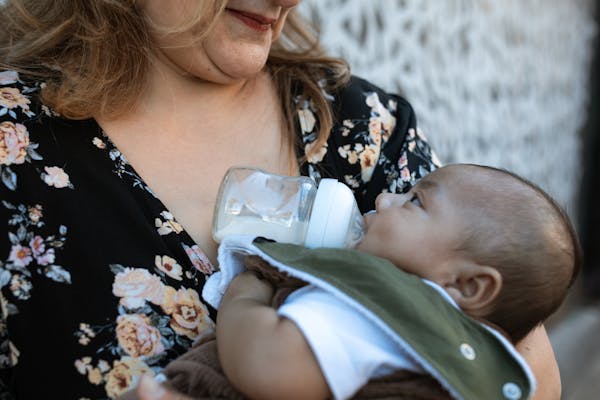
Are Breast Pumps Covered by Insurance? Your Complete 2024 Guide
Navigating Insurance for Breast Pumps
If you're planning to breastfeed and pump, your first question is likely: are breast pumps covered by insurance? The financial and logistical aspects of obtaining a pump shouldn't add stress to your journey. The good news is that, for most, the answer is yes—but the "how" involves some navigation. Thanks to the Affordable Care Act (ACA), access to a breast pump is a recognized preventive health benefit. However, the process, timing, and specific models covered vary wildly between insurance providers and plans.
This guide exists to demystify that process entirely. We'll walk you through the law, the different types of coverage, the exact questions to ask your insurer, and how to align insurance allowances with your real-life needs as a mom. As a trusted maternal and baby care brand, MomMed specializes in creating reliable, comfortable, and innovative products like our wearable breast pumps, designed to fit seamlessly into a mom's life. Understanding your insurance coverage is the first step to accessing the best tools for your breastfeeding journey.
Understanding the Law: Your Right to Coverage
The cornerstone of breast pump insurance coverage is the Affordable Care Act (ACA). Enacted in 2010, the ACA mandates that most private health insurance plans and Medicaid expansion plans provide coverage for breastfeeding support, supplies, and counseling without cost-sharing. This means no copay, coinsurance, or deductible should apply when obtaining a breast pump through your plan's approved channels. It's classified as a women's preventive service.
However, critical nuances exist. First, grandfathered health plans—those that existed before March 23, 2010, and have made minimal changes—are exempt from this mandate. If you have such a plan, you'll need to check your benefits directly. Second, while the ACA sets a federal floor, it does not specify the type of pump (e.g., manual vs. electric, standard vs. wearable) or the frequency of replacement. This leaves significant discretion to individual insurance companies.
For Medicaid recipients, coverage is governed by state law. All states are required to provide breast pump coverage to pregnant and postpartum individuals enrolled in Medicaid, but the extent and process differ. Some states offer robust coverage through DME providers, while others may have more limited options. Checking with your state's Medicaid program is essential.
Ultimately, the law establishes your right to a pump, but the execution is managed by your insurer. They determine the network of providers, the brands they contract with, and whether they offer a rental hospital-grade pump or a personal use electric pump. Knowing this framework empowers you to have informed conversations with your insurance company.
Types of Coverage: What Your Insurance Plan Might Offer
Insurance companies typically administer breast pump benefits through one of three primary models. Understanding which model your plan uses is crucial for a smooth process. The most common is the Direct Shipment from an In-Network Durable Medical Equipment (DME) Provider. In this model, your insurance has contracted with specific suppliers. You must order your pump through one of these in-network companies, often from a pre-selected catalog of models.
The second model is Reimbursement. Here, you have the freedom to purchase your breast pump from any retailer, including directly from brands like MomMed. You pay upfront and then submit a claim to your insurance for reimbursement. This requires more paperwork—including an itemized receipt, a prescription, and often a Letter of Medical Necessity (LMN)—but offers the greatest choice in pump selection.
A third, less common model is through a Retail Pharmacy or Medical Supply Benefit. Some plans allow you to pick up a covered breast pump directly from a participating pharmacy or a major retail chain's medical supply section, similar to how you'd get crutches or a blood pressure monitor. The available inventory here can be very limited.
Your plan documents or a call to customer service will reveal your path. Many insurers use a hybrid approach, offering a basic pump through a DME but allowing an upgrade to a more advanced model (like a hands-free wearable) for an additional out-of-pocket fee or through the reimbursement pathway with a spending cap.
The In-Network DME Provider Route
This is the most streamlined path for many. To start, you'll need to contact your insurance or check your online portal to identify their approved Durable Medical Equipment (DME) providers. Popular national DMEs include Aeroflow Breastpumps, Edgepark, and Byram Healthcare. You'll then visit that DME's website, enter your insurance information, and often need to upload a prescription from your healthcare provider.
The DME will verify your eligibility and present you with a selection of pumps that are fully covered under your plan. This catalog is determined by the contracts between the insurer and pump manufacturers. It may not include every brand or the latest wearable models. Your choice might be between a few standard electric pumps. It's important to ask the DME representative if they can facilitate an upgrade or if your plan allows you to choose a pump outside their standard catalog.
The advantage of this route is convenience: no upfront cost and the DME handles all the insurance billing. The pump is shipped directly to your door. The disadvantage is potential limitation in choice. You may not see innovative options like MomMed's S21 Wearable Pump listed, but it's always worth inquiring if they can source specific brands.
The Reimbursement Process Explained
If you desire a specific pump not offered by your insurer's DME, the reimbursement path is your avenue. The first step is obtaining a prescription and a Letter of Medical Necessity (LMN) from your OB-GYN, midwife, or pediatrician. The LMN should state that a breast pump is medically necessary for breastfeeding. While the ACA considers it preventive, some insurers still require this documentation for reimbursement claims.
Next, purchase your pump from an authorized retailer. Ensure you get a detailed, itemized receipt showing the pump model, serial number (if applicable), and date of purchase. You will then need to download and complete your insurance company's claim form (usually a CMS-1500 or similar). Submit the claim form, itemized receipt, prescription, and LMN to the address provided by your insurer.
Reimbursement can take 4-8 weeks. Be aware that most plans have a spending cap or "allowable amount" for breast pumps. If you purchase a pump that costs $300 but your plan's allowable amount is $200, you will only be reimbursed $200 and are responsible for the $100 difference. Always confirm this amount before purchasing.
What to Ask Your Insurance Provider: The Essential Checklist
Arming yourself with the right questions turns a confusing call into a productive one. Here is your essential checklist for contacting your insurance provider:
- Is a breast pump a covered benefit under my specific plan? Confirm you are not on a grandfathered plan.
- What is my coverage type? Do I need to use an in-network DME provider, or can I seek reimbursement?
- Do I need a prescription or a Letter of Medical Necessity (LMN)? If so, what specific wording is required?
- What is the timing? Can I get my pump before my due date (often 30-90 days prior), or only after delivery?
- Are there specific pump brands or models covered? Can you provide a list? Is MomMed or other wearable pump brands in your network?
- Is there a spending cap or allowable amount? What is the maximum reimbursable amount if I go the reimbursement route?
- Does coverage include accessories? Are milk storage bags, replacement parts, or extra collection cups covered?
- What is the process for a hospital-grade rental if medically needed (e.g., for premature birth, low milk supply)?
Write down the representative's name, reference number for the call, and the date. This creates a paper trail if any discrepancies arise later.
Choosing the Right Pump: Aligning Insurance with Your Needs
Insurance coverage is one factor; your lifestyle is another. The ideal pump balances what's available through your benefit with what will make your daily routine sustainable. Common pump types include hospital-grade rentals (for establishing supply or exclusive pumping), standard electric double pumps (the workhorse for many moms), and the increasingly popular hands-free wearable pumps.
Insurance typically covers a standard electric double pump. However, the innovation in the wearable pump category has been a game-changer for modern mothers. If you plan to return to work, have other children to care for, or simply value mobility and discretion, a wearable pump can significantly impact your pumping consistency and comfort. While not all DME catalogs feature them yet, many insurers will cover them under a reimbursement model or as an upgrade.
When evaluating pumps, consider key features: suction strength and patterns (simulating a baby's natural rhythm), portability, noise level, ease of cleaning, and flange fit. A proper flange fit is critical for comfort and efficient milk removal; many pumps, including MomMed's, come with multiple flange size options. Pain or low output is often a sign of incorrect flange size, not the pump itself.
Your pumping schedule will also influence choice. If you'll be pumping multiple times a day at work, a efficient, comfortable, and discreet pump is paramount. This is where advocating for a pump that fits your life, not just your insurance's basic catalog, becomes important.
Why a Wearable Pump Like MomMed S21 is a Game-Changer
Wearable pumps represent a significant evolution in breast pump technology, directly addressing common pain points for pumping moms. A model like the MomMed S21 Double Wearable Breast Pump offers complete hands-free operation with quiet, powerful motors built into each cup. This allows you to pump while working at your computer, making dinner, or caring for your older child—activities that are nearly impossible with tubes and bottles dangling from a traditional pump.
The benefits are profound for mental and practical well-being. The discretion afforded by a wearable pump can reduce stress for moms pumping in shared workplaces or public spaces. Comfort is enhanced through customizable suction settings and soft, BPA-free silicone flanges that come in multiple sizes. Efficient milk removal supports healthy milk supply, which is the core medical purpose insurance is meant to support.
From an insurance perspective, a wearable pump like the S21 is a legitimate medical device that facilitates breastfeeding. When discussing options with your DME or insurance, frame it as the tool that will enable you to successfully meet your breastfeeding goals within your lifestyle. Many insurers are updating their formularies to include these innovative models because they recognize their value in supporting sustained breastfeeding.
The Step-by-Step Guide to Getting Your Pump
Follow this chronological guide to navigate the process from start to finish.
Step 1: Contact Your Insurance (During Pregnancy). Don't wait until after birth. Call the member services number on your insurance card and use the checklist above. Determine if you use a DME or reimbursement path.
Step 2: Obtain Your Prescription. Request a prescription and LMN from your prenatal care provider at around 28-32 weeks. Specify if you have a desired pump model in mind for the LMN.
Step 3: Engage with Your DME or Make a Purchase. If using a DME, go to their website, enter your details, and upload your prescription. Browse their catalog. If seeking reimbursement, research and purchase your chosen pump from a reputable retailer like mommed.com.
Step 4: Select Your Pump. Don't just accept the default option. Ask the DME representative about all available models, including wearable options or the possibility of ordering a specific brand like MomMed. Compare features against your needs.
Step 5: Submit Required Paperwork. For DME, they handle this. For reimbursement, compile your claim packet (receipt, prescription, LMN, claim form) and submit it promptly after purchase.
Step 6: Receive and Test Your Pump. Once your pump arrives, familiarize yourself with its parts, settings, and cleaning instructions before you need it. Ensure you have the correct flange size for comfortable, effective use.
Common Questions and Hurdles (FAQ)
Q: When can I actually get my pump?
A: Most insurers allow you to order or be eligible for reimbursement 30-90 days before your due date. This is ideal, as having it ready for potential early arrival or immediate use postpartum is helpful. Some plans still require proof of birth, so check your policy.
Q: What if my insurance denies my claim?
A> First, get the denial reason in writing. Common reasons are missing documentation, using an out-of-network provider without authorization, or attempting to get a pump before the allowed timeframe. You can appeal the decision, often starting with a phone call and submitting any missing documents. If you have a grandfathered plan, you may need to explore using HSA/FSA funds.
Q: Are pump accessories covered?
A> Coverage for accessories like milk storage bags, replacement valves, membranes, and tubing is inconsistent. Some plans offer an annual allowance for supplies (e.g., $50-$100), while others do not cover them at all. Always ask specifically about accessory benefits. These are often eligible for purchase with HSA or FSA funds.
Q: Can I use my HSA or FSA to pay for a pump or parts?
A> Yes. Breast pumps and related supplies are qualified medical expenses under both Health Savings Accounts (HSAs) and Flexible Spending Accounts (FSAs). This is especially useful if you have out-of-pocket costs from an upgrade, if your plan has a deductible for DME, or if you need to buy replacement parts.
Q: How does MomMed assist customers with insurance?
A> MomMed provides customers with the necessary documentation, including detailed invoices and product information, to streamline the reimbursement process. Our customer support team can guide you on what information your insurer typically requires. We are also actively working to become an in-network provider with major insurance DME networks to make access even easier.
Insurance Coverage & Pump Type Comparison
| Pump Type | Typical Insurance Coverage | Best For | Pros | Cons |
|---|---|---|---|---|
| Hospital-Grade Rental | Often covered with LMN for medical need (preemie, low supply) | Establishing milk supply, exclusive pumping, NICU moms | Most powerful suction, multiple users | Not for long-term personal use, bulky, requires rental fee/return |
| Standard Electric Double | Most commonly covered model via DME | Primary daily pump, budget-conscious moms | Reliable, effective, often fully covered | Less portable, can be noisy, requires sitting near outlet |
| Wearable/Hands-Free (e.g., MomMed S21) | Increasingly covered via reimbursement or as DME upgrade | Working moms, on-the-go, multitasking, seeking discretion | Ultimate portability & discretion, promotes mobility | May have out-of-pocket cost if exceeding allowance, parts can be smaller/more numerous |
| Manual Pump | Sometimes covered as a supplemental benefit | Occasional use, backup, travel | Inexpensive, portable, no power needed | Physically tiring, not efficient for regular pumping |
Empowering Your Breastfeeding Journey
Securing a quality breast pump through your insurance is more than a paperwork exercise—it's about claiming a benefit designed to support your health and your baby's. You have a right to a tool that makes your breastfeeding goals achievable within the context of your real life. Don't hesitate to be your own advocate: ask detailed questions, understand your options, and if your insurer's standard offering doesn't meet your needs, explore the reimbursement path for a pump that does.
Investing time now to understand the answer to "are breast pumps covered by insurance?" pays dividends in postpartum comfort and confidence. Whether you choose a powerful standard pump or advocate for a wearable innovator like the MomMed S21, the goal is the same: effective, comfortable, and sustainable milk expression to nourish your child. Your journey is unique, and your pump should be a support, not a hurdle.
Ready to explore a pump that fits your life? Shop the MomMed collection at mommed.com for all your breastfeeding and pregnancy needs, from our award-winning S21 Wearable Pump to essential nursing accessories and baby care essentials. Our team is here to help you navigate your choices and provide the products trusted by thousands of moms.