


Home
Pregnancy, Breastfeeding, and Pumping: The Ultimate Guide for Moms
Can You Take Pumped Breast Milk Through Airport Security? The Complete Guide
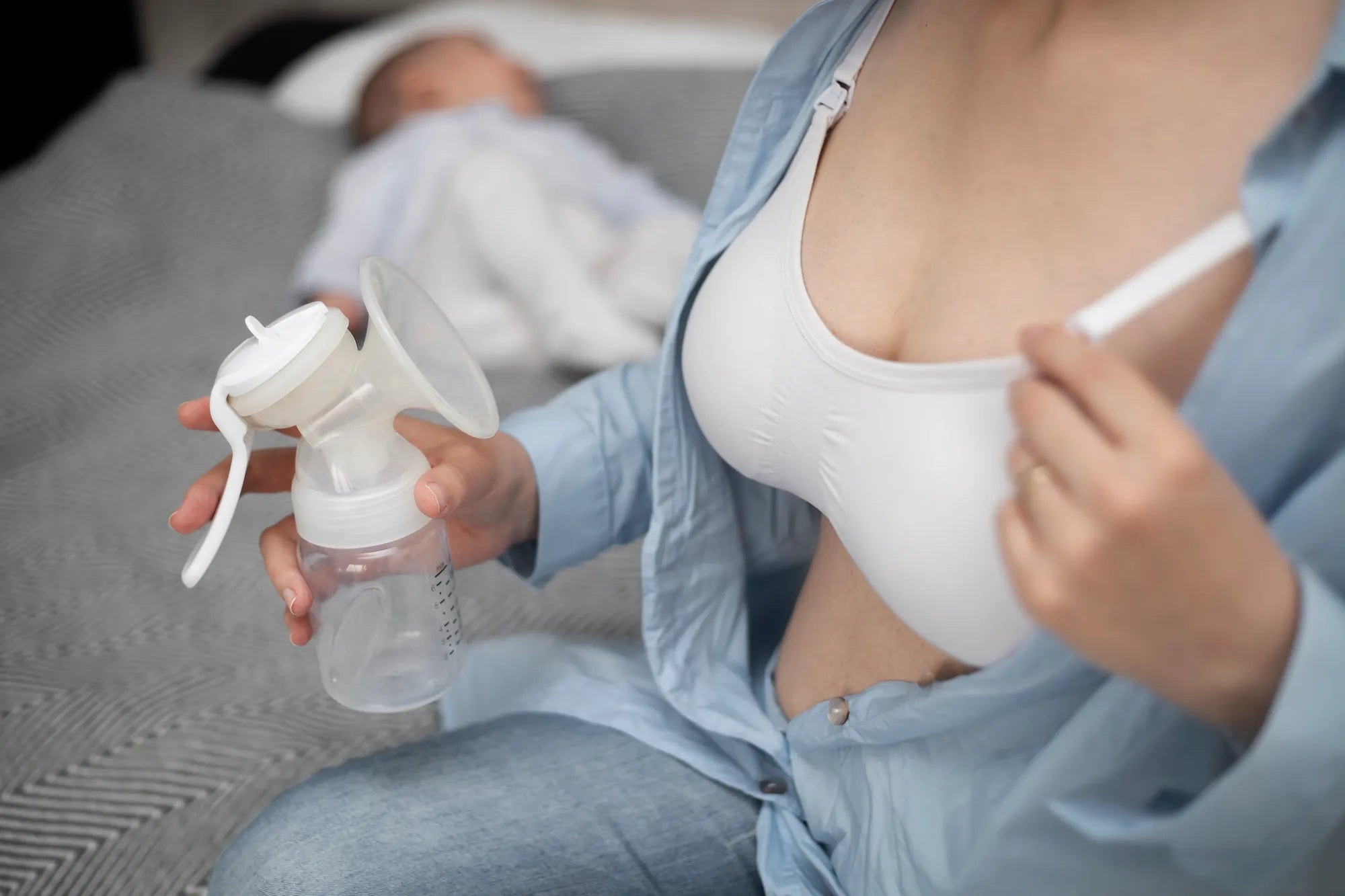
Can You Take Pumped Breast Milk Through Airport Security? The Complete Guide
Traveling with Liquid Gold – Your Guide to Airport Security and Breast Milk
The anxiety is real. You've meticulously pumped and stored ounces—or perhaps gallons—of precious breast milk, and now you face the daunting prospect of airport security. The question, 'Can you take pumped breast milk through airport security?' echoes in every traveling parent's mind. The unequivocal answer is yes. This guide provides clear, evidence-based guidance from official TSA regulations to practical packing strategies, empowering you to navigate checkpoints with confidence and ensure your baby's nourishment travels safely with you.
Transporting breast milk is protected under U.S. federal regulations. Understanding these rules is your first line of defense against unnecessary stress or confusion. We will walk you through the exact language used by the Transportation Security Administration (TSA), how to prepare your milk, and what to expect during screening.
Whether you're traveling with your infant, flying solo as a pumping parent, or carrying milk home for your baby, the protocols are designed to accommodate you. Preparation is key. From choosing the right cooler to communicating effectively with TSA officers, every detail matters. This article will cover all aspects, including the specific advantages of using a wearable breast pump like the MomMed S21 during your journey.
Our goal is to replace uncertainty with a clear, actionable plan. You have the right to travel with breast milk and formula. Let's ensure you can exercise that right smoothly, turning a potential travel hurdle into a simple, manageable process.
Understanding TSA Regulations for Breast Milk and Formula
The cornerstone of traveling with breast milk is the TSA's special procedures. Critically, breast milk, formula, and toddler drinks are exempt from the standard 3.4-ounce (100ml) liquid rule for carry-on baggage. This exemption is clearly stated on the TSA website and is a federal security directive.
This rule applies regardless of whether the traveling parent is accompanied by an infant or child. This is a vital point for pumping mothers traveling for work, bereavement, or other reasons without their baby. You do not need to prove the presence of a child to transport your milk. The policy recognizes the effort and value of expressed milk.
Quantities are defined as "reasonable quantities." While not a strict numerical limit, this generally means an amount consistent with the duration of your travel and your baby's feeding schedule. Traveling with a day's worth of milk is straightforward. Transporting a deep freezer's stock for an international move requires more planning and communication, but is still permissible.
The exemption also fully covers juice for toddlers and all types of infant formula (powdered, liquid concentrate, and ready-to-feed). Ice packs, freezer packs, and other cooling accessories required to keep these liquids cool are also allowed, whether they are frozen solid or gel-based. They must be presented alongside the milk for inspection.
How to Prepare and Pack Your Pumped Milk for Security
Proper preparation transforms the security experience from chaotic to calm. Start by selecting your storage vessels. Use pre-sterilized, BPA-free breast milk storage bags or sealed bottles. MomMed's food-grade silicone and BPA-free storage solutions are designed for safety and leak prevention, making them excellent travel companions. Clearly label bags or bottles with the date and volume.
Organize your milk for easy inspection. Place all milk containers and cooling elements in a clear, quart-sized plastic bag or a dedicated cooler bag with a clear panel. While not always mandatory, this proactive step signals to TSA officers that you are prepared and familiar with the procedures, facilitating a smoother process. Keep this bag easily accessible in your carry-on, not buried at the bottom.
For cooling, use ice packs or frozen gel packs. Ensure they are completely frozen solid when you arrive at security. Partially thawed packs may be subject to additional screening as they can appear as a gel/liquid on the X-ray. A small tip: freeze a few ounces of milk in a storage bag to use as an extra ice pack that can later be thawed and fed.
Pack all pumping equipment—flanges, valves, connectors, and bottles—in a separate clean bag. If any parts have residual milk moisture, it's advisable to pack them with your liquids bag. Your breast pump itself, whether a hospital-grade model or a wearable pump like the MomMed S21, is considered a personal medical device and should be carried in your hand luggage.
The Security Checkpoint Process: A Step-by-Step Walkthrough
When you approach the security line, your mindset should be one of calm declaration. As you place your bins on the conveyor, immediately and clearly inform the first TSA officer you see: "I am carrying breast milk and ice packs in my carry-on." Use direct, simple language. This declaration triggers the special screening protocol.
You will be directed to a separate screening area for your milk and cooler bag. A TSA officer will inspect the items. Standard procedure involves a visual inspection of the containers. The officer may ask you to open a container. You have the right to open it yourself to maintain sterility. They may also perform a vapor test using a small swab to check for explosive residues.
This test is quick and safe. The officer will swab the outside of a few containers or your hands and then insert the swab into a Trace Detection machine. It does not contaminate your milk. If you are uncomfortable with any part of the process, you have the right to request a private screening and/or that the officer change their gloves before handling your items.
Your pump and other equipment will go through the X-ray machine. Once cleared, you can repack your items. The entire process typically adds only 5-10 minutes. Remember, TSA officers are trained in these procedures. Politeness and preparedness on your part are met with efficiency on theirs.
Pro-Tip: Traveling with Your Wearable Breast Pump
For the modern pumping parent, a wearable pump is a travel game-changer. Devices like the MomMed S21 Double Wearable Breast Pump offer unparalleled discretion and convenience. When packing, ensure the pump's collection cups and bottles are clean and dry. The motor unit and charging cables are standard electronics.
At security, you can wear the pump or carry it in your bag. If there is any residual milk in the cups, declare it as part of your liquids. The primary advantage shines during travel delays or long flights. You can pump discreetly and comfortably without needing a private lactation room, maintaining your pumping schedule to protect your milk supply.
The ultra-quiet motors of quality wearable pumps prevent drawing attention. This allows you to manage engorgement, maintain output, and store fresh milk even while in transit. Always carry a portable power bank to ensure your pump stays charged throughout your journey, making your travel experience significantly more manageable and less stressful.
Travel Considerations: Fresh vs. Frozen Milk and Long Journeys
The state of your milk—fresh or frozen—dictates your packing strategy. Fresh milk (cooled or at room temperature for less than 4 hours) must be kept cold. Use a well-insulated cooler with frozen ice packs. The CDC states fresh milk can be kept in a cooler with frozen ice packs for up to 24 hours. Upon arrival, use it immediately or refrigerate.
Frozen milk is ideal for longer journeys. Pack it tightly in a hard-sided cooler filled with frozen gel packs. The goal is to keep it completely frozen until you can transfer it to a freezer. A high-quality cooler can keep milk frozen for 24-48 hours. Do not refreeze milk that has completely thawed; it must be used within 24 hours if refrigerated.
For international or multi-leg journeys, research is crucial. While the TSA governs U.S. departure, your destination country's aviation security authority sets the rules for arrival. Most follow similar exemptions, but confirm on their official website. For extremely long hauls, you may need to plan for mid-journey pumping and temporary storage, or even shipping milk commercially as a backup plan.
Always have a contingency plan. Know the location of baby care rooms or family restrooms in your departure and arrival airports. Carry a small kit with dish soap, a bottle brush, and disposable baggies for cleaning pump parts on the go. Staying hydrated and relaxed is also essential for maintaining your milk supply while traveling.
Navigating Common Challenges and Special Scenarios
Even with preparation, unique situations can arise. A common challenge is encountering a TSA officer who is less familiar with the specific regulations. In this case, remain calm and polite. You can ask to speak to a supervisor (TSA Lead Officer or Passenger Support Specialist) who will have more detailed knowledge of the medical exemptions.
What if your ice packs are not fully frozen? If they are slushy, they may be treated as a gel/liquid and subject to the 3.4-ounce rule. This is why starting with rock-solid packs is critical. You can purchase ice after security, but having your own frozen packs is more reliable. Some airports may have facilities to refreeze them, but don't count on it.
Traveling with a large volume of milk, such as a donor milk shipment or a freezer stash for an extended separation, requires advanced notice. While not required, contacting TSA Cares (1-855-787-2227) 72 hours before travel can provide guidance and potentially smooth the process for transporting medically necessary liquids in large quantities.
For parents dealing with low milk supply or conditions like mastitis, the stress of travel can exacerbate issues. Using a comfortable, efficient pump like the MomMed Swing with its adjustable suction and rhythm can help maintain pumping efficiency. Remember to pack all medications, and consider wearing comfortable, accessible clothing to manage pumping and potential discomfort.
Comparison: Traveling with Breast Milk vs. Other Baby Liquids
| Aspect | Breast Milk (Pumped) | Infant Formula (Ready-to-Feed) | Baby/Toddler Food Pouches | Water for Formula Mixing |
|---|---|---|---|---|
| TSA Exemption Status | Fully exempt from 3.4 oz rule | Fully exempt from 3.4 oz rule | Exempt if for baby/toddler | Not exempt; subject to 3.4 oz rule unless medically necessary |
| Need for Child Present | Not required | Not required | May be questioned | Subject to standard rules |
| Screening Method | Visual inspection, possible vapor test | Visual inspection, possible vapor test | Usually X-ray only | X-ray, may require disposal if over limit |
| Cooling Elements Allowed | Yes, ice/freezer packs | Yes, ice/freezer packs | Not typically needed | No |
| Recommended Preparation | Declare immediately, use clear bag | Declare immediately, keep sealed | Keep accessible in clear bag | Buy after security or pack in 3.4 oz containers |
Frequently Asked Questions (FAQs) for Peace of Mind
1. Do I need to bring my baby with me to take pumped milk through security?
No. TSA regulations explicitly state that a child does not need to be present for you to carry breast milk, formula, or toddler drinks. This policy supports pumping parents who travel for work, personal reasons, or are transporting milk to their child.
2. Can I bring ice packs or cooler bags? What if they are partially thawed?
Yes, ice packs, freezer packs, and gel packs are allowed to keep milk and formula cool. They are permitted whether frozen or gel-based. For the smoothest process, ensure they are completely frozen solid at the checkpoint. Partially thawed packs may be subject to additional screening as they can resemble a gel.
3. Is it safe to put pumped milk in checked luggage?
It is strongly discouraged. Checked luggage is exposed to extreme temperature fluctuations and rough handling, which can compromise the milk's safety and quality. More importantly, bags can be lost or delayed. Always keep your "liquid gold" in your carry-on where you can control its temperature and security.
4. Is there a limit to how much breast milk I can bring?
The TSA uses the term "reasonable quantities" for the duration of your trip. There is no stated ounce limit. For typical travel, this is not an issue. If you are transporting a very large volume (e.g., a freezer stash), be prepared to explain it calmly. It is advisable to contact TSA Cares ahead of time for such scenarios.
5. Do the same rules apply for international flights departing from or arriving in the USA?
Yes, for flights departing from U.S. airports, TSA rules apply. For international flights arriving in the USA, you have cleared foreign security. However, when traveling to another country, you must check that nation's specific aviation security website for their rules on carrying liquids like breast milk, as they may have different procedures for inbound passengers.
Conclusion: Embark on Your Journey with Confidence
Navigating airport security with pumped breast milk is a manageable process when armed with knowledge and a plan. The key takeaways are clear: know your rights under TSA regulations, declare your liquids immediately, pack thoughtfully for easy inspection, and communicate calmly with officers. Your dedication to providing breast milk for your child should not be a barrier to travel.
Investing in reliable, travel-friendly gear makes all the difference. A wearable pump like the MomMed S21 provides the freedom to maintain your routine anywhere, while BPA-free storage bags ensure your milk stays safe. Remember, you are far from alone in this experience. Thousands of parents transport breast milk through airports every day, supported by established policies.
Focus on your journey and your baby's needs, not on uncertainty. With this comprehensive guide, you can transform a source of pre-travel anxiety into a simple, routine step. Pack your bags, secure your milk, and step forward confidently, knowing you are fully prepared to take your pumped breast milk through airport security.
Ready to travel with ease? Shop the MomMed collection at mommed.com for all your breastfeeding and pregnancy needs, including our award-winning S21 Wearable Breast Pump, BPA-free storage solutions, and essential nursing accessories designed for the on-the-go parent.