


Startseite
Pregnancy, Breastfeeding, and Pumping: The Ultimate Guide for Moms
How Much Pumped Breast Milk for Newborn: A Complete Guide
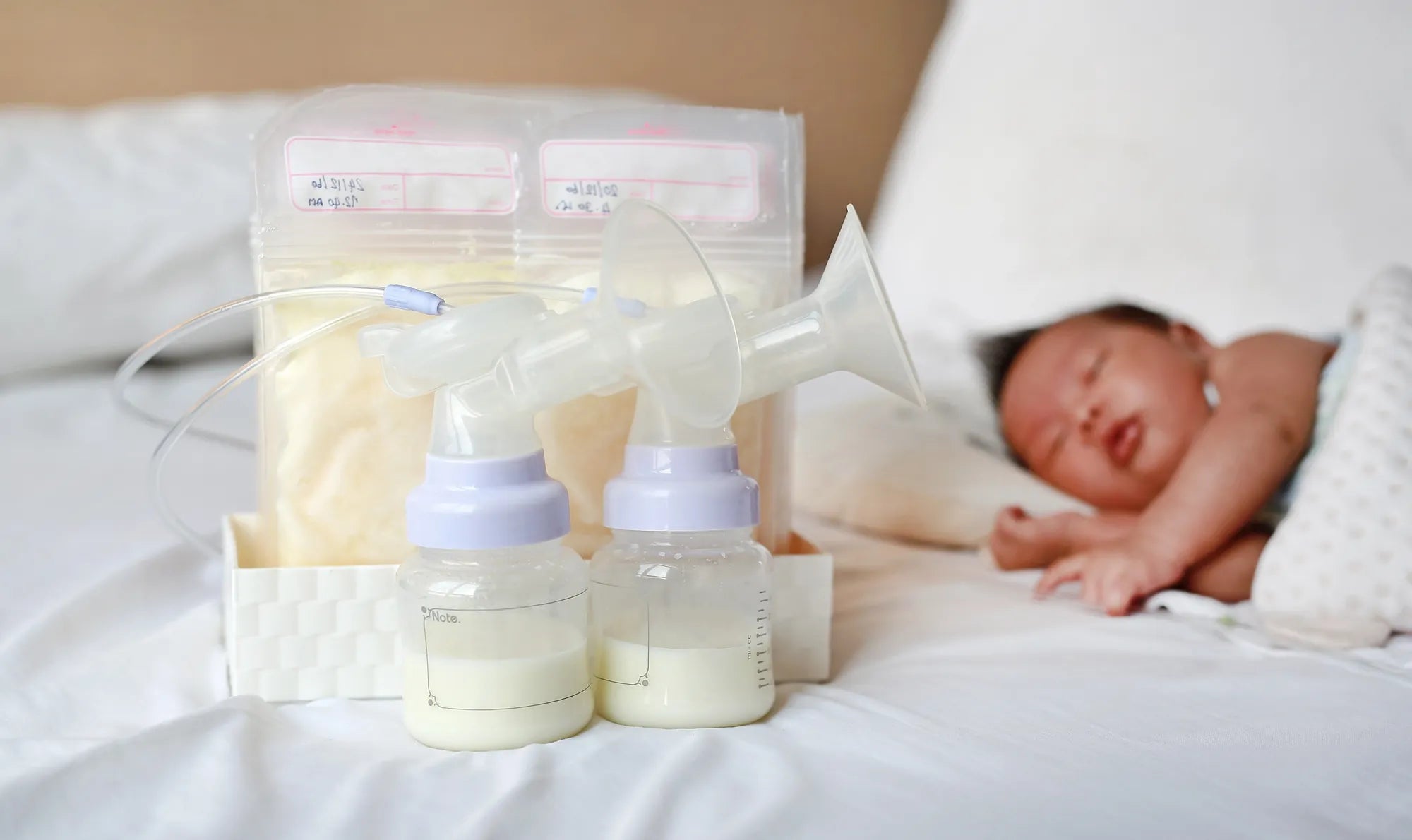
How Much Pumped Breast Milk for Newborn: A Complete Guide
Figuring out how much pumped breast milk your newborn needs can feel like solving a complex puzzle. You're dedicated to providing breast milk, but without the direct feedback of nursing, questions about ounces and schedules can create real anxiety. This guide cuts through the confusion with clear, data-driven answers. You'll learn exactly how much breast milk newborns typically consume, how to calculate your baby's personal needs, and the essential techniques for bottle-feeding breastfed babies successfully. We'll also cover how to protect your milk supply while pumping and how the right tools can make this journey more manageable.
Understanding Newborn Stomach Size and Growth
A newborn's stomach is remarkably small at birth, which is why frequent, small feedings are the biological norm. Understanding this growth helps set realistic expectations for how much milk to prepare in each bottle. The capacity expands rapidly in the first days and weeks of life.
On day one, a newborn's stomach is about the size of a cherry or marble, holding just 5-7 milliliters (mL). This is why the first milk, colostrum, is produced in small, concentrated amounts. By day three, the stomach grows to the size of a walnut, with a capacity of about 22-27 mL. By the end of the first week, it's similar to an apricot, holding around 45-60 mL.
This gradual expansion is why feeding schedules should start with tiny amounts. Offering a large bottle to a day-old baby can easily lead to overfeeding, as their stomach cannot accommodate it. The small capacity is also why newborns need to feed 8-12 times in 24 hours—they are designed to consume little and often.
By one month old, a baby's stomach size stabilizes at about the size of a large egg, with a capacity of 80-150 mL. This growth pattern underscores a key principle: your pumping and feeding strategy must evolve with your baby. The amounts that seemed vast in week one will become a single feeding by month one.
General Guidelines: How Much Pumped Milk Per Feeding by Age
While every baby is unique, research and lactation science provide reliable averages for how much pumped breast milk a newborn needs per feeding. These guidelines are a starting point, not a rigid rule. Always prioritize your baby's hunger and fullness cues over any chart.
From Birth to One Month (The Fourth Trimester)
The first month is a period of rapid adjustment. Intake increases quickly as your milk transitions from colostrum to mature milk and your baby grows. A useful rule of thumb is to offer 1 to 1.5 ounces (30 to 45 mL) for every hour since the last feeding.
Here is a typical progression for single feeding amounts:
- Days 1-3: 5-15 mL (approx. 0.2-0.5 oz) of colostrum per feed. Focus on frequency, not volume.
- Days 4-7: 30-60 mL (1-2 oz) per feeding as mature milk "comes in."
- Weeks 2 & 3: 60-90 mL (2-3 oz) per feeding.
- Week 4 onward: 90-120 mL (3-4 oz) per feeding may become common.
During this period, expect to offer 8-12 bottles in a 24-hour period. It's better to prepare smaller bottles (e.g., 2 oz) and offer more if baby is still hungry than to waste larger amounts. Breast milk is digested quickly, so a 2-3 hour feeding rhythm is standard.
One to Six Months
After the first month, a baby's daily milk intake surprisingly stabilizes even as they grow. From about 1-6 months, most exclusively breastfed babies will consume an average of 25 ounces (750 mL) per day, with a typical range of 19-30 ounces (560-900 mL).
The amount per feeding may increase slightly, but the primary change is the baby's efficiency. They become faster, stronger drinkers. You may find your 3-month-old still takes 3-4 oz per feeding but finishes in 10 minutes instead of 30. The number of feedings often decreases to 7-9 times in 24 hours.
This plateau occurs because breast milk composition changes to meet the baby's needs; it doesn't dilute as the baby grows. Therefore, you should not expect to need to constantly increase bottle sizes linearly. If your baby consistently drains larger bottles (e.g., over 5 oz) and still seems hungry, consult with a lactation consultant to assess feeding technique.
Key Principles for Feeding a Newborn Pumped Milk
How you feed your newborn pumped milk is just as important as how much you feed. Breastfed babies are accustomed to controlling the flow at the breast, and bottle-feeding requires techniques that mimic this experience to prevent overfeeding and support healthy development.
Pace Feeding is Non-Negotiable
Paced bottle feeding is a method that puts the baby in control of the feeding pace, similar to breastfeeding. It helps prevent overfeeding, reduces gas and spit-up, and makes switching between breast and bottle easier.
To practice paced feeding: hold your baby upright, not cradled back. Use a slow-flow newborn nipple. Hold the bottle horizontally so milk only fills the nipple when the baby actively sucks. Every 10-20 seconds, or when you see a steady suck-swallow pattern, tip the bottle down to stop the flow, allowing the baby to pause and breathe. Watch for signs of fullness and end the feeding there, even if milk remains.
Reading Your Baby's Hunger Cues, Not Just the Ounce Mark
Bottles should be offered in response to early hunger cues, not on a strict schedule. Early cues include stirring, rooting (turning head with open mouth), and hand-to-mouth movements. Mid-stage cues are more active: stretching, increased physical movement, and soft cooing or squeaking. Crying is a late cue; it's best to try to feed before this point.
Similarly, watch for signs of fullness: turning head away, sealing lips, slowing sucking, pushing the bottle away, falling asleep with a relaxed body, and spitting out the nipple. Respecting these cues teaches baby to listen to their body's satiety signals, which is a critical lifelong skill.
How to Calculate Daily Needs Based on Weight
A reliable pediatric guideline for calculating a newborn's total daily milk requirement is based on weight. The standard calculation is 2.5 ounces of breast milk per pound of body weight per day (or approximately 165 mL per kilogram).
To use this formula: Weigh your baby. Multiply their weight in pounds by 2.5. The result is the total ounces they likely need in a 24-hour period. Then, divide that total by the number of typical feedings to get a per-feeding estimate.
Example: A 9-pound baby.
9 lbs x 2.5 oz = 22.5 total ounces per day.
If feeding 8 times: 22.5 oz / 8 = ~2.8 oz per feeding.
If feeding 10 times: 22.5 oz / 10 = ~2.25 oz per feeding.
This is a guideline for healthy, full-term infants. Always use it in conjunction with monitoring diaper output and weight gain, and discuss any concerns with your pediatrician.
Special Considerations for Pumping Moms
When you're providing breast milk via bottle, you're managing two sides of the equation: your baby's intake and your own milk production. A successful pumping journey requires strategies to ensure these remain in sync.
Building and Maintaining Your Supply
In the critical first 4-6 weeks, your body uses the frequency of milk removal to determine how much milk to make. To establish a robust supply, plan to pump 8-12 times in 24 hours, roughly matching what a newborn would nurse. This often means pumping every 2-3 hours, with one longer stretch at night (no more than 4-5 hours).
Pump until the milk stops flowing, then continue for 1-2 minutes to provide additional stimulation. Hands-on pumping—gently massaging and compressing your breasts before and during pumping—can significantly increase output and efficiency. Consistency in the early weeks is far more important than the length of any single session.
The Role of Comfort and Efficiency: How MomMed Supports Your Journey
Consistent pumping depends heavily on comfort and convenience. Discomfort can lead to skipped sessions, which can impact supply. An efficient pump that effectively removes milk signals your body to produce more. This is where innovative, mom-centric design makes a profound difference.
MomMed, a trusted maternal and baby care brand, engineers products specifically for this balance. The award-winning MomMed S21 double wearable breast pump is designed to support a sustainable pumping routine. Its hospital-grade performance ensures effective milk removal, crucial for maintaining supply. The adjustable suction modes allow you to find a comfortable, efficient rhythm, from gentle stimulation to effective expression.
Most importantly, its true wearable, hands-free design allows you to pump while caring for your newborn, preparing a bottle, or even working. This removes a major barrier to frequent pumping sessions. All parts that contact milk are made from BPA-free, food-grade silicone, ensuring the highest safety for your baby. By reducing the hassle and discomfort associated with pumping, a reliable tool like this helps you stick to your schedule, directly supporting your ability to meet your newborn's feeding needs.
Signs Your Newborn is Getting Enough Breast Milk
While tracking ounces is helpful, the most reliable indicators of sufficient intake are your baby's output, growth, and behavior. These signs collectively paint a clearer picture than any single bottle measurement.
Diaper Output is Key: After day five, look for 5-6+ heavy wet diapers with clear or pale yellow urine every 24 hours. Stool patterns are also telling: at least 3-4 yellow, seedy stools per day is common in the first month. After 4-6 weeks, some breastfed babies may stool less frequently, but urine output remains critical.
Steady Weight Gain: After the initial weight loss (up to 7-10% of birth weight), your baby should regain their birth weight by 10-14 days old. Following that, expect an average gain of 5-7 ounces per week (155-210 grams) for the first few months. Regular check-ups with your pediatrician will track this.
Behavior and Alertness: A well-fed newborn is generally alert and active during wakeful periods. They should appear satisfied and relaxed after most feeds, not consistently fussy or frantic. It's normal to have some fussy periods, but persistent discontent, lethargy, or excessive sleepiness can be red flags.
Pumped Milk Feeding: Common Scenarios and Solutions
Navigating real-world feeding situations often brings up specific questions. Here’s a look at common scenarios and evidence-based approaches to handle them.
| Scenario | Possible Reason | Recommended Action |
|---|---|---|
| Baby drains every bottle and seems hungry for more. | Growth spurt, inefficient transfer due to fast bottle nipple, or needing more frequent feedings. | First, try offering bottles more frequently. Ensure you're using a slow-flow nipple and practicing paced feeding. If pattern persists, increase bottle size by 0.5 oz increments. |
| Baby consistently leaves 1-2 oz in every bottle. | Bottles may be routinely overfilled, or baby is efficiently satisfied with less. | Prepare smaller bottles to avoid waste. Trust baby's fullness cues. Re-calculate daily need by weight; they may simply need less per feed but more frequent feeds. |
| Pump output is less than baby takes in one bottle. | Normal, especially early on. Baby is more efficient than most pumps. | Pump more frequently than baby eats to boost supply. Use hands-on pumping. Focus on total daily pumped volume, not single session output. |
| Baby sleeps longer stretches at night (4-5 hours). | Normal developmental milestone after regaining birth weight. | Enjoy the rest! To protect supply, you may need to add an extra pumping session during the day or pump if you wake up uncomfortably full. |
Frequently Asked Questions (FAQ)
How do I know if I'm overfeeding my newborn with a bottle?
Signs of overfeeding can include frequent spit-up (more than a tablespoon), gagging or choking during feeds, excessive gassiness and discomfort, and rapid weight gain significantly above the expected curve. Overfeeding is often a result of a fast-flow nipple and a lack of paced feeding techniques, which prevent the baby from self-regulating. Always use a slow-flow nipple and let the baby set the pace.
Can I mix breast milk from different pumping sessions?
Yes, you can safely combine breast milk from different sessions, but with a key temperature rule: cool the newly expressed milk in the refrigerator first before adding it to already chilled or frozen milk. Do not add warm milk directly to cold milk, as it can raise the temperature of the stored batch and promote bacterial growth. Ensure the combined milk is used within the timeframe of the oldest milk in the mixture.
My baby drinks more formula than breast milk per feeding. Is that normal?
Yes, this is typical. Formula is metabolized differently than breast milk. Breast milk is more easily and quickly digested, and its composition changes to meet the baby's needs. Babies often consume larger volumes of formula per feeding because it may be less bioavailable and they may be less able to self-regulate intake with formula in a bottle. When feeding pumped breast milk, always follow breast milk volume guidelines, not formula guidelines.
How long can pumped breast milk sit out, and how should I store it?
Follow the "Rule of 4s" for fresh milk: up to 4 hours at room temperature (77°F or cooler). In the refrigerator (39°F or cooler), use within 4 days (ideally 3 days for newborns). In a standard freezer, store for up to 6 months; in a deep freezer, up to 12 months. Always label with the date and use the oldest milk first. Thawed milk should be used within 24 hours and never refrozen.
When should I increase the amount of milk per bottle?
Increase the amount when your baby consistently (for 2-3 days) finishes every bottle and still shows hunger cues (rooting, sucking on hands). Increase in small increments—usually 0.5 to 1 ounce (15-30 mL) at a time. The need for an increase often aligns with growth spurts around 2-3 weeks, 6 weeks, 3 months, and 6 months. Before increasing, ensure you are practicing paced feeding to rule out a fast drinking pace as the cause.
Conclusion: Trust, Observe, and Nourish
Determining how much pumped breast milk your newborn needs is a blend of science, observation, and trust. Start with the guidelines for stomach size and weight-based calculations, but let your baby's hunger and fullness cues be your ultimate guide. Embrace paced bottle feeding as an essential skill to protect your baby's ability to self-regulate. Remember, your success is measured not by the highest number on a bottle but by steady weight gain, ample wet diapers, and a content, alert baby. Your commitment to providing breast milk is a gift, and with the right information and supportive tools—like comfortable, efficient pumps designed for real moms—you can navigate this journey with confidence. Trust your instincts, you know your baby best.
Ready to build a more comfortable and efficient pumping routine? Shop the MomMed collection at mommed.com for hospital-grade wearable breast pumps, BPA-free storage solutions, and all your breastfeeding and pregnancy needs, designed to support you at every stage.