


Startseite
Pregnancy, Breastfeeding, and Pumping: The Ultimate Guide for Moms
How Long Is Too Long to Pump Breast Milk: A Comprehensive Guide for Modern Moms
How Long Is Too Long to Pump Breast Milk: A Comprehensive Guide for Modern Moms
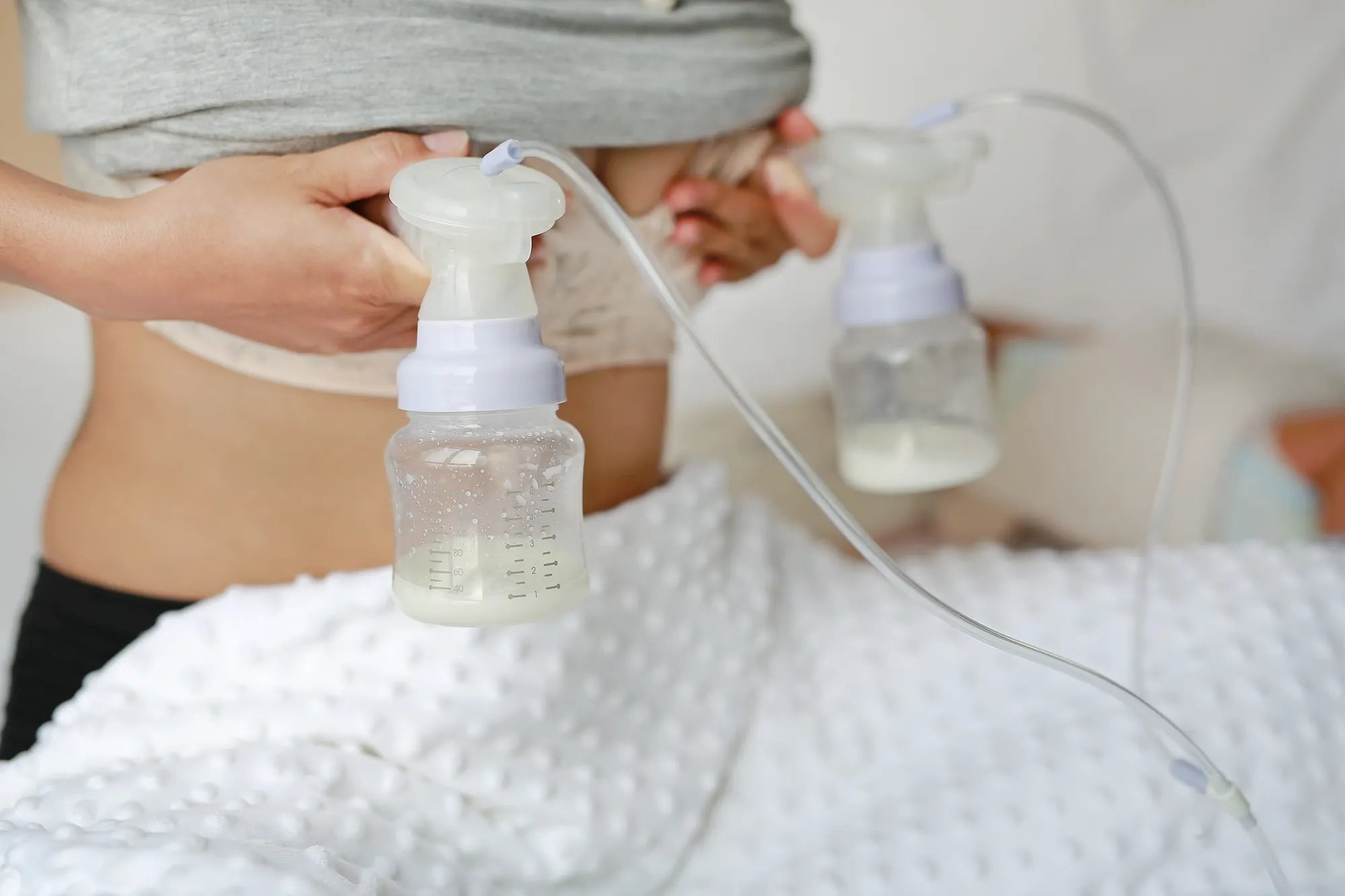
If you're pumping breast milk, you've likely wondered about timing. How long is too long to pump breast milk? This comprehensive guide addresses that pressing question with data, expert recommendations, and practical strategies. We'll explore the "Goldilocks zone" for pumping sessions, identify warning signs of over-pumping, and explain how factors like pump efficiency and your body's response dictate your ideal routine. Whether you're exclusively pumping, returning to work, or building a freezer stash, understanding session length is crucial for maintaining supply, preventing discomfort, and making the process sustainable. MomMed, a trusted maternal and baby care brand, is here to provide clarity and support with our range of comfortable, innovative products designed to simplify your pumping journey.
Understanding the "Goldilocks Zone" for Pumping Sessions
Most lactation experts recommend pumping for about 15 to 20 minutes per breast per session, or for 2 to 5 minutes after the last drop of milk is seen. This timeframe isn't arbitrary; it's based on the typical milk ejection reflex (let-down) pattern and the physiology of milk removal. The goal is to effectively empty the breast, which signals your body to produce more milk, without causing unnecessary strain on breast tissue or nipples.
Pumping sessions typically follow a pattern. The first let-down usually occurs within the first 2-3 minutes of effective pumping. Milk flow then continues, often slowing after 10-15 minutes. A second let-down may occur, especially with longer or more efficient sessions. The recommended 15-20 minute window generally allows time for at least one, if not two, let-downs to occur, facilitating better drainage.
Why is there a maximum suggested time? Prolonged suction on delicate breast tissue can lead to edema (swelling) in the nipple and areola. This swelling can actually block milk ducts, making subsequent emptying less effective and increasing the risk of clogged ducts and mastitis. Therefore, the "just right" duration balances thorough emptying with tissue safety.
It's critical to note that "per breast" timing applies when pumping both sides simultaneously with a double pump, which is most efficient. A 20-minute double-pumping session is equivalent to 40 minutes of single-side pumping. Using a high-quality, hospital-grade double pump like the MomMed S21 Wearable Breast Pump can maximize output within this optimal window, making every minute count.
Factors That Influence Your Ideal Pumping Time
Your perfect pumping duration is personal. Several key variables determine whether you lean toward the shorter or longer end of the standard range, or even slightly beyond it in specific circumstances.
Milk Supply Goals
Are you maintaining, building, or reducing your supply? For maintaining an established supply, sticking to the 15-20 minute guideline is usually sufficient. If you are trying to increase supply, some lactation consultants may recommend "power pumping"—a technique involving clustered, shorter sessions over an hour—but not simply extending every regular session to 30+ minutes. Conversely, if you are weaning or dealing with severe oversupply, shorter sessions focused on comfort are advised.
Baby's Age and Feeding Patterns
A newborn's stomach is tiny, and they feed frequently. If you are pumping for a newborn, you may need to pump more often (8-12 times per 24 hours) but session length might be standard. For an older baby who takes larger, less frequent feeds, your pumping sessions will likely align with their feeding schedule, and thorough emptying within the standard window remains the goal to maintain supply.
Pump Type and Efficiency
Not all pumps are created equal. A hospital-grade, double-electric pump with adjustable settings is the most efficient. A weak, single manual pump will take much longer to empty the breast, potentially pushing you past the 20-minute mark for inadequate output. MomMed pumps are designed with hospital-grade performance, featuring multiple stimulation and expression modes that mimic a baby's natural nursing pattern to encourage faster let-downs and efficient milk removal.
Individual Physiology
Your milk ejection reflex speed and breast storage capacity vary. Some moms have a fast, strong let-down and can empty a breast in 10 minutes. Others have a slower, multiple-let-down pattern and may need the full 20 minutes to feel adequately drained. Learning your body's signals is more important than watching the clock obsessively.
Signs You Might Be Pumping for Too Long
Recognizing the physical cues of over-pumping is essential to prevent injury and maintain a healthy breastfeeding relationship. Here are the primary warning signs that your sessions may be excessively long.
Nipple Trauma and Pain: Persistent soreness, cracking, blanching (turning white), or bruising on the nipples are direct indicators. This is often due to prolonged suction or an incorrect flange fit. Pain should not be a normal part of pumping. If you experience pain beyond the initial few seconds of latch, check your pump settings and flange size.
Breast Pain and Swelling: General breast pain, not just nipple pain, after pumping can signal tissue trauma or inflammation. If your breasts feel more tender, swollen, or lumpy *after* a session than before, the session was likely too aggressive or too long.
Unexpected Oversupply: While some seek to increase supply, a sudden, significant oversupply causing recurrent engorgement, leaking, and a forceful let-down can be a problem. Excessively long or frequent pumping sessions can over-stimulate production, leading to a difficult-to-manage surplus and increasing mastitis risk.
Fatigue and Dreading Pumping: The mental load matters. If 30-minute sessions leave you feeling physically drained and mentally stressed, it's unsustainable. Pumping should fit into your life, not dominate it. Efficient sessions with a comfortable, wearable pump like the MomMed S12 can reduce this burden significantly.
The Risks of Under-Pumping and Incomplete Emptying
While over-pumping has risks, consistently pumping for too *short* a duration presents its own set of challenges. Incomplete emptying is a common culprit behind several breastfeeding complications.
The primary risk is a gradual decrease in milk supply. Milk production works on a supply-and-demand basis. If the breasts are not emptied regularly and thoroughly, the body receives a signal that less milk is needed, leading to a down-regulation in production. This can be particularly concerning for moms working to establish or protect their supply.
Incomplete emptying is the leading cause of clogged milk ducts and mastitis. When milk sits in the ducts, it can thicken and form a plug, blocking the flow. This creates a tender, hard lump. If bacteria enter, it can develop into mastitis, a painful breast infection often accompanied by fever and flu-like symptoms, requiring medical attention.
Chronic engorgement from not fully emptying can also be uncomfortable and make it harder for your baby to latch if you are also nursing. It can also lead to issues like nipple stretch and damage due to the areola being less pliable when overly full. Ensuring complete, comfortable emptying with each session is a preventative health measure.
Pumping Schedules: How Session Length Fits into Your Day
Session length doesn't exist in a vacuum; it's part of your overall pumping frequency. Your schedule should align with your baby's feeding patterns or, if exclusively pumping, mimic them. Here’s how duration integrates into common scenarios.
Exclusive Pumping: For exclusive pumpers, the golden rule is to pump as often as a baby nurses, typically 8-12 times in 24 hours for a newborn. Session length should be the 15-20 minutes required for thorough drainage. Consistency is key to establishing and maintaining a full supply. Hands-free wearable pumps are a game-changer here, allowing for mobility during these frequent sessions.
Pumping at Work: Most working moms aim to pump 2-3 times during an 8-hour workday. Each session should be a dedicated 15-20 minutes of effective pumping, plus setup and cleanup time. Efficiency is paramount. A quiet, discreet, and effective pump like the MomMed Swing Breast Pump can make workplace pumping more feasible and less stressful.
Pumping to Increase Supply: To boost supply, focus on frequency more than dramatically extending individual sessions. Adding one extra pumping session per day or implementing a daily 60-minute "power pumping" session (e.g., 20 minutes on, 10 minutes rest, 10 minutes on, 10 minutes rest, 10 minutes on) is more effective than pumping for 40 minutes straight, which risks tissue damage.
Pumping for Occasional Bottles: If you are mostly nursing and only need a bottle here and there, pump for 10-15 minutes after a morning nursing session (when supply is often highest) or between feeds. The goal is to collect milk without over-stimulating your body to produce excess.
A Quick Comparison: Pumping Session Guidelines by Scenario
| Scenario | Recommended Session Length | Typical Daily Frequency | Key Goal |
|---|---|---|---|
| Maintaining Supply at Work | 15-20 minutes | 2-3 times during work hours | Fully empty breasts to match baby's missed feeds |
| Increasing Supply | Standard 15-20 min sessions; Power Pump: 60 min cluster | Add 1-2 sessions or 1 power pump block | Increase stimulation to signal higher demand |
| Exclusive Pumping (Newborn) | 15-20 minutes | 8-12 times per 24 hours | Mimic newborn nursing frequency to establish supply |
| Occasional Bottle Feeding | 10-15 minutes after nursing or between feeds | 1-2 times per day as needed | Collect milk without creating oversupply |
MomMed's Pumping Technology: Designed for Efficient, Comfortable Sessions
Finding your ideal pumping rhythm is easier with equipment that supports, rather than hinders, the process. MomMed engineers its breast pumps with the understanding that efficiency and comfort directly impact how long is too long to pump breast milk.
The cornerstone of our design is hands-free, wearable convenience. Models like the S21 Double Wearable Breast Pump fit discreetly in your bra, allowing you to move, work, or care for your older child during a session. This reduces the perceived burden of pumping, making it easier to stick to your optimal schedule without feeling "stuck" to a machine. Comfort during the session helps you relax, which can promote better let-downs.
We prioritize adjustable, intuitive suction. Our pumps feature multiple modes and levels. The stimulation mode mimics a baby's quick, light sucks to trigger let-down. Once milk flows, you can switch to expression mode with a deeper, slower rhythm. Being able to fine-tune the suction strength ensures effective milk removal without discomfort, making the standard 15-20 minute window both productive and tolerable.
All MomMed pumps are built with hospital-grade performance and safety. They are BPA-free and use food-grade silicone components for baby's safety. The powerful, ultra-quiet motors are designed to effectively empty the breast, reducing the temptation to extend sessions unnecessarily because the pump is weak. When your pump is efficient, you can trust that a 20-minute session is doing its job.
Frequently Asked Questions on Pumping Duration
Can I pump for 30 minutes on each side?
Routinely pumping for 30 minutes per side is generally not recommended. It significantly increases the risk of nipple trauma, tissue edema, and oversupply. In very rare cases, under specific guidance from an IBCLC (International Board Certified Lactation Consultant) for a particular medical reason, it might be advised temporarily. For the vast majority, sticking to the 15-20 minute guideline per session (for both sides when double pumping) is safer and more effective.
What if no more milk comes out after 10 minutes?
If milk flow seems to stop after 10 minutes, try switching back to stimulation mode for a minute or two to encourage a second let-down. Gentle breast massage or hand expression during pumping can also help. However, if you consistently feel empty after 10 minutes and your supply is meeting your baby's needs, a 10-12 minute session might be sufficient for you. Always go by comfort and output, not just time.
How long should I pump if I'm exclusively pumping for a newborn?
For a newborn, aim to pump 8-12 times in 24 hours, with each session lasting 15-20 minutes with a double electric pump. This frequency mimics a newborn's nursing pattern and is critical for establishing a robust milk supply. Consistency is more important than extremely long sessions.
Does the "hands-free" feature of MomMed pumps change how long I should pump?
The hands-free feature doesn't change the physiological need to empty the breast. You should still target the 15-20 minute range for thorough emptying. The benefit is that these minutes are more comfortable and productive because you can be upright, relaxed, and mobile, which may improve milk ejection. It makes adhering to the ideal session length easier and more sustainable.
My pump has a 30-minute auto-shutoff. Does that mean 30 minutes is okay?
An auto-shutoff is a safety feature to prevent the pump from running indefinitely if you fall asleep or get distracted. It is not a recommendation for session length. Most manufacturers set it at a maximum safe limit. You should still aim to complete your session in the effective 15-20 minute window and turn the pump off yourself when you feel adequately drained.
Listening to Your Body and Your Baby
Determining how long is too long to pump breast milk ultimately comes down to a partnership between general guidelines and your unique body. The 15-20 minute session is a strong, evidence-based starting point, but your comfort, output, and your baby's growth are the ultimate metrics of success. Watch for signs of distress in your nipples or breasts, monitor your milk supply trends, and adjust in consultation with an IBCLC if needed. Remember, pumping is a tool to support your feeding goals, not a source of constant stress. MomMed is committed to empowering you on this journey with reliable, comfortable, and innovative products that make finding your rhythm simpler. For personalized guidance, always consult a healthcare provider or lactation consultant. Ready to experience a more comfortable, efficient pumping session? Shop the MomMed collection at mommed.com for all your breastfeeding and pregnancy needs.