


Startseite
Pregnancy, Breastfeeding, and Pumping: The Ultimate Guide for Moms
Can Using a Breast Pump Induce Labor? Exploring the Facts and Safety
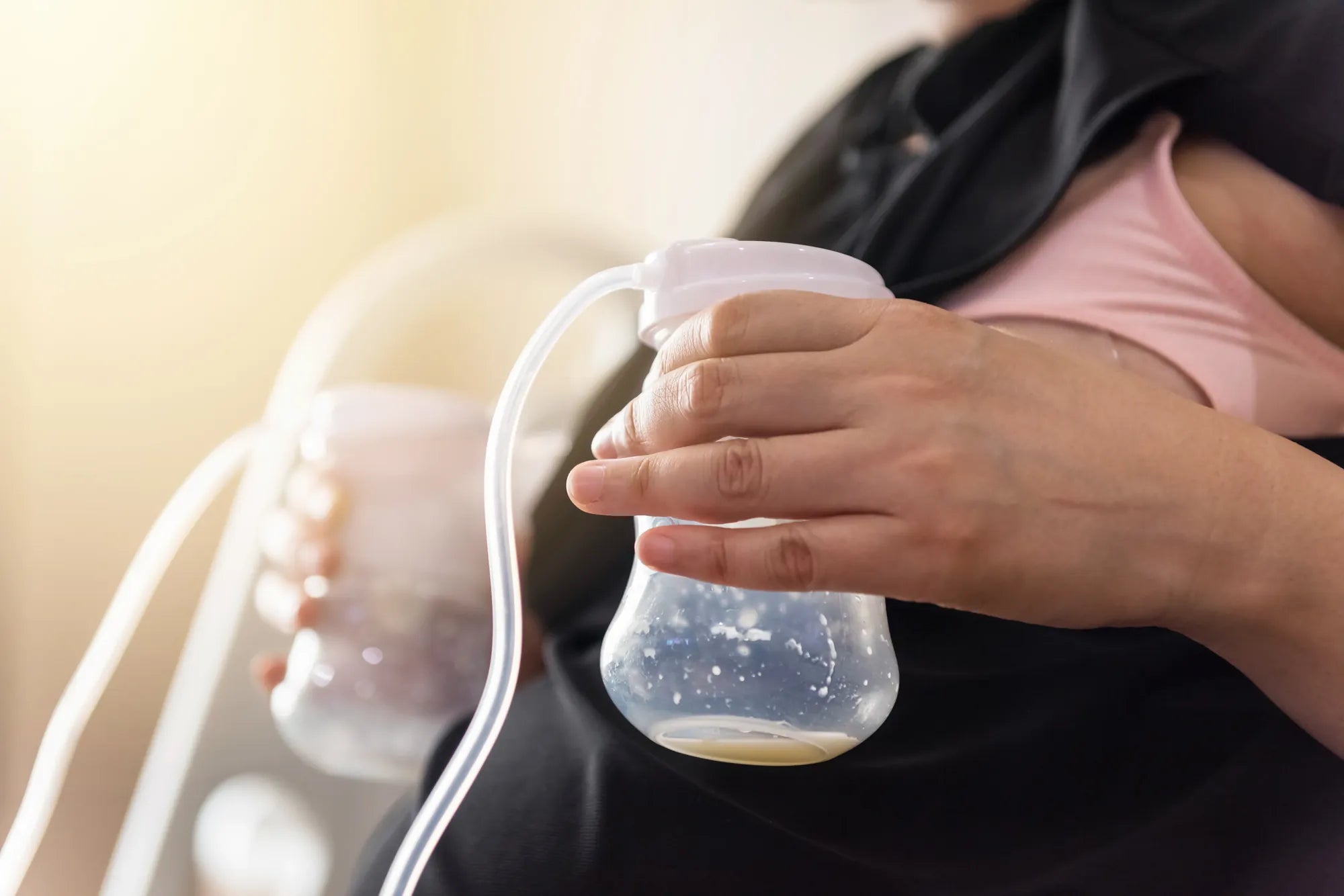
Can Using a Breast Pump Induce Labor? Exploring the Facts and Safety
Many expectant mothers, especially those nearing or past their due date, search for natural ways to encourage labor to begin. One common question that arises is: can using a breast pump induce labor? This query stems from a natural desire to meet your baby and a need for safe, reliable information. While the connection between nipple stimulation and contractions is real, using a breast pump for this purpose is not a straightforward or universally safe solution. This article will explore the physiological facts, weigh the evidence, highlight critical risks, and clarify the appropriate, safe uses of a breast pump in the final weeks of pregnancy. As a trusted brand in maternal and baby care, MomMed is committed to providing accurate, helpful guidance to support moms and moms-to-be through every stage of their journey with innovative, reliable products like our wearable breast pumps and pregnancy tests.
The Science of Labor Induction: How It’s Supposed to Work
Understanding natural labor onset is key to evaluating any induction method. True labor begins when a complex hormonal symphony signals your body that it's time. The star hormone is oxytocin, often called the "love hormone," which is crucial for stimulating effective uterine contractions.
Your body naturally produces oxytocin in pulses, leading to contractions that gradually become longer, stronger, and closer together. This process also involves prostaglandins, hormones that help ripen and efface (thin out) the cervix, allowing it to dilate. For labor to progress safely, both the uterus and the cervix must be ready, a state often termed "favorable" or "ripe."
Medical induction in a clinical setting mimics or enhances these natural processes under strict supervision. Methods include administering synthetic oxytocin (Pitocin) intravenously, using prostaglandin gels or inserts on the cervix, or employing mechanical methods like a Foley balloon. These interventions are timed and dosed based on continuous monitoring of both the mother's contractions and the baby's heart rate.
The critical difference between medical induction and at-home attempts lies in this controlled environment and professional oversight. A healthcare provider assesses cervical readiness, fetal position, and overall maternal health to determine if induction is appropriate and which method carries the lowest risk.
Nipple Stimulation and Uterine Contractions: The Biological Link
The theory behind using a breast pump to induce labor is rooted in basic physiology. Nipple stimulation triggers the release of oxytocin from the pituitary gland in the brain. This is the same biological pathway that causes uterine cramping (often called afterpains) when nursing after birth, helping the uterus contract back to its pre-pregnancy size.
In late pregnancy, this released oxytocin can indeed cause uterine tightening. These may be sporadic Braxton Hicks contractions or, in some cases, may develop into a more regular pattern. The American College of Obstetricians and Gynecologists (ACOG) acknowledges that natural methods like nipple stimulation can promote cervical ripening and may be associated with the onset of labor.
However, ACOG and other medical bodies typically reference manual nipple stimulation, not the use of an electric or wearable pump. The intensity, duration, and consistency of stimulation from a pump are different from gentle manual techniques. This distinction is important when considering safety and predictability.
The body's response is highly variable. For some, nipple stimulation may cause noticeable contractions that then subside. For others, it might have little to no effect. The key takeaway is that while a biological link exists, it does not equate to a reliable, safe, or recommended method for self-induction.
Can a Breast Pump Specifically Trigger Labor? Weighing the Evidence
So, can using a breast pump induce labor? The direct answer is that while it is a form of nipple stimulation and can cause contractions, it is not a reliable, predictable, or medically endorsed method for safely inducing labor at home. Using a breast pump for this purpose is attempting to harness a natural biological response without the safety controls of a medical setting.
Evidence from small studies and anecdotal reports is mixed. Some women may experience contraction patterns after pumping, but these do not always lead to progressive cervical change or active labor. Crucially, causing contractions is not the same as successfully and safely inducing labor, which requires coordinated cervical ripening and sustained, productive contractions.
The unpredictable nature poses a significant problem. You cannot control the dose of oxytocin your body releases in response to the pump. This can lead to an all-or-nothing response: either no effect or, riskily, an excessive effect. Furthermore, a breast pump does not address cervical readiness, which is a fundamental component of successful labor induction.
For those seeking the facts, it is essential to differentiate between correlation and causation. Just because labor sometimes follows pumping does not mean the pump safely caused it. Labor may have been imminent regardless. Relying on this method can create false hope or, worse, lead to dangerous complications.
Important Risks and Reasons for Extreme Caution
Attempting to self-induce labor with a breast pump without medical supervision carries several serious risks. The foremost concern is uterine hyperstimulation. This occurs when contractions are too long, too strong, or too close together.
Hyperstimulation can compromise blood flow to the placenta, leading to fetal distress, indicated by abnormal heart rate patterns. This is a medical emergency that may necessitate an urgent cesarean delivery. Without electronic fetal monitoring, which is only available in a hospital, you cannot detect this danger.
Another major risk is initiating labor before the baby or your body is truly ready. If your cervix is unfavorable (long, thick, and closed), strong contractions against a resistant cervix are painful and ineffective. More gravely, if the baby is not in an optimal position (e.g., breech) or if you have an undiagnosed condition like placenta previa, inducing contractions can be life-threatening for both mother and baby.
Other contraindications include a history of previous cesarean section or major uterine surgery (due to risk of uterine rupture), expecting multiples, or having a high-risk pregnancy diagnosis such as preeclampsia. The table below summarizes key risks versus the controlled environment of medical induction.
| Risk Factor | With Self-Induction via Pump (Unsupervised) | With Medical Induction (Supervised) |
|---|---|---|
| Uterine Hyperstimulation | High risk; undetectable without monitoring | Risk managed; immediately detectable and treatable |
| Fetal Distress | Cannot be assessed or managed at home | Continuous fetal monitoring allows for intervention |
| Timing & Readiness | No assessment of cervical favorability or fetal position | Cervix and fetal station assessed prior to induction |
| Underlying Conditions | Potential to exacerbate undiagnosed issues (e.g., previa) | Full maternal/fetal health workup conducted beforehand |
Safe and Recommended Uses of a Breast Pump in Late Pregnancy
Shifting focus, there are several safe and beneficial ways to use a breast pump in late pregnancy with the approval of your healthcare provider. The primary recommended use is for the gentle collection of colostrum, often referred to as "liquid gold."
Colostrum is the first milk, rich in antibodies and nutrients. Some providers may recommend hand-expressing or using a pump to collect small amounts in the final weeks, particularly if there are concerns about potential breastfeeding challenges or infant blood sugar levels. This should only be done after 36-37 weeks and with direct guidance on technique and frequency.
Using your pump in late pregnancy can also serve as a practical trial run. You can familiarize yourself with the settings, assemble the parts, and ensure everything is clean and functional for postpartum use. Practicing flange fit is crucial; a flange that is too large or too small can lead to nipple pain, damage, and reduced output.
For moms planning to use a pump like the MomMed S21 Wearable Breast Pump postpartum, this preparation can build confidence. You can learn the controls, experiment with different suction modes at low settings, and understand how to wear the collection cups comfortably. This ensures you're ready to establish a smooth pumping routine once your milk comes in, supporting your breastfeeding goals.
When to Absolutely Avoid Pumping and Consult Your Provider
Clear contraindications exist for any form of nipple stimulation or pumping in late pregnancy. You should absolutely avoid it and consult your doctor or midwife if any of the following apply to you:
- High-Risk Pregnancy: This includes conditions like preeclampsia, gestational diabetes, intrauterine growth restriction (IUGR), or carrying multiples.
- History of Preterm Labor: Or if you are currently experiencing any signs of preterm labor in this pregnancy.
- Placenta Previa or Vasa Previa: Contractions could cause catastrophic bleeding.
- Previous Uterine Surgery: Including a prior C-section or myomectomy (fibroid removal), due to increased rupture risk.
- Vaginal Bleeding: Any unexplained bleeding in the third trimester requires immediate medical evaluation.
- Abnormal Fetal Position: Such as breech or transverse lie.
- If Your Provider Has Advised Against It: Always follow the personalized guidance of your care team.
Open communication with your provider is non-negotiable. If you are uncomfortable, anxious about your due date, or experiencing signs of labor, your provider is your best resource. They can perform a cervical exam, monitor the baby, and discuss safe options, which may include a scheduled medical induction if it becomes medically advisable.
MomMed: Designed for Your Postpartum Journey, Not Induction
At MomMed, our mission is to support safe and confident motherhood with innovative, reliable products. Our breast pumps, like the award-winning MomMed S21 Double Wearable Breast Pump, are engineered for comfort, efficiency, and discretion after your baby arrives.
We specialize in creating solutions that fit seamlessly into a new mom's life. The S21 pump features adjustable suction modes and cycles to mimic a baby's nursing pattern, BPA-free food-grade silicone materials for baby's safety, and ultra-quiet, cord-free operation for true mobility. These features are designed to support milk supply establishment and maintenance, not to induce labor.
Our commitment extends across the maternal journey—from early detection with our highly accurate pregnancy test kits to supportive feeding gear and baby care essentials. We help moms prepare with knowledge and the right tools for the postpartum period, where products like our wearable pumps truly shine by offering flexibility and comfort during feeding sessions.
Trusted by thousands of moms, MomMed products are developed with input from lactation consultants and real-world testing. We prioritize your comfort and your baby's well-being, providing resources and products that align with professional breastfeeding and childcare recommendations.
Conclusion: Patience, Preparation, and Partnering with Your Care Team
The desire to meet your baby is powerful, but the safety of you and your child must always come first. While nipple stimulation can cause contractions, using a breast pump to induce labor is an unpredictable and potentially risky method that lacks the safety controls of medical induction. The evidence does not support it as a reliable or recommended practice.
Instead, focus on safe preparation. With your provider's okay, you can use your pump to collect colostrum or familiarize yourself with its operation. Channel your energy into final nesting steps, resting, and having open conversations with your healthcare team about any concerns regarding your due date or induction.
When the time is right and your baby is here, your MomMed pump will be a valuable partner in your breastfeeding journey, designed for comfort and efficiency. Trust your body, trust your care team, and look forward to using your pump for its intended purpose: nourishing your newborn.
Shop the MomMed collection at mommed.com for all your breastfeeding and pregnancy needs, and embark on your postpartum journey with confidence, comfort, and innovative support.
FAQ: Your Quick Questions Answered
Q: I’ve heard breast pumping can start labor at 38 or 39 weeks. Is that true?
A: It is biologically possible for nipple stimulation to cause contractions at any point in late pregnancy. However, at 38 or 39 weeks—which is still term—inducing labor without a medical reason is not advised. The baby is still maturing, and the cervix may not be ready. This action could lead to complications like hyperstimulation or fetal distress and should never be done without explicit instruction from your healthcare provider.
Q: What’s the difference between using a pump and hand expression for colostrum?
A: Hand expression is often the preferred method for colostrum collection in late pregnancy because it allows for gentler, more controlled stimulation. You can feel the delicate breast tissue and avoid excessive pressure. A pump, especially on high settings, can be too strong for the small volumes of colostrum. Postpartum, once milk volume increases, a pump like the MomMed S21 becomes highly effective. Always get your provider's approval and guidance on technique before attempting either method prenatally.
Q: If I’m past my due date, is it safer to try pumping?
A: No. Even if you are past 40 weeks, the decision to induce labor is a medical one. Your provider will monitor you and your baby through non-stress tests and ultrasounds to ensure well-being. If induction is recommended, they will use medically supervised methods in a controlled setting. Self-induction attempts when overdue still carry the same risks of hyperstimulation and can complicate a potentially already higher-risk situation.
Q: How soon after birth can I use my MomMed wearable pump?
A: Most lactation consultants recommend waiting until your milk "comes in" (typically around days 2-5 postpartum) and you have established a feeding rhythm with your baby. Early, frequent direct breastfeeding or hand expression is crucial for signaling your body to produce milk. Once lactation is established, your MomMed wearable pump is perfect for creating flexibility, building a freezer stash, and allowing others to feed the baby. Always follow your baby's feeding cues and your consultant’s guidance for when to introduce pumping sessions.
Q: Can pumping in pregnancy help increase my future milk supply?
A: Not in a significant way. Milk production is primarily driven by the hormone prolactin, which surges after the placenta is delivered and in response to the removal of milk (by baby or pump). While collecting colostrum prenatally has benefits, it does not "prime" your system for a greater overall supply. The key to a good supply is effective, frequent milk removal starting after birth. Using a well-fitted, efficient pump like the MomMed S21 postpartum is one of the best ways to support and maintain your milk supply.