


Startseite
Pregnancy, Breastfeeding, and Pumping: The Ultimate Guide for Moms
Can I Take an Electric Breast Pump on a Plane? The Complete Travel Guide
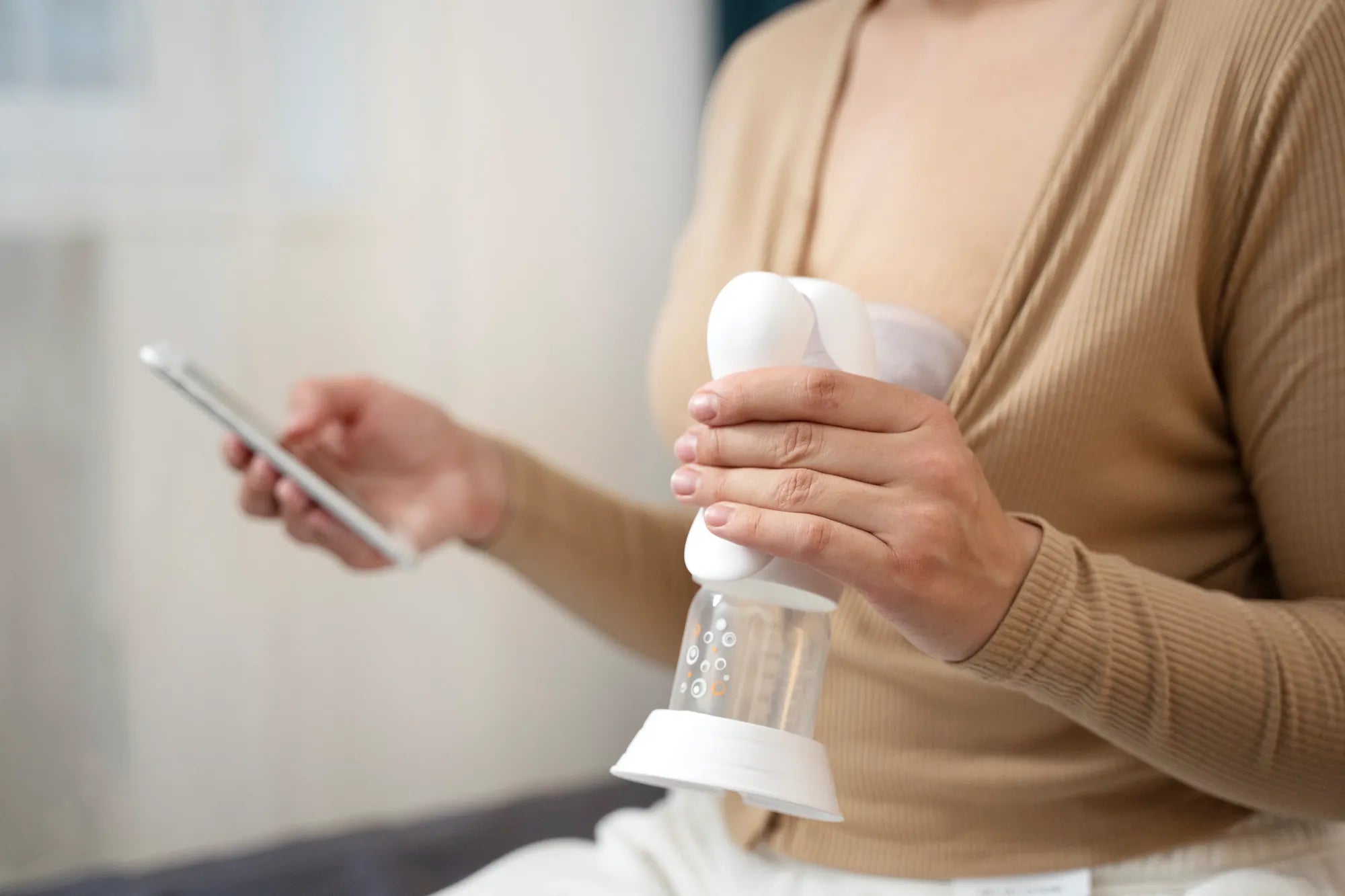
Can I Take an Electric Breast Pump on a Plane? The Complete Travel Guide
Traveling as a breastfeeding mother brings a unique set of questions, with one of the most common being: Can I take an electric breast pump on a plane? The answer is a resounding yes, and this guide provides everything you need to know to travel confidently. Navigating airport security and managing pumping on the go can seem daunting, but with proper preparation and knowledge of your rights, it's entirely manageable. This definitive resource covers TSA regulations, packing strategies, in-flight pumping tips, and storage solutions, empowering you to maintain your breastfeeding journey without interruption.
Understanding TSA Regulations for Breast Pumps and Milk
The Transportation Security Administration (TSA) has clear guidelines that classify breast pumps as medical devices. This classification grants them special allowances, making air travel with your pump straightforward. According to the official TSA website, breast pumps, milk, and related cooling accessories are exempt from the standard 3.4-ounce liquid rule for carry-on bags.
Breast milk and formula are considered medically necessary liquids for the baby. There is no limit to the quantity you can bring through the security checkpoint, whether you are traveling with or without your child. TSA officers may need to inspect these items, but they will never ask you to taste or test the milk on your skin.
Your electric breast pump itself, including the motor unit, flanges, bottles, and tubing, is always allowed in your carry-on luggage. It is highly recommended to keep these critical items with you to prevent loss, damage, or contamination that could occur in checked baggage. For international travel, regulations are generally similar, but it's wise to check the specific policies of your destination country.
The key to a smooth experience is knowing your rights. You are permitted to travel with all equipment necessary for expressing, storing, and feeding breast milk. This includes ice packs, freezer bags, and cleaning supplies. Being informed allows you to advocate for yourself calmly and effectively at security checkpoints.
Packing Your MomMed Breast Pump for Air Travel: A Step-by-Step Guide
Strategic packing is the foundation of stress-free travel with a breast pump. Start by creating a dedicated pump bag that contains all essentials. For moms using a MomMed wearable pump like the S21 or S12 model, the compact and all-in-one design is a significant advantage, reducing the number of separate parts to manage.
Your core packing list should include the pump motor, charged batteries or a power bank, flanges (correctly sized for comfort and efficiency), collection bottles or bags, a nursing cover for discretion, moist wipes for quick clean-ups, and a large zip-top bag for storing used parts. Don't forget your charger and any necessary adapters for your destination.
Organize liquids—such as any previously expressed milk or a small bottle of water for rinsing—in a clear, quart-sized plastic bag. While breast milk is exempt, placing it in a clear bag signals to TSA officers that you are prepared and can speed up the visual inspection process. Keep this bag easily accessible at the top of your carry-on.
Finally, pack a printed copy of the TSA regulations or have the official webpage bookmarked on your phone. This serves as a helpful reference if you encounter an officer unfamiliar with the latest policies. A well-organized bag demonstrates preparedness, making the security interaction quicker and smoother for everyone involved.
Carry-On vs. Checked Bag: Making the Smart Choice
Always carry your breast pump, its key components, and any expressed milk in your carry-on luggage. The pump motor, flanges, and valves are difficult to replace quickly if lost, and milk can spoil if a checked bag is delayed. The MomMed pump's compact size makes it easy to fit under the seat in front of you.
Checked luggage can be used for non-essential, bulky, or liquid items that are not immediately needed. This includes large bottles of pump cleaner, extra storage bags, and backup parts. However, never check your only pump or a significant milk stash. The risk of loss is too high.
Consider the battery type of your pump. Most electric pumps, including MomMed models with built-in rechargeable batteries, are safe for carry-on luggage. Spare lithium batteries must also be carried in your cabin bag, not checked, due to aviation safety regulations.
Organizing Your Pump Bag for Security Efficiency
Efficiency at security starts with organization. Use separate, clear pouches within your pump bag: one for clean parts, one for soiled parts post-use, and the quart-sized bag for liquids. This modular system keeps everything sanitary and easy to present.
Place the pump motor unit in an easily accessible spot, as you may be asked to remove it from the bag for X-ray screening, similar to a laptop. Having it in a dedicated sleeve or pocket saves time and reduces fumbling during the stressful security line.
Label your milk storage bottles or bags with your name, the date expressed, and the volume. While not always required, this can facilitate the inspection process and is a good practice for managing your milk inventory. Use MomMed's BPA-free, leak-proof storage bottles for secure transport.
Navigating Airport Security with Ease
The security checkpoint is often the point of highest anxiety for traveling pumping moms. A proactive and informed approach turns this into a routine step. Upon reaching the conveyor belt, simply inform the TSA officer that you are carrying a breast pump and breast milk in your carry-on bag.
You have the right to request a visual inspection of your milk instead of sending it through the X-ray machine, though many mothers opt for the X-ray for convenience. The CDC and FDA state that the minimal radiation exposure from airport X-rays does not affect the safety or quality of breast milk. The choice is yours.
The officer may need to perform additional screening. This typically involves swabbing the exterior of your pump, bottles, and cooler bag to test for explosive residue. The process is quick and should not involve opening the milk containers. You can request that new gloves be used for the inspection.
Stay calm and polite. If you feel your rights are not being respected, politely ask to speak with a supervisor. Having the TSA regulations on hand helps in these rare situations. Remember, thousands of mothers pass through security with pumps every day—you are not an exception, but part of a standard procedure.
The Security Screening Process: What to Expect
The standard process involves placing your pump bag on the X-ray belt. You may be asked to remove the motor unit. Your milk and cooler packs will be seen on the scanner. An officer might pull your bag aside for a closer look.
If you opted out of X-ray for your milk, an officer will take the bottles or bags to a separate testing area. They will visually inspect the containers and likely use a vapor test. You should be able to observe this process. The milk will not be opened or contaminated.
For wearable pumps like the MomMed S21, the all-in-one unit may be screened as a single device. Its compact, electronic nature is familiar to TSA agents. Its quiet, discreet design also means you won't draw unnecessary attention while preparing for screening.
Tips for a Stress-Free Security Experience
Arrive Early: Give yourself at least an extra 30-45 minutes to account for potential additional screening. Rushing increases stress for you and the security personnel.
Use Clear Communication: Use simple, direct language: "I have a medical device—a breast pump—and breast milk in my bag."
Stay Together: Try to keep your pump, milk, and related accessories in one bin or adjacent bins as they go through the X-ray to keep the inspection contained.
Know Your Pump: Be familiar with how to quickly power on your MomMed pump if asked to demonstrate its function, though this request is uncommon.
Pumping and Storing Milk During Your Flight
Maintaining your pumping schedule in the air is crucial for comfort and milk supply. The cabin environment can be dehydrating, so drink plenty of water before and during your flight to support healthy milk production. Wear a comfortable, two-layer top or a dedicated pumping bra for easy access.
Finding a moment to pump depends on your comfort level. Many mothers pump right at their seat using a nursing cover. The quiet operation of a MomMed wearable pump is ideal for this, as it minimizes noise and allows for complete hands-free use. You can relax, watch a movie, or even read while expressing milk.
If you prefer more privacy, you can politely ask a flight attendant upon boarding if there is an empty row or a larger space (like a vacant premium cabin seat) you could use temporarily. Some wide-body aircraft have larger lavatories that might be feasible, though this is less ideal due to hygiene concerns.
The best strategy is often to pump right before boarding, using an airport lactation room or family restroom. This can maximize the time between sessions, potentially allowing you to get through a shorter flight without needing to pump. Plan your schedule around your flight time and typical pumping intervals.
Finding Privacy and Space on the Plane
Your assigned seat is your most reliable space. A window seat offers the most privacy from the aisle. Using a high-coverage nursing cover or even a large scarf can create a private tent. Remember, you have a legal right to express milk wherever you are allowed to be.
Lactation pods, such as those from Mamava, are becoming more common in airports worldwide. Use apps or airport maps to locate them before your flight. These pods offer a clean, private, and powered space to pump or nurse in peace before you even board the plane.
For longer flights, consider booking a seat with more space, like an aisle in an empty row or premium economy. The extra elbow room makes handling pump parts and bottles much easier. The investment in comfort can significantly reduce travel stress.
Storing Breast Milk Safely Mid-Journey
Freshly expressed breast milk can be kept at room temperature (up to 77°F or 25°C) for up to 4 hours. On a climate-controlled aircraft, this provides a good window. For longer storage, you must cool it. Use an insulated cooler bag with frozen ice packs.
TSA allows ice packs, freezer packs, and gel packs—even if partially frozen—through security when used to cool breast milk. They are considered medically necessary. Ensure your cooler bag is well-insulated. MomMed's storage bottles seal tightly to prevent leaks in your bag.
If you have access to ice on the plane (from the galley), you can request a cup of ice to keep your cooler bag cold. Flight attendants are usually very accommodating when you explain it's for breast milk storage. Label your bottles clearly to avoid any confusion.
Upon arrival, transfer milk to a refrigerator or freezer as soon as possible. If staying in a hotel, request a room with a mini-fridge in advance. Many hotels will provide a fridge for medical needs like storing breast milk at no extra charge if you call ahead.
International Travel and Airline-Specific Policies
While TSA governs U.S. departures, international travel requires checking the policies of your destination and any transit countries. Generally, the principles are similar: breast pumps are medical devices, and breast milk is a necessary liquid. However, the interpretation and application of rules can vary.
Research the aviation authority websites for your destination country (e.g., EASA for Europe, CAA for the UK). Key phrases to search include "traveling with breast milk" and "medical devices cabin baggage." When in doubt, contact the airline directly and get their policy in writing via email.
Airlines may have their own specific rules about the number of carry-on items. Since a pump is a medical device, it often does not count toward your personal item limit. Confirm this with your airline when you check in. Having documentation, such as a note from your doctor, can be helpful internationally, though rarely required in the U.S.
Consider voltage and plug types at your destination. MomMed pumps typically have universal voltage (100-240V), but you will need the correct plug adapter. Packing a small power strip with USB ports can be a lifesaver in hotel rooms with limited outlets.
Comparison of Pump Travel-Friendliness: Wearable vs. Traditional
Choosing the right pump can dramatically impact your travel experience. The following table compares key features of wearable pumps (like the MomMed S21) and traditional electric pumps in the context of air travel.
| Feature | Wearable Pump (e.g., MomMed S21) | Traditional Electric Pump |
|---|---|---|
| Portability | Excellent. All-in-one, cordless, fits in a purse. | Fair to Poor. Requires separate motor, tubing, and bottles. |
| Discretion & Noise | High. Quiet, fits inside bra, hands-free operation. | Low to Moderate. Audible motor, visible tubing. |
| Ease at Security | Simple. One compact unit to screen. | Complex. Multiple parts may need separate screening. |
| In-Flight Pumping | Very Easy. Pump discreetly at your seat. | Cumbersome. Requires setup, limited mobility. |
| Power Source | Rechargeable battery (lasts multiple sessions). | Often requires wall outlet or large battery pack. |
| Packing Efficiency | High. Minimal components, less clutter. | Low. More components to organize and pack. |
As evidenced, a wearable pump offers significant advantages for the mobile mother. Its integrated design reduces hassle at security, maximizes comfort and privacy during flight, and simplifies packing. This allows you to focus on your journey and your baby's needs.
Frequently Asked Questions (FAQs) for Traveling Moms
1. Do I need a doctor's note for my breast pump?
For domestic travel within the United States, a doctor's note is not required by TSA regulations. The pump is recognized as a medical device. However, for international travel or if you feel more comfortable having one, a note can be helpful. It should state that the breast pump is a medically necessary device for lactation. Carrying one is a personal choice for extra assurance.
2. Are ice packs for my milk allowed through security?
Yes. Ice packs, freezer packs, and gel packs are allowed in your carry-on when used to cool breast milk, even if they are partially frozen. They are exempt from the standard liquid/gel rules. Inform the TSA officer that you have medically necessary cooling accessories. It's advisable to ensure they are fully frozen solid when you arrive at security to avoid any potential questions about the gel inside.
3. Can I use my MomMed breast pump during takeoff and landing?
Yes, you can. The Federal Aviation Administration (FAA) allows the use of approved portable electronic devices during all phases of flight. A breast pump falls into this category. Its use does not interfere with aircraft systems. Using your pump during takeoff or landing can be a strategic way to relieve engorgement, especially during longer flights when cabin pressure changes can cause discomfort.
4. How do I clean my pump parts while traveling?
Practice the "clean, not sterile" method on the go. Carry disposable or reusable pump wipes approved for cleaning breast pump parts. After pumping, wipe all parts that contact milk. You can also rinse parts with bottled water in a bathroom sink and store them in a clean, dry zip-top bag until you can properly wash them. Many moms pack a small bottle of mild soap and a collapsible drying rack for hotel use. Sanitizing bags that use microwave steam are also highly portable and effective.
5. What if I'm traveling without my baby?
The TSA rules are the same whether your child is with you or not. You are permitted to travel with a breast pump and any amount of breast milk. You may be asked additional questions to confirm the milk is yours, but you cannot be denied passage. It is helpful to have your pump with you as proof of purpose. Maintaining your pumping schedule while away is critical for sustaining your milk supply.
6. Can I check my breast pump as luggage?
You can, but it is strongly discouraged. Always carry your primary pump and essential parts in your cabin bag. Checked luggage can be lost, delayed, or damaged, which could leave you without a way to express milk, causing pain and risking your supply. A backup manual pump in your checked bag can be a wise precaution, but your main electric pump should stay with you.
Conclusion: Travel with Confidence and Comfort
Traveling with an electric breast pump is a fully supported and manageable part of modern motherhood. The key lies in preparation: understanding your rights under TSA guidelines, packing your MomMed pump strategically, and planning your in-flight routine. With tools designed for mobility and discretion, like wearable pumps, you can navigate airports and aircraft with minimal stress, keeping your feeding goals on track. Your journey doesn't have to pause because you're a breastfeeding mom. Embrace the adventure, armed with knowledge and the right gear. You have the freedom to explore the world while providing the best for your baby. For a pump designed with your mobile lifestyle in mind, shop the MomMed collection at mommed.com for all your breastfeeding and pregnancy needs.