


Startseite
Pregnancy, Breastfeeding, and Pumping: The Ultimate Guide for Moms
Are Breast Pumps Allowed on Airplanes: The Complete Travel Guide for Pumping Moms
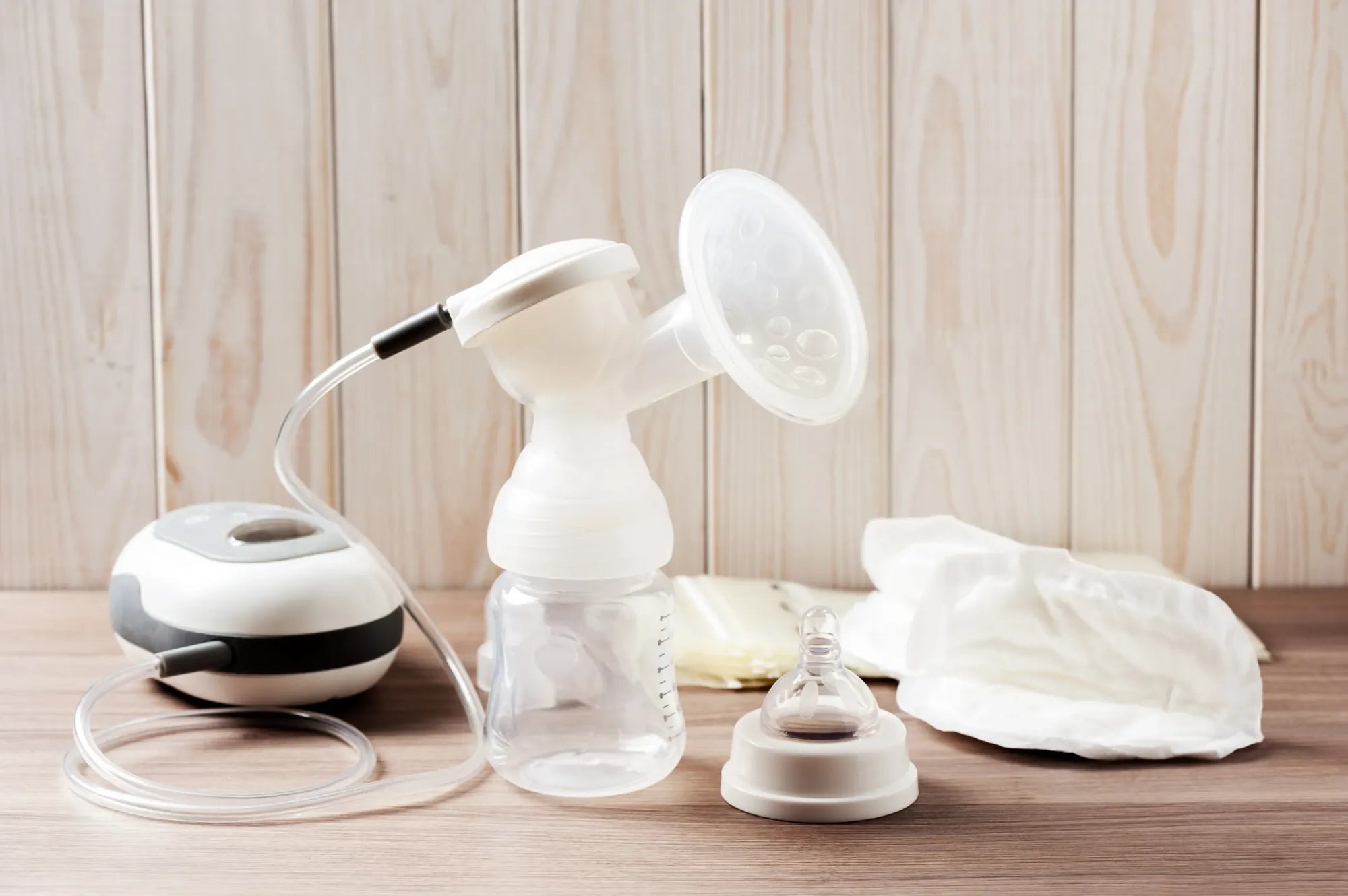
Are Breast Pumps Allowed on Airplanes: The Complete Travel Guide for Pumping Moms
Introduction: Navigating Air Travel as a Pumping Mother
If you're a breastfeeding mother planning to fly, the question "Are breast pumps allowed on airplanes?" is likely at the top of your mind. The logistics of transporting your essential equipment and expressed milk can feel overwhelming. Rest assured, with the right knowledge, you can travel confidently and comfortably.
This guide provides everything you need to know, from official TSA regulations to practical packing tips and product recommendations. We'll demystify the process, ensuring you can maintain your pumping schedule and protect your milk supply while navigating airports and flights. The key is understanding your rights and preparing effectively.
Federal regulations explicitly permit breast pumps and breast milk on aircraft. These items are classified as medically necessary, granting you specific exemptions from standard security rules. Knowing these rules empowers you to advocate for yourself and your baby's needs during travel.
We'll cover how to pack your pump, communicate with security agents, and manage pumping sessions during your journey. With preparation, air travel with a breast pump can be a smooth, manageable experience, allowing you to focus on your destination rather than the stress of getting there.
Understanding TSA Regulations: Your Legal Rights
The Transportation Security Administration (TSA) has clear, traveler-friendly policies for breastfeeding mothers. These rules are designed to support your need to transport expressed milk and pumping equipment without unnecessary hassle. Familiarizing yourself with these guidelines is the first step to a smooth airport experience.
Breast pumps are considered medical devices. Breast milk, formula, and toddler drinks are classified as medically necessary liquids. This critical distinction exempts them from the standard 3-1-1 rule for liquids, gels, and aerosols in carry-on baggage. You are allowed to bring these items in quantities exceeding 3.4 ounces (100 milliliters).
The TSA states you may bring "reasonable quantities" of these liquids. While not explicitly defined, this generally means an amount consistent with the duration of your travel and your baby's feeding needs. It's advisable to carry only what you need for the journey, plus a small buffer for delays.
You must declare these items to a TSA officer at the security checkpoint for inspection. Officers may need to test the liquids for explosives. This is typically done without opening the containers, using a vapor analysis or a non-invasive test. Cooperation and clear communication are essential.
Breast Pumps as Carry-On Items
You are allowed to bring a breast pump in your carry-on bag or checked luggage. However, it is strongly recommended to carry it on the plane with you. This prevents potential damage, loss, or delays if your checked bag is misplaced. A breast pump does not count as your one personal item.
You can bring multiple pumps (e.g., a primary electric pump and a backup manual pump) if desired. All pump parts, including flanges, bottles, valves, membranes, and tubing, are permitted. It's wise to keep these parts organized in a clear bag within your carry-on for easy inspection at security.
If your pump has a lithium-ion battery, it must be in your carry-on baggage. This is a standard FAA safety rule for all devices containing these batteries. Ensure the pump is powered off during the flight unless you are actively using it, following crew instructions.
For the most seamless experience, consider using a wearable breast pump like the MomMed S21. Its compact, all-in-one design is less cumbersome to unpack and repack at security compared to traditional pumps with multiple external parts and tubes.
The 3-1-1 Rule Exemption for Breast Milk
The standard 3-1-1 rule limits liquids to containers of 3.4 ounces or less, all fitting in one quart-sized bag. Breast milk, formula, and toddler drinks are fully exempt from this rule. You can bring containers of any size, and they do not need to fit in the quart-sized bag.
Ice packs, freezer packs, frozen gel packs, and other cooling accessories required to keep milk cool are also exempt, even if they are partially frozen or slushy. If these items are in a solid frozen state at the time of screening, they are generally allowed without question.
If the ice packs are not fully frozen, they will be subject to additional screening. Inform the officer that they are being used to cool medically necessary liquids. The TSA officer has the final say on whether an item is allowed through the checkpoint.
To streamline the process, pack all your expressed milk, formula, and cooling elements together in a separate, easy-to-access cooler bag. Politely notify the officer as you place this bag on the X-ray belt: "I am carrying medically necessary liquids and ice packs for breast milk."
Packing Strategy: Your Airport Security Blueprint
A thoughtful packing strategy is your best defense against airport stress. Organizing your pump and milk supplies logically will expedite the security screening process and give you peace of mind. The goal is to make inspection as straightforward as possible for TSA officers.
Designate one bag specifically as your "pumping kit." This could be a dedicated section of your diaper bag or a separate insulated tote. Within this kit, use clear, zip-top plastic bags to group related items: one for clean pump parts, one for used parts (if needed), and one for accessories like nursing pads and cleaning wipes.
Your expressed milk should be stored in sealed bottles or storage bags, clearly labeled with the date if possible. Place these, along with your ice packs, in an insulated cooler bag. Having everything consolidated shows officers you are organized and understand the procedures.
Pack a small power bank if your pump is rechargeable, and ensure all electronic components are charged. Include a manual hand pump as an emergency backup—it takes up minimal space and can be a lifesaver if you encounter power issues. Don't forget a nursing cover or scarf for discretion.
The Essential Travel Pumping Checklist
Use this checklist to ensure you have everything you need for a successful journey. Print it out and tick items off as you pack.
- Breast Pump: Primary electric pump (e.g., MomMed S21 wearable) and/or backup manual pump.
- Power: Charger, adapter (for international travel), and portable power bank.
- Pump Parts: Flanges, connectors, valves, membranes, bottles, and tubing (pack an extra set of membranes).
- Milk Storage: Pre-sterilized bottles or breast milk storage bags.
- Cooling: Insulated cooler bag and ice packs/gel packs.
- Cleaning: Quick-clean wipes, a small bottle of dish soap, a travel brush, and zip-top bags for used parts.
- Comfort & Discretion: Nursing cover, extra nursing pads, lanolin cream, and a large water bottle.
- Documents: Printed copy of TSA regulations (optional but helpful).
Why a Wearable Pump is the Ultimate Travel Companion
When it comes to air travel, not all breast pumps are created equal. Traditional pumps with external motors, tubes, and cords can be cumbersome to set up in tight spaces. A wearable, cordless breast pump transforms the travel pumping experience with unparalleled convenience and discretion.
Wearable pumps fit directly into your bra, with no external tubes or dangling bottles (in collection mode). This allows for complete mobility. You can pump while walking through the terminal, waiting at your gate, or even sitting in your airplane seat without drawing attention.
This hands-free operation is a game-changer. You can use your phone, read, eat, or work while pumping, making the most of travel time. For longer flights, discreetly pumping at your seat is often more feasible and comfortable than trying to navigate to a tiny airplane lavatory multiple times.
Many wearable pumps, like the MomMed S21 Double Wearable Breast Pump, feature ultra-quiet motors. This is crucial for maintaining privacy and not disturbing fellow passengers. The hospital-grade suction ensures efficient milk removal, helping you maintain your supply while on the go.
Comparing Pump Types for Travel
| Pump Type | Best For Travel? | Pros for Travel | Cons for Travel |
|---|---|---|---|
| Wearable/Cordless (e.g., MomMed S21) | Yes - Ideal | Hands-free, discreet, quiet, no cords, easy to pack, often USB-rechargeable. | May have shorter battery life than plug-in models; requires charging. |
| Traditional Electric (Plug-in) | Possible, but less convenient | Powerful, reliable suction; familiar operation. | Requires outlet access; bulky with cords and tubes; less discreet. |
| Manual Hand Pump | Excellent as a backup | Tiny, lightweight, no power needed, failsafe option. | Can be tiring for full sessions; less efficient for regular use. |
| Battery-Operated (AA/AAA) | Good for portability | More portable than plug-in models; doesn't require an outlet. | Less powerful; ongoing cost of batteries; can be noisy. |
The MomMed S21: Engineered for the On-The-Go Mom
As a trusted maternal care brand, MomMed designs products with real-world challenges in mind. The award-winning S21 Double Wearable Breast Pump exemplifies this, built specifically for active, traveling mothers. Its compact, all-in-one design eliminates the need for separate motors, cords, and bottles during use.
The pump features BPA-free, food-grade silicone flanges that are soft and adjustable for a comfortable fit, which is crucial for maintaining pumping comfort during long travel days. Its hospital-grade suction is powerful yet gentle, with multiple modes and levels to mimic a baby's natural nursing pattern and protect milk supply.
For travel, its USB-C rechargeable battery is a major advantage. A full charge provides multiple pumping sessions, and it can be easily topped up with a power bank or airport USB port. The entire system packs down neatly into a small case, taking up minimal space in your carry-on luggage.
Thousands of moms across the US and Europe trust MomMed for its reliable, innovative approach to breastfeeding products. When your journey depends on reliable equipment, choosing a pump designed for mobility makes all the difference in reducing travel anxiety.
In-Air and Airport Pumping Logistics
Managing your pumping schedule during travel requires some planning. The change in routine, pressure, and hydration levels can temporarily affect supply, so sticking close to your normal schedule is important for comfort and maintaining your milk production.
Before Your Flight: Pump or nurse right before leaving for the airport. An empty breast is more comfortable for security pat-downs (if required) and gives you a longer buffer before your next session. Ensure your cooler packs are fully frozen if you're bringing stored milk.
At the Airport: Look for dedicated lactation suites or nursing pods. Many major airports now have Mamava pods or similar private, clean spaces with seating and a table. Family restrooms are another option, though space can be limited. Some airline lounges also have private nursing rooms.
On the Plane: The most discreet option is to pump at your seat using a wearable pump and a nursing cover. If you prefer privacy, you can ask a flight attendant if there is a space you can use, but be prepared that the only option may be the lavatory. Pumping in the lavatory is challenging due to space and hygiene concerns, so seat pumping is often preferred.
After Landing: Pump as soon as you reasonably can after deplaning to relieve engorgement and signal your body to maintain production. Find a family restroom or lactation room in the arrival terminal. If you have a long drive ahead, consider pumping in the car using a portable pump or your wearable before hitting the road.
International Travel and Airline-Specific Policies
While TSA rules govern security in U.S. airports, it's vital to research policies for your destination and airline. Most international regulations are similar, recognizing the medical necessity of breast pumps and milk, but nuances exist.
Foreign Security Agencies: Agencies like the UK's Department for Transport and the European Union's aviation security rules also exempt baby milk and medical equipment from liquid restrictions. Always check the official website of your destination country's aviation authority a week before travel for the most current information.
Airline Policies: Individual airlines may have their own policies regarding the use of pumps inflight. Most U.S. and international carriers allow it, but some may request you not use devices with motors during takeoff and landing. Always inform a flight attendant if you plan to pump at your seat as a courtesy.
Documentation: A doctor's note is not required by TSA or U.S. law. However, for international travel or if you feel more comfortable, a brief note from your pediatrician or OB-GYN stating you are a breastfeeding mother traveling with medically necessary equipment and milk can be helpful if you encounter an uninformed agent abroad.
Customs Considerations: When entering another country, you generally do not need to declare breast milk for personal use. If you are transporting a very large quantity (e.g., a shipment for a adopted child), check the destination country's import rules for human milk.
Frequently Asked Questions (FAQs)
Q: Do I need a doctor's note for my breast pump or milk at TSA?
A: No. The TSA does not require a doctor's note for breast pumps, milk, or formula. Their policies are clear and publicly available. However, if it makes you feel more confident, especially for international travel, you may carry one.
Q: Can TSA make me taste my breast milk?
A: Absolutely not. TSA officers are prohibited from asking you to taste, test, or otherwise compromise your breast milk. They will use other approved methods, such as a vapor test or X-ray, to screen the liquids if needed.
Q: What if my ice packs are partially melted at security?
A: Partially melted ice packs used to cool medically necessary liquids are allowed. Inform the officer they are for breast milk. They may be subject to additional screening, but they are permitted. Fully frozen packs typically pass through without issue.
Q: Are the rules the same for pumping on a plane versus in the airport?
A> Security rules (TSA) apply to what you bring through the checkpoint. Once you are airside or on the plane, it's about airline policy and practicality. Most airlines allow pumping at your seat; using a quiet, discreet wearable pump is the least intrusive method.
Q: Can I bring a breast pump that uses dry ice to keep milk frozen?
A: The FAA allows dry ice in carry-on or checked bags under specific conditions: it must be for packing perishables, you are limited to 5.5 lbs (2.5 kg), the package must be vented, and you must inform the airline. For most travelers, standard gel packs are simpler.
Q: How do I clean my pump parts while traveling?
A> Use quick-clean microwave bags (available in some airport lounges or family restrooms), pump cleaning wipes, or a small bottle of dish soap and a travel brush. The CDC's "clean, sanitize, dry" method is ideal, but when traveling, cleaning thoroughly with soap and hot water is sufficient between sanitizing sessions.
Travel with Confidence and Comfort
Flying with a breast pump is a completely manageable part of your motherhood journey. The regulations are on your side, recognizing the essential nature of your equipment and your milk. By preparing your "pumping kit," understanding the screening process, and choosing gear designed for mobility, you can transform a potential source of anxiety into a routine part of travel.
The freedom to travel without sacrificing your breastfeeding goals is empowering. Whether you're traveling for work, family, or adventure, you have the right and the ability to bring what you need to nourish your child. Your preparedness not only benefits you but also helps educate and smooth the process for the pumping mothers who travel after you.
Remember, hydration and comfort are key. Drink plenty of water before and during your flight, wear comfortable, accessible clothing, and don't be afraid to ask for assistance from TSA agents or flight crew—most are happy to help when you communicate your needs clearly and politely.
You are capable of navigating this. With the insights from this guide, you can board your flight feeling informed, prepared, and confident. Embrace the journey, knowing you have everything you need to care for yourself and your baby, no matter where you are in the world.
Ready to simplify your travel pumping routine? Explore the MomMed collection of wearable breast pumps, nursing accessories, and baby care essentials designed for your on-the-go lifestyle. Shop the award-winning, travel-friendly S21 Double Wearable Breast Pump and more at mommed.com for reliable, comfortable, and innovative support at every stage of motherhood.