


Accueil
Pregnancy, Breastfeeding, and Pumping: The Ultimate Guide for Moms
How Often Should I Pump Breast Milk While Nursing: A Comprehensive Guide
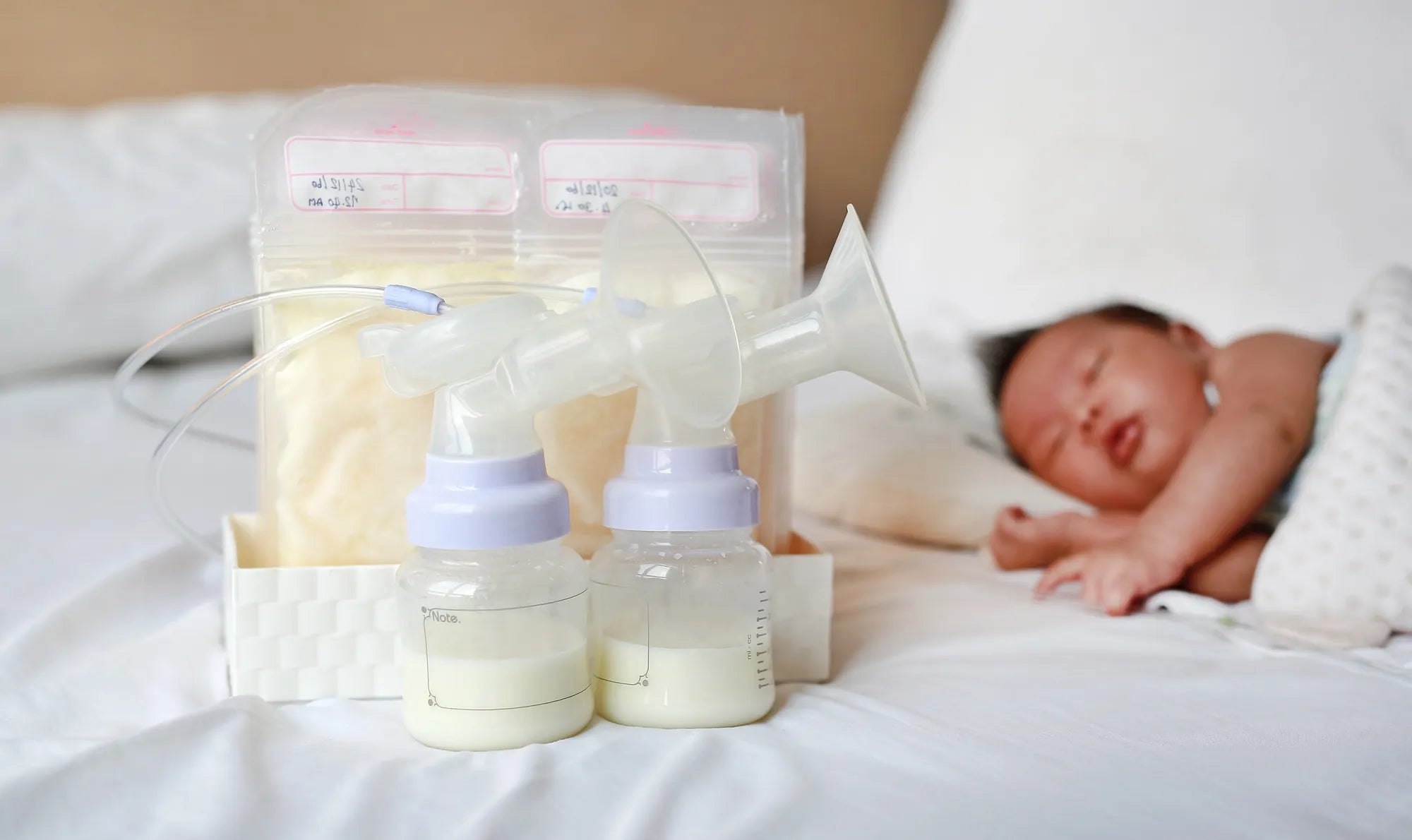
How Often Should I Pump Breast Milk While Nursing: A Comprehensive Guide
Introduction: Finding Your Pumping Rhythm While Nursing
You're nursing your baby beautifully, but now you're wondering about pumping. Maybe you're preparing to return to work, hoping to build a freezer stash for flexibility, or simply want to understand your options. The central question for many nursing mothers is: How often should I pump breast milk while nursing? The answer is deeply personal and depends entirely on your individual goals, your baby's patterns, and your body's unique response.
This guide will move beyond one-size-fits-all advice to provide you with evidence-based frameworks. We'll explore schedules for different scenarios, from creating a small stash to managing an exclusive pumping routine. Integrating pumping with nursing is a skill, and with the right information and tools—like comfortable, efficient pumps from trusted brands like MomMed—you can find a rhythm that supports both your breastfeeding journey and your lifestyle.
Understanding Your Body: The Supply and Demand Principle
At the core of all breastfeeding and pumping is the principle of supply and demand. Your mammary glands are not passive storage tanks but active factories that respond to signals. The primary signal for milk production is the effective removal of milk. The hormone prolactin, which stimulates milk production, rises in response to nipple stimulation and emptying.
When your baby nurses or you use a pump effectively, it sends a clear message to your body: "Make more milk." Conversely, when milk is consistently left in the breast, the body receives signals to slow production. This biological feedback loop is why frequency and consistency are more critical than the length of any single session.
Pumping can be just as effective a signal as nursing when done correctly. The key is using a pump that mimics a baby's efficient suckling pattern to trigger multiple let-downs. A high-quality pump with adjustable settings and comfortable, properly fitted flanges is essential for sending those strong "make more milk" signals to your body.
How Often to Pump Based on Your Primary Goal
Your pumping frequency is a tool to achieve a specific objective. The schedule for a mom building a occasional stash looks very different from one exclusively pumping. Let's break down the most common goals with actionable templates.
To Build a Freezer Stash While Primarily Nursing
If your goal is to slowly accumulate milk for occasional bottle feeds or a small backup supply, you don't need to pump around the clock. The most effective strategy is to add one consistent pumping session per day. Most mothers find their milk volume is highest in the morning due to elevated prolactin levels.
A highly effective routine is to pump for 10-20 minutes after your baby's first morning feed. At this time, your baby has taken the edge off any fullness, but your breasts are still primed to respond to further stimulation. You might only get 1-2 ounces initially, but consistency is key. Over a week, this adds up to a meaningful stash without causing an oversupply.
Using a comfortable, efficient pump can make this extra session feel less like a chore. A wearable pump like the MomMed S21 allows for hands-free operation, so you can have your coffee, check emails, or simply relax while you pump, integrating the session seamlessly into your morning.
To Replace a Missed Nursing Session
For times when you'll be away from your baby for a typical feeding—a doctor's appointment, date night, or work event—the rule is simple: pump when your baby would normally eat. This is a 1:1 replacement strategy crucial for maintaining your supply and avoiding engorgement or plugged ducts.
If your baby typically nurses every 3 hours, aim to pump at that 3-hour mark while you're apart. The session length should roughly match a typical feeding, about 15-20 minutes, or until your breasts feel soft and drained. This practice tells your body that the "demand" remains unchanged, preserving your long-term milk production.
This scenario is where the convenience of a portable pump truly shines. A discreet, cordless wearable pump allows you to maintain your schedule without being tethered to an outlet, ensuring you can honor your pumping commitment no matter where you are.
To Increase Your Milk Supply
If you've been advised to boost your milk production, pumping frequency and strategy shift significantly. The goal is to increase the total number of daily "emptying signals." This often involves adding sessions immediately after or between nursing sessions.
A powerful technique is "power pumping," which simulates a baby's cluster feeding. One common pattern is: pump for 20 minutes, rest for 10, pump for 10, rest for 10, pump for 10. Do this for one hour, once or twice a day, for a few days. It's intensive but can be very effective for signaling your body to ramp up production.
Additionally, ensuring you have a pump with effective, adjustable suction is critical. You need a pump that can efficiently trigger a let-down and then switch to a deeper, expressing mode to fully empty the breast, like the MomMed Swing breast pump with its two-phase technology. Consistency with this temporary increased schedule is key until your supply meets your goals.
Preparing to Return to Work
Transitioning back to work requires a strategic pumping plan. Start by introducing one daily pumping session 2-3 weeks before your return date. This helps you build a small stash (aim for one day's worth of feeds) and get comfortable with your pump.
Next, practice pumping on the schedule you'll follow at work. If you plan to pump every 3 hours during your 8-hour workday, practice that rhythm at home. This conditions your body to produce milk at those times. A concept known as the "magic number" is helpful here—this is the typical number of milk removals (nursing + pumping) per 24 hours you need to maintain supply. For many, it's 8-10 times.
Investing in a reliable, efficient double electric pump is non-negotiable for working moms. A pump like the MomMed S21 Double Wearable offers hospital-grade suction, quiet operation for discreet use, and complete portability, allowing you to pump during commutes or in meetings without disruption.
To Exclusively Pump (EP)
Exclusive pumping is a full-time commitment that replaces all nursing sessions with pumping. The schedule must closely mimic a newborn's feeding frequency to establish and maintain a full supply. In the early months, this typically means pumping 8-12 times every 24 hours, including at least one session overnight when prolactin levels are highest.
As your baby grows and your supply is well-established (usually after 12-16 weeks), you may be able to gradually reduce sessions to 6-7 per day while maintaining output, provided you fully empty the breast each time. Consistency in timing is less critical than total number of sessions for EP moms, but never go longer than 5-6 hours without pumping to avoid supply drops.
For this intensive use, durability and comfort are paramount. A hospital-grade pump designed for multiple daily uses, with BPA-free, soft silicone parts like those in all MomMed pumps, is essential to prevent discomfort and maintain long-term pumping success.
Key Factors That Influence Your Pumping Schedule
Beyond your goal, several personal factors will fine-tune your ideal pumping frequency. Understanding these helps you customize the general guidelines.
Baby's Age & Feeding Frequency: A newborn nurses 8-12 times a day. Your pumping schedule when your baby is 2 weeks old will be far more frequent than when they are 6 months old and on solids. Align your pumping sessions with your baby's natural feeding rhythm for the best results.
Individual Storage Capacity: This varies greatly. A mother with a larger storage capacity may produce plenty of milk with fewer, longer sessions. A mother with a smaller capacity may need to pump more frequently to remove the same total volume and signal adequate production. Neither is better; they just require different strategies.
Pump Efficiency: Not all pumps are created equal. An efficient pump with proper flange fit will empty your breast more completely and quickly than an ineffective one. A high-quality pump like those from MomMed, which uses optimized cycling and suction, can mean shorter sessions or more output per session, potentially influencing how often you need to pump.
Your Body's Cues: Learn to listen to your body. Pumping to relieve mild fullness is good; waiting until you are painfully engorged can lead to problems like mastitis and signal your body to slow down. Your comfort is a practical and biological guide.
Creating a Sustainable and Comfortable Routine
Adherence to a pumping schedule hinges on how manageable and comfortable it is. Practical integration is the key to long-term success.
Embrace Hands-Free Technology: Wearable breast pumps have revolutionized pumping. Being able to move around, care for an older child, or work while pumping removes a major barrier. The MomMed S21 pump, for example, fits discreetly in your bra, offering powerful suction without confining you to a chair.
Optimize Your Setup: Ensure your flange is the correct size—this is the most common cause of low output and pain. Have a dedicated, comfortable pumping station with water, snacks, phone charger, and entertainment. Use relaxation techniques like looking at photos/videos of your baby, gentle breast massage, or warmth to encourage let-down.
Prioritize Hydration and Nutrition: Your body needs fuel and fluids to make milk. Drink to thirst (water is best) and maintain a balanced diet with enough calories. Don't skip meals to fit in a pump; instead, have easy snacks available during your session.
Be Kind to Yourself: Some sessions will yield more than others. Hormonal fluctuations, stress, time of day, and menstrual cycles all affect output. Focus on the weekly total, not the volume of a single session. Comfort leads to better let-downs and consistency.
Pumping Output: Nursing vs. Exclusive Pumping Comparison
Understanding how output expectations differ can help set realistic goals. The following table compares typical patterns.
| Factor | While Nursing (with occasional pumping) | While Exclusively Pumping (EP) |
|---|---|---|
| Primary Goal of Pumping | Supplemental: Build stash, replace feeds. | Primary: Sole source of baby's milk. |
| Typical Session Frequency | 1-3 times per day (varies by goal). | 8-12 times per day (early months), 6-7 (established). |
| Expected Output per Session | Often lower (0.5-3 oz), as baby nurses first. | Higher (3-6+ oz per breast), as it's the sole emptying. |
| Critical Success Factors | Timing (e.g., morning), consistency, pump efficiency. | Strict schedule, complete emptying, pump quality & fit. |
| Ideal Pump Type | Wearable or standard electric for convenience. | Hospital-grade, durable double electric pump. |
Common Pumping Scenarios and Solutions (FAQ-Style)
Addressing specific, high-intent questions provides clarity for common challenges.
Q: I'm nursing and pumping, but I'm not getting much milk. Why?
A: Several factors could be at play. First, timing: pumping right after a feed will yield less than pumping 30-60 minutes later. Second, pump settings and fit: ensure you're using the let-down mode correctly and that your flange size is accurate (nipple should move freely without areola being pulled in). Third, stress and hydration: try to relax and ensure you're drinking enough fluids.
Q: Should I pump after every nursing session?
A: Generally, no. This can lead to an oversupply and is unsustainable. It's typically only recommended short-term under guidance from a lactation consultant for specific issues like poor weight gain or to boost a critically low supply. For most, adding 1-2 sessions total per day is sufficient for stash-building goals.
Q: How long should each pumping session last?
A: A good rule is 15-20 minutes, or for about 2 minutes after the last drops of milk flow. Double pumping saves time. Don't judge session length solely by the clock; judge by breast softness. If milk is still flowing at 20 minutes, it's okay to continue for a few more minutes.
Q: Can I pump on one side while nursing on the other?
A: Yes! This is a highly efficient technique often called "double-draining." The baby's nursing triggers a strong let-down reflex, often resulting in a greater yield from the pumping side. It's an excellent way to collect milk for a stash without adding extra time to your day.
Q: My pumping output seems to be decreasing. What should I do?
A: First, check the basics: replace pump parts (valves, membranes) every 4-8 weeks as they wear out and lose suction. Ensure proper flange fit hasn't changed. Then, consider adding one extra pumping session or a power pumping session for a few days. Also, evaluate your stress, sleep, and calorie intake.
Conclusion: Trust Yourself, Supported by the Right Tools
Determining how often to pump breast milk while nursing is a dynamic process of aligning biology with personal life. There is no single perfect schedule, only the one that works for you and your baby. Be patient, allow for flexibility, and remember that your body is designed to respond to your baby's needs—and a pump is simply another way to communicate those needs.
Your journey is unique, and having reliable, comfortable tools can make all the difference. MomMed is committed to supporting moms and moms-to-be with innovative, trusted products designed for real life—from the award-winning, discreet S21 Wearable Pump for on-the-go freedom to our BPA-free, soft silicone parts that prioritize your comfort and your baby's safety.
Trust your instincts, lean on evidence-based guidance, and equip yourself with technology that empowers your choices. You are navigating the beautiful, complex world of feeding your child, and you are doing a great job.
Shop the MomMed collection at mommed.com for all your breastfeeding and pregnancy needs, and find the perfect pump to support your unique rhythm.