


Accueil
Pregnancy, Breastfeeding, and Pumping: The Ultimate Guide for Moms
How Long Should I Use a Manual Breast Pump: A Comprehensive Guide
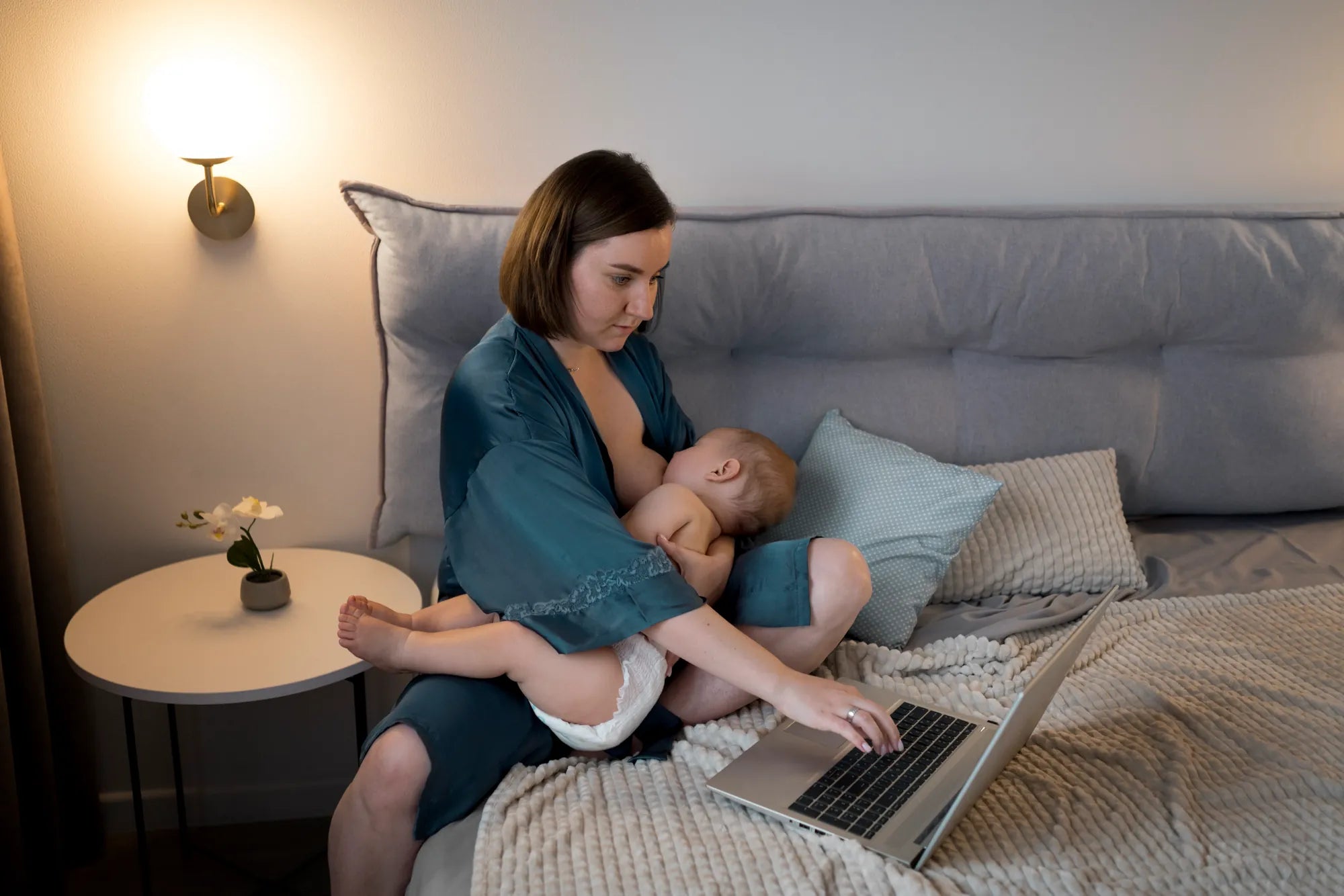
How Long Should I Use a Manual Breast Pump: A Comprehensive Guide
Determining how long should I use a manual breast pump is one of the most common and practical questions for new and expecting mothers. The answer isn't a single number that fits everyone; it's a personalized rhythm based on your body, your baby, and your unique feeding goals. This comprehensive guide will provide the data-driven insights and evidence-based recommendations you need to pump effectively and comfortably. As a trusted maternal and baby care brand, MomMed specializes in creating reliable, comfortable, and innovative products—from wearable breast pumps to essential feeding gear—to support you in finding the pumping routine that works for your lifestyle.
Understanding Your Pumping Goals: The Foundation of Timing
Your ideal pumping duration is intrinsically linked to your specific objective. A one-size-fits-all approach doesn't work because the time needed to relieve occasional engorgement differs vastly from the time required to build a substantial freezer stash. Defining your primary goal is the first critical step in answering how long should I use a manual breast pump effectively.
For occasional use, such as relieving pressure from a missed feed or managing leaking, a short session of 5 to 10 minutes per breast may be sufficient. The goal here is comfort, not complete drainage. If you're pumping to supplement after nursing, often called "topping off," you typically aim to pump for about 10 to 15 minutes immediately after your baby feeds to stimulate additional production and collect any remaining milk.
Building a freezer stash or exclusively pumping requires a more structured and thorough approach. Here, sessions should mimic a full baby's feeding, generally lasting 15 to 20 minutes per breast, or until milk flow has significantly slowed. The focus is on signaling your body to maintain or increase milk supply by ensuring effective removal. MomMed designs its pumps with ergonomic comfort in mind, understanding that these longer, more frequent sessions demand a product that won't cause undue strain.
Another key goal is managing specific issues like clogged ducts or mastitis. In these cases, frequent, shorter sessions (e.g., 5-10 minutes every 2 hours) focused on the affected breast can be more beneficial than one long, painful session. The aim is to gently encourage milk flow without exacerbating inflammation. Always consult a healthcare provider or lactation consultant if you suspect mastitis.
A Session-by-Session Guide: Breaking Down the Ideal Pumping Time
Let's translate goals into actionable, minute-by-minute guidance for a standard pumping session. A typical effective session with a manual breast pump is not about constant pumping for a set time; it's about following your body's natural let-down rhythm.
The first phase is the let-down stimulation. Before you even begin pumping, spend 1-2 minutes using breast massage, applying a warm compress, or gently hand-expressing. This signals your body to release milk. Once you begin pumping, use a rapid, light suction pattern for the first 1-2 minutes to mimic a baby's initial quick sucks, which can help trigger let-down.
Once milk begins to flow steadily—your let-down—shift to a slower, deeper, and more rhythmic pumping pattern. This active expression phase is where the majority of milk is removed. For most women, this phase lasts about 10-15 minutes per breast. You should see streams of milk with each pull or compression. It's crucial to listen to your body and the pump; the sound and sight of milk flow are better indicators than the clock.
As the flow slows to drips, you can employ "hands-on pumping" techniques. Use your free hand to massage from the outer chest wall toward the nipple, compressing different quadrants of the breast while you continue to pump. This can help drain milk more effectively and may shorten the total time needed. The final phase is knowing when to stop. A good rule is to continue for about 2 minutes after milk stops flowing in streams, but never pump for more than 20-25 minutes on a single breast in one session, as this can lead to nipple soreness without significant yield benefit.
Key Factors That Influence Your Personal Pumping Duration
Beyond goals, several individual variables make your optimal pumping time unique. Understanding these will help you customize the general guidelines to your personal situation.
Your milk supply and storage capacity are primary factors. Mothers with a larger storage capacity may have longer, more productive sessions, while those with a smaller capacity may find their milk flow slows significantly after 10-12 minutes. Women with oversupply may need to pump for shorter durations to avoid over-stimulation, while those working to increase a low supply might benefit from slightly longer sessions (closer to 20 minutes) or adding a second let-down.
The time of day significantly impacts output and efficiency. Prolactin levels are highest in the early morning, so a 6 AM session will often yield more milk in a shorter time compared to an evening session. You may find you need to pump for a few minutes longer in the evening to achieve the same level of drainage. Adjust your expectations and timing based on the clock.
Your baby's age and feeding pattern also dictate timing. In the early weeks postpartum, frequent, shorter sessions help establish supply. As your baby grows and goes longer between feeds, your body adapts, and pumping sessions may become more concentrated. If you're pumping to replace a feed, align your session length with how long your baby typically nurses.
Finally, your own comfort and the pump's efficiency are limiting factors. Manual pumping is a physical activity. Hand fatigue and nipple sensitivity will naturally dictate a practical maximum session length. A high-quality, ergonomic pump like those from MomMed, made with soft, BPA-free silicone flanges, can extend comfortable pumping time by reducing friction and strain.
Manual vs. Wearable Electric Pumps: A Time and Efficiency Analysis
Choosing between a manual pump and a wearable electric pump like the MomMed S21 often comes down to a trade-off between simplicity, cost, and time efficiency. This comparison is crucial for understanding where a manual pump fits into your routine.
| Factor | Manual Breast Pump | Wearable Electric Pump (e.g., MomMed S21) |
|---|---|---|
| Typical Session Duration | 15-25 minutes of active, hands-on pumping. | 15-30 minutes of hands-free, automated pumping. |
| Hands-On Requirement | Constant. Requires one hand to operate, limiting multitasking. | Minimal. Once positioned and turned on, both hands are free. |
| Portability & Discretion | Excellent. Small, quiet, no cords or batteries needed for basic function. | Excellent. Fits inside a bra, allowing full mobility and discretion. |
| Efficiency for Full Drainage | High, but dependent on user technique and stamina. | High, with programmable modes (stimulation & expression) designed to mimic a baby efficiently. |
| Ideal Use Case | Occasional use, relief, on-the-go sessions, backup, or as a primary pump for those with a strong let-down and good stamina. | Frequent pumping, returning to work, exclusive pumping, or for mothers who need to multitask or value hands-free convenience. |
| Time Investment Over a Day | Pumping time = active, focused time. 4 sessions could mean 60-100 minutes of dedicated hand motion. | Pumping time can overlap with other tasks (working, caring for older children, chores). The 60-120 minutes of pump time is not "lost" time. |
This analysis shows that while a manual pump session might be similar in clock length, it demands your full attention. A wearable electric pump like the award-winning MomMed S21 Double Wearable Breast Pump redefines efficiency by giving you time back, making longer or more frequent sessions sustainable for busy moms.
Optimizing Your Technique: Practical Tips for Effective Manual Pumping
Maximizing output within a reasonable time frame relies heavily on proper technique. These evidence-based tips can help you get more milk in less time, reducing overall session duration and physical strain.
First, ensure proper flange fit. A flange that is too small or too large can drastically reduce milk flow and cause pain, prolonging your session unnecessarily. Your nipple should move freely in the tunnel without rubbing, and only a small amount of areola should be drawn in. MomMed pumps often include multiple flange sizes for this reason.
Use warmth and massage before and during your session. A warm shower or a heating pad on your breasts for 5 minutes prior to pumping can encourage let-down. During pumping, use your free hand to massage in a circular motion from the outer breast toward the nipple, especially when flow slows. This "hands-on pumping" technique is proven to increase milk yield.
Find and maintain a comfortable rhythm. Don't pump at maximum suction constantly. Use a cycle: compress the handle fully, hold for a moment as milk flows, then release fully. A rhythmic, consistent pace of about 45-60 cycles per minute is often effective. Listen for the sound of milk spraying into the bottle—it's your best feedback.
Switch breasts strategically. Some women find switching back and forth every 5-7 minutes can trigger multiple let-downs. Others prefer to fully drain one breast before moving to the other. Experiment to see what yields the most for you. Finally, ensure all parts are correctly assembled and valves/membranes are intact. A weak or broken valve is a common culprit for poor suction and extended, ineffective pumping times.
Recognizing Signs of Effective Pumping and When to Stop
Learning to read your body's signals is more valuable than watching a timer. Knowing the signs of effective milk removal and the cues to stop will build your confidence and protect your breast health.
Signs of an effective let-down and pumping session include a tingling or tightening sensation in the breasts at the start, a change from drips to steady streams of milk, and feeling your breasts become noticeably softer and lighter. You should also hear a distinct "spray" or "ping" sound as milk hits the bottle. After pumping, your nipple should be centrally located and not blanched (white) or misshapen, which indicates incorrect flange size or excessive suction.
It's time to stop pumping when the strong streams of milk have subsided to occasional drips, even with breast compression and massage. Your breast should feel soft and pliable, not lumpy or firm. Continuing to pump on an effectively drained breast for more than a few minutes yields minimal additional milk and increases the risk of nipple trauma and inflammation.
Never pump to the point of pain. Discomfort is a sign to reassess suction strength, flange fit, or technique. Slight tenderness during the initial let-down can be normal, but sharp or persistent pain is not. Setting a maximum time limit of 20-25 minutes per breast per session can help prevent over-pumping, which can lead to soreness, edema, and damage to breast tissue.
Integrating Manual Pumping into Your Daily Feeding Routine
How long and how often you use your manual pump depends on its role in your overall feeding plan. Here’s how to integrate it seamlessly.
For the exclusively breastfeeding mom using a pump occasionally, one short session (5-10 min) per day for relief or to save a small amount of milk may be all that's needed. You might pump on one breast while baby nurses on the other to catch let-down from the opposite side, a very efficient use of time.
For the combination feeding mom (nursing and supplementing with pumped milk or formula), you may pump after 1-3 nursing sessions per day. Session length should be the full 15-20 minutes to provide the supplemental milk and maintain supply. Consistency in timing (e.g., always after the morning feed) helps regulate your body's production.
For the exclusively pumping mom using a manual pump as primary, you must mimic a newborn's feeding frequency: 8-12 sessions per 24 hours, each lasting 15-25 minutes per breast. This schedule is extremely demanding with a manual pump due to the hands-on time required, highlighting a scenario where a double electric or wearable pump is often recommended for sustainability.
For the working mom, a manual pump can be a fantastic discreet backup or for quick sessions during a commute. However, for regular pumping breaks at work, the efficiency and hands-free nature of a wearable pump like the MomMed S21 are often indispensable for maintaining output and reducing stress.
Frequently Asked Questions on Manual Breast Pump Use
Can I pump for too long with a manual pump?
Yes. Pumping beyond the point of effective milk removal (typically more than 25-30 minutes on one breast in a single session) offers diminishing returns and increases the risk of nipple soreness, tissue damage, and inflammation. It's more effective to pump more frequently than to pump for excessively long durations.
How many times a day should I use a manual pump?
The frequency is dictated by your goal. For occasional relief, 1-2 times a day. To build a stash, pump 1-2 times daily after or between feeds. To exclusively pump, you must pump 8-12 times in 24 hours, including at least once at night, especially in the early months to establish supply.
Is it normal for a manual pumping session to take 30 minutes?
While 15-20 minutes per breast is typical, a 30-minute total session (15 min per side) is within a normal range, especially if you are triggering a second let-down. However, if you are consistently pumping for 30 minutes on a single breast with little output, it's time to troubleshoot flange fit, pump parts, or consider if your technique or a low supply issue needs addressing with a lactation consultant.
How do I know when my breast is "empty"?
Breasts are never truly empty; they continuously produce milk. "Empty" in a practical sense means you have effectively removed the available milk. Signs include: milk flow has changed from streams to slow drips, your breast feels significantly softer and less full, and hand expression after pumping yields only drops. Don't strive for absolute emptiness, just effective drainage.
Can a manual pump help increase my milk supply?
Yes, but consistency is key. A manual pump can be an effective tool for increasing supply through frequent milk removal. The principle is "demand and supply." To boost supply, add 1-2 extra pumping sessions per day (after nursing or between feeds) for 15-20 minutes each, ensuring effective drainage. Power pumping (simulating cluster feeding) for an hour once a day can also be done with a manual pump, though it is more taxing.
Building a Sustainable and Confident Pumping Practice
Finding your ideal answer to how long should I use a manual breast pump is a journey of observation and adjustment. It combines general guidelines—15-20 minutes per breast, listening for slowed flow—with a deep understanding of your personal physiology, goals, and lifestyle. The most successful pumping routine is one that is effective, comfortable, and sustainable for you.
Remember that your needs may change. The session length that worked at 6 weeks postpartum may not be right at 6 months. Be prepared to adapt. Comfort is your north star; pain is a signal to stop and reassess. Whether you choose a manual pump for its simplicity and portability or integrate a hands-free wearable for greater efficiency, the goal is the same: nourishing your baby while caring for your own well-being.
MomMed is committed to supporting every step of your feeding journey with products designed for real-life motherhood. From the precise control of a manual pump to the liberating, multitasking capability of the award-winning S21 Wearable Pump, our range offers reliable, innovative solutions to fit your evolving needs. Trust your body, use the right tools, and pump with confidence.
Ready to find your perfect pumping match? Shop the MomMed collection at mommed.com for all your breastfeeding and pregnancy needs, from comfortable manual pumps to advanced wearable technology, and discover the tools that empower your unique journey.