


Accueil
Pregnancy, Breastfeeding, and Pumping: The Ultimate Guide for Moms
How Long Do I Need to Pump Breast Milk: A Comprehensive Guide for Every Mom
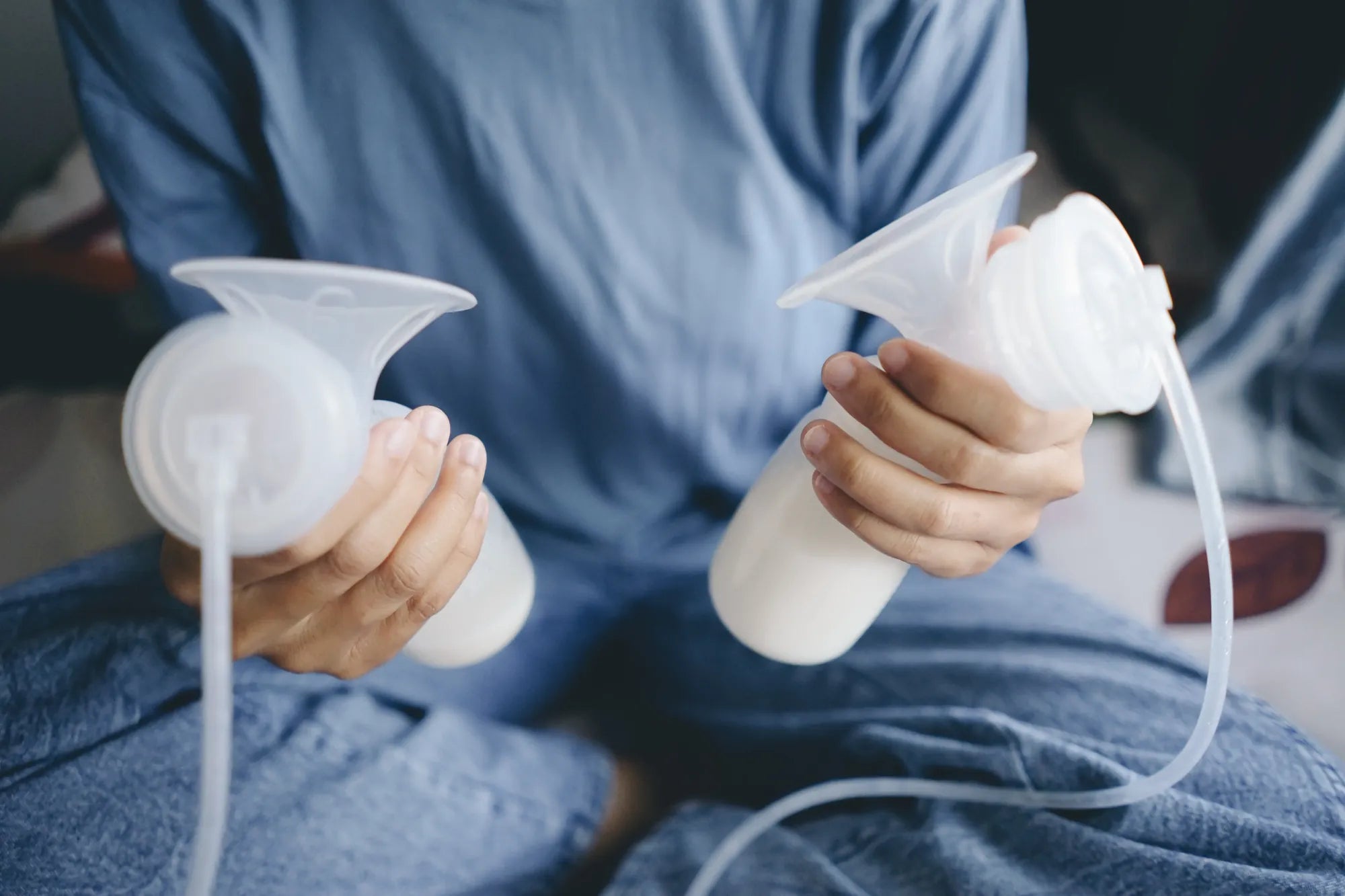
How Long Do I Need to Pump Breast Milk: A Comprehensive Guide for Every Mom
Introduction: Understanding Your Pumping Journey
The question "how long do I need to pump breast milk" is one of the most common and crucial queries for breastfeeding mothers. There is no universal answer, as the optimal pumping duration depends entirely on your individual goals, physiology, and circumstances. Whether you're exclusively pumping, returning to work, supplementing nursing, or building a freezer stash, understanding the factors that influence session length is key to establishing a sustainable and effective routine.
This comprehensive guide breaks down the science and practicalities behind pumping time. We'll explore how your baby's age, your milk supply, and the efficiency of your equipment all play vital roles. You'll find clear, scenario-based guidelines and learn to recognize your body's signals for when a session is complete. Our goal is to empower you with knowledge, moving beyond guesswork to create a pumping schedule that supports both your milk production and your well-being.
Key Factors That Determine Pumping Time
Pumping session length is not one-size-fits-all. It's a personalized equation influenced by several interconnected variables. Ignoring these factors can lead to frustration, insufficient milk removal, or even discomfort. The primary determinants include your baby's feeding patterns, your unique milk production and storage capacity, the technical efficiency of your breast pump, and your individual comfort and let-down reflex patterns.
Understanding these elements helps you move from following rigid time-based rules to adopting a more intuitive, effective approach. For instance, a mother with a large storage capacity may efficiently drain her breasts in 15 minutes, while another might need 25 minutes to achieve the same result. The key is to learn what "complete" looks and feels like for you, rather than watching the clock exclusively.
Your Baby's Age and Feeding Schedule
Your pumping needs evolve dramatically from the early postpartum days through later infancy. In the first 4-6 weeks, the primary goal is establishing a robust milk supply. This often requires more frequent, relatively shorter sessions (e.g., 15-20 minutes, 8-12 times per day) to mimic a newborn's cluster feeding and signal your body to produce prolactin receptors.
As your baby grows and their stomach capacity increases, feeds become more spaced out, typically every 3-4 hours. Your pumping schedule should adapt accordingly. During growth spurts, you may temporarily need to increase frequency or add a "power pumping" session to boost supply. After supply is well-established (around 12 weeks), many mothers find they can maintain volume with fewer, potentially longer sessions, provided the breasts are adequately drained each time.
Your Milk Supply and Storage Capacity
Storage capacity—the amount of milk your breasts can hold between feeds—varies significantly among women and is a major factor in determining optimal pumping frequency and duration. Women with a larger storage capacity may produce the same daily volume as those with a smaller capacity but can go longer between sessions and may pump larger amounts per session.
If you have a smaller storage capacity, you likely need to pump more frequently (e.g., every 2-3 hours) for adequate total daily output. Sessions might be slightly shorter if you empty quickly. Conversely, with a larger capacity, you might pump fewer times per day (e.g., every 4-5 hours) for longer durations (25-30 minutes) to ensure complete drainage. Observing your output pattern and how your breasts feel is the best guide.
The Efficiency of Your Breast Pump
A high-quality, well-fitted pump is not a luxury; it's essential for efficient milk removal. An inefficient pump can require significantly longer sessions to achieve what a effective pump can do in less time. Key features include adjustable suction strength and cycle speed, effective stimulation (let-down) mode, and properly fitted flanges that match your nipple diameter.
For example, MomMed's award-winning S21 double wearable breast pump is engineered for hospital-grade performance with adjustable suction levels and a patented stimulation mode designed to trigger a fast let-down. Its efficient motor and BPA-free, food-grade silicone components are designed to maximize output, potentially reducing the time needed per session compared to less effective models. This efficiency is crucial for busy moms managing work or caring for other children.
Practical Pumping Guidelines: By Scenario
Actionable recommendations depend heavily on your specific pumping goals. The duration for a mom who pumps once a day to leave a bottle for an occasional outing differs vastly from that of an exclusive pumper. Below, we break down evidence-based guidelines for the most common scenarios.
If You're Pumping to Replace a Feeding
When pumping in place of a nursing session (e.g., because you're apart from baby), aim to mimic the baby. A typical full feeding lasts 15-30 minutes. Start with 15-20 minutes of double pumping. The most critical rule is to continue pumping for 2-3 minutes after the last drop of milk is seen. This ensures you're fully draining the breast, which is vital for maintaining supply and preventing clogged ducts.
Use your pump's massage mode for 2-3 minutes at the start to initiate let-down, then switch to expression mode. If you get a second let-down (a new surge of milk flow), continue pumping until that flow subsides plus the extra 2-3 minutes. The goal is soft, comfortable breasts at the end of the session, not necessarily a specific volume or time on the clock.
If You're Pumping to Increase Milk Supply
To boost supply, frequency and thorough drainage are more important than long, drawn-out single sessions. The gold standard technique is "power pumping," which simulates cluster feeding. A common pattern is: pump for 20 minutes, rest for 10, pump for 10, rest for 10, pump for 10. Do this once per day for several days.
During all your regular sessions, apply the "2-3 minutes after the last drop" rule rigorously. Consider adding one extra pumping session per day, even if it's short. The consistent, frequent signaling tells your body to produce more milk. Ensure you are hydrated, well-nourished, and resting as much as possible, as fatigue can hinder milk production.
If You're Exclusively Pumping
Exclusive pumping (EP) is a full-time commitment that requires a structured schedule akin to a newborn's feeding frequency. In the early months, aim for 8-12 pumping sessions per 24 hours, including at least one session overnight to maintain prolactin levels. Each session should typically last 15-30 minutes, or until milk flow stops plus 2-3 minutes.
As your supply regulates (around 12 weeks), some EP moms can reduce to 6-7 sessions per day while maintaining output, provided each session fully empties the breasts. Total daily pumping time is often 120-180 minutes. Tracking total daily volume (aiming for 25-35 oz for a singleton) is more important than the output of any single session. Consistency in your schedule is paramount.
If You're Pumping at Work or Building a Stash
For the working mom, efficiency and predictability are key. Aim to pump for every missed feeding, typically every 3-4 hours. Sessions should fit into standard break times, so 15-20 minutes of active pumping is a realistic target. Preparation is crucial: have all parts clean, assembled, and ready to go.
This is where technology like MomMed's hands-free, ultra-quiet wearable pumps becomes a game-changer. Their discreet design allows you to pump effectively while potentially working at your desk, taking a call, or moving around, making the 15-20 minute window far more productive and less stressful. For building a stash, add one pumping session per day, often right after the first morning feed when milk volume is typically highest, for an extra 10-15 minutes.
What to Expect: Milk Output and Session Length
Setting realistic expectations for output helps alleviate anxiety. It is completely normal for output to vary from session to session and between breasts. The following table outlines typical ranges, but remember, your baby's needs are the ultimate gauge of "enough."
| Postpartum Stage | Typical Output Per Breast Per Session* | Average Session Duration Goal | Key Considerations |
|---|---|---|---|
| Early Days (1-2 weeks) | 0.5 - 2 oz (15-60 ml) | 15-20 min | Focus on frequency (8-12x/day) to establish supply. Colostrum transitions to mature milk. |
| Established Supply (1-6 months) | 2 - 4 oz (60-120 ml) | 15-25 min | Output stabilizes. Total daily volume (25-35 oz) matters more than single session amount. |
| Regulated Supply (6+ months) | 3 - 5 oz (90-150 ml) | 15-30 min | Feeds/pumps are less frequent. Solid food intake increases, potentially changing milk needs. |
| Exclusively Pumping | Varies widely | 15-30 min, 6-8x/day | Consistent schedule is critical. Total daily output should match baby's intake. |
*Output is for both breasts combined in a double pumping session. These are averages; many healthy, well-fed babies have mothers whose output falls outside these ranges.
Signs You've Pumped Long Enough (or Not Enough)
Learning to read your body's signals is more valuable than any timer. Physical cues provide direct feedback on the effectiveness of your session. Relying solely on time can lead to under- or over-pumping.
Signs you've pumped long enough: Your breasts feel noticeably softer and lighter after pumping. Milk flow has slowed to occasional drips for 2-3 minutes. You feel relaxed (not rushed or stressed). You achieved a let-down (often a tingling sensation and sudden flow). For moms with visible output, the streams have turned to drops.
Signs you might need to pump longer or adjust your routine: Breasts still feel firm, full, or have lumpy areas after pumping. You rarely or never experience a second let-down during a session. You are consistently not meeting your daily output goals for your baby's needs. You frequently develop clogged ducts or mastitis, which can indicate incomplete drainage.
Optimizing Your Pumping Sessions with the Right Gear
The right equipment is foundational to efficient and comfortable pumping. It directly impacts how effectively you can drain your breasts within a given time frame. Three components are non-negotiable: proper flange fit, appropriate pump settings, and overall comfort during use.
Flanges that are too large or too small can reduce output by up to 50% and cause pain. Your nipple should move freely in the tunnel without rubbing, and only a small amount of areola should be pulled in. Most pumps come with standard 24mm or 27mm flanges, but many women need sizes from 15mm to 30mm. MomMed offers a range of flange sizes to ensure a custom fit. Always start with your pump's massage or let-down mode at a comfortable, rapid cycle to stimulate milk ejection before switching to a slower, stronger expression mode.
The Role of a High-Performance Wearable Pump
Innovative pump technology can transform your pumping experience by saving time, reducing stress, and improving efficiency. A high-performance wearable pump like the MomMed S21 is designed not just for convenience but for clinical effectiveness. Its hospital-grade motor provides strong, rhythmic suction essential for complete milk removal.
The true advantage lies in its design philosophy: the comfort of BPA-free silicone against the skin, the flexibility of multiple suction and cycle modes to match your physiology, and the unparalleled freedom of a truly hands-free, in-bra design. This freedom allows you to move, care for your baby, or work during a session. Reduced stress and the ability to engage in light activity can actually facilitate the let-down reflex, making your 20-minute session more productive than a stressful 30-minute session tethered to a wall outlet.
Frequently Asked Questions (FAQs)
Q: Should I pump for 15 minutes or 20 minutes?
A: Let your milk flow be your guide, not a rigid minute count. Pump until your milk flow has significantly slowed to drips, then continue for an additional 2-3 minutes. For many women, this process takes 15-20 minutes, but it can vary. The "2-3 minutes after the last drop" rule is more important than the total time.
Q: Is pumping for 30 minutes too long?
A: It can be, especially if it causes nipple pain, damage, or undue time burden. For most women with an efficient pump, 30 minutes is the upper limit needed to ensure multiple let-downs and complete drainage. If you consistently need 30+ minutes to feel empty, check your flange fit, pump settings, and consider if your pump motor is functioning optimally.
Q: How long can I store pumped milk?
A> Follow the "Rule of 4s": Freshly pumped milk can be kept at room temperature (up to 77°F/25°C) for up to 4 hours, in the refrigerator for up to 4 days, and in a standard freezer for about 6 months (12 months in a deep freeze). Always use clean containers and label with the date.
Q: Can I pump too much?
A: Yes, creating an oversupply is possible, especially with excessive pumping duration or frequency beyond what your baby needs. While some extra milk is useful for a stash, a significant oversupply can lead to recurrent engorgement, clogged ducts, mastitis, and foremilk/hindmilk imbalance for your baby. Pump to meet your baby's demand and maintain comfort, not to constantly increase stash volume.
Q: Why am I only pumping for 10 minutes but getting a good output?
A> If you have a fast let-down and efficient milk ejection reflex, you may empty quickly. This is perfectly normal! If your breasts feel soft and you've applied the "2-3 minutes after last drop" rule, a 10-minute session can be complete. Efficiency is a gift—don't feel you must pump longer just because.
Finding Your Perfect Pumping Rhythm
The journey to answering "how long do I need to pump breast milk" is deeply personal and often involves some trial and error. Your perfect rhythm is the one that consistently removes milk effectively, maintains your supply for your baby's needs, and integrates sustainably into your life. It will likely change as your baby grows, your supply regulates, and your circumstances evolve.
Trust your body's signals over the clock. Track output and comfort, not just minutes. Remember that the right tools are not just about convenience—they are about efficacy and preserving your mental and physical well-being during this demanding phase. MomMed is committed to supporting this journey with innovative, reliable, and comfortable products designed to adapt to your unique needs, from the powerful S21 wearable pump to perfectly fitted flanges.
Be patient with yourself as you learn. You are not just measuring ounces and minutes; you are providing nourishment and love. For a pump that respects your time and empowers your journey, shop the MomMed collection at mommed.com for all your breastfeeding and pregnancy needs.