


Accueil
Pregnancy, Breastfeeding, and Pumping: The Ultimate Guide for Moms
Does Breast Pump Bag Count as Personal Item: The Ultimate Travel Guide
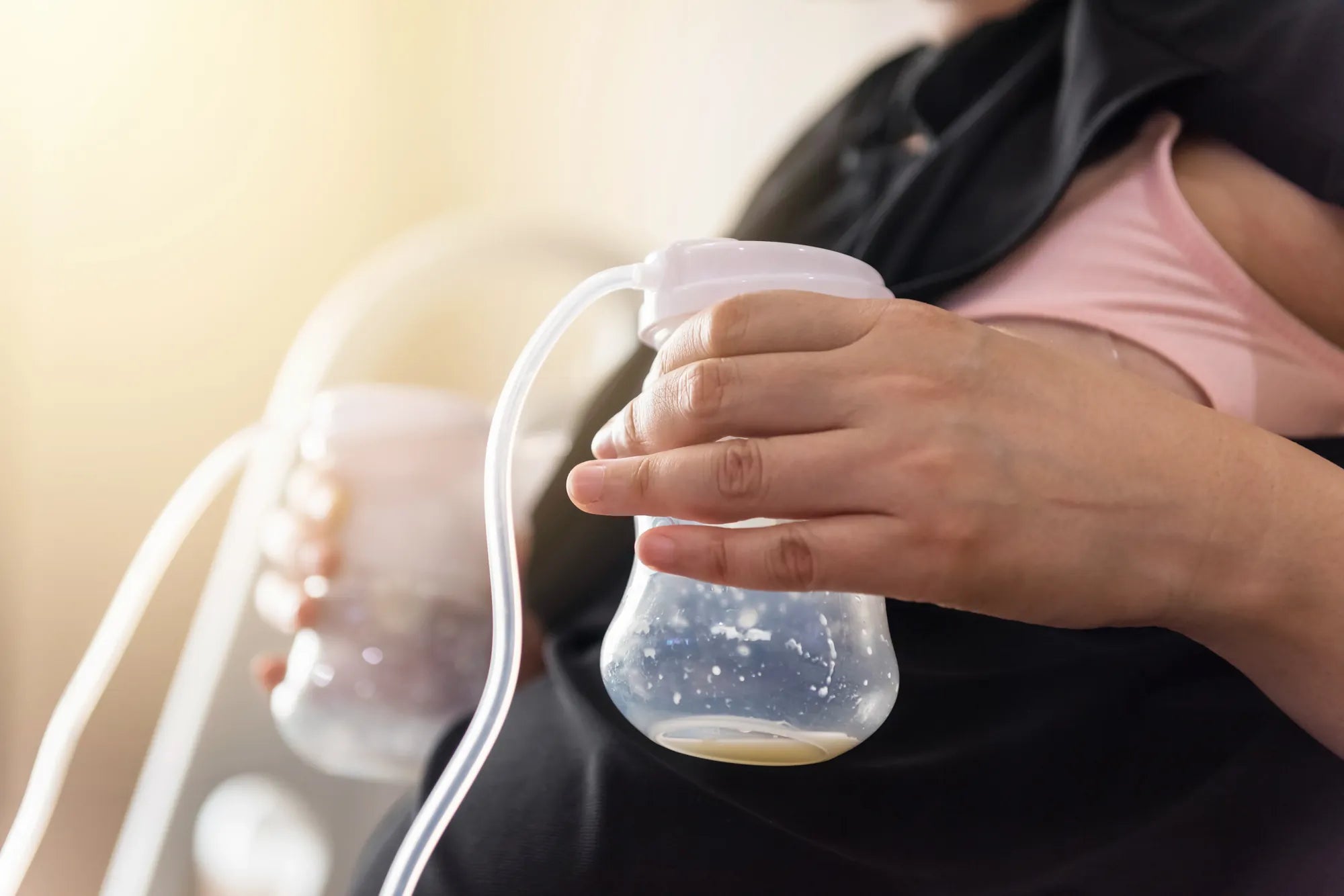
Does Breast Pump Bag Count as Personal Item: The Ultimate Travel Guide
Packing for a flight as a breastfeeding parent instantly adds a layer of complexity. Between the diapers, wipes, and baby gear, you’re also responsible for the crucial equipment that maintains your milk supply. A pressing, practical question emerges at the gate: does a breast pump bag count as your personal item? The anxiety of being charged extra or forced to check your vital pump is real. This guide cuts through the confusion. You will learn the explicit regulations that protect you, master the art of packing for TSA efficiency, and discover how innovative products like MomMed’s wearable pumps transform travel from a hassle to a manageable part of your breastfeeding journey.
Understanding Airline Carry-On Policies: The Official Framework
Most U.S. and international airlines follow a standard carry-on allowance structure. This typically permits one carry-on suitcase that fits in the overhead bin and one personal item that fits under the seat in front of you. The personal item is usually defined as a purse, laptop bag, small backpack, or similar-sized item.
This binary system is where confusion begins for traveling parents. A diaper bag often receives a pass as a “baby item,” but the status of a bag containing a breast pump is less universally understood by frontline staff. It’s crucial to know that your pump is not merely another piece of luggage.
Breast pumps and the milk they produce are classified differently. In the United States, the Department of Transportation (DOT) has issued clear guidance. They are considered medical devices and medically necessary liquids, respectively. This classification forms the legal basis for your rights when flying.
Similar protections exist in many other countries, often under aviation or public health regulations. The key principle is that items required for medical or infant care needs are exempt from standard baggage count limits. Understanding this framework is the first step to advocating for yourself confidently.
Does a Breast Pump Bag Count as Your Personal Item? The Definitive Answer
Here is the clear, authoritative answer: No, a breast pump bag should not count as your personal item allowance. It is widely recognized as an additional medical device or essential baby care item. This means you should be able to bring your carry-on suitcase, your personal item (e.g., purse), and your breast pump bag without incurring fees.
The U.S. DOT ruling is explicit. It states that breast pumps and other “assistive devices” do not count toward the airline’s carry-on limit. While the ruling doesn’t specify “bag,” the pump, its parts, and cooling elements are inseparable from a carrying case for practical and sanitary reasons. Therefore, the bag containing the medical device is part of the exemption.
When approaching the gate or check-in counter, communication is key. Be polite but firm. You can say, “This is my breast pump, a medical device. It’s exempt from the personal item limit per DOT regulations.” Having a copy of the DOT rule (accessible on your phone) can be helpful, though rarely needed.
It’s important to note that the pump bag should be reasonable in size. A massive duffel bag claimed as a “pump bag” may raise eyebrows. A dedicated breast pump backpack or tote designed to hold the pump, bottles, and cooler is universally understood and accepted. This distinction helps ensure smooth interactions with airline personnel.
How to Pack Your Breast Pump Bag for Effortless Travel
Strategic packing turns a potential security checkpoint nightmare into a quick, streamlined process. The goal is organization and transparency for TSA officers. Start with a dedicated bag that has insulated compartments. This keeps parts together and milk cool.
Pack the pump motor (clean and dry), flanges, valves, backflow protectors, and bottles or storage bags. Place these in clear, zip-top bags within your pump bag. This allows TSA to inspect without touching sterile parts directly. Include a small bottle of pump cleaning wipes or spray (under 3.4 oz if liquid) for quick cleans on the go.
For milk storage, use a separate insulated cooler bag with frozen ice packs. According to TSA, ice packs are allowed regardless of physical state (frozen or partially melted) if required for medically necessary liquids. Place sealed milk storage bags or bottles inside. Clearly labeling with “Breast Milk” and dates can be helpful.
Finally, include a nursing cover or scarf for discreet pumping, extra batteries or a portable charger if your pump isn’t rechargeable, and any personal comfort items. Packing in this layered, organized manner demonstrates preparation and makes the security process faster for everyone.
Why a Wearable Pump Like MomMed S21 is a Travel Game-Changer
Traditional electric pumps, while effective, are bulky and tethered to an outlet or battery pack. Traveling amplifies these inconveniences. This is where a wearable, cordless pump like the MomMed S21 Double Wearable Breast Pump fundamentally alters the experience. Its compact, all-in-one design is engineered for mobility.
Imagine navigating a busy airport. With a traditional pump, you’d need to find a private lactation room, unpack multiple parts, and be stationary for 15-20 minutes. With the MomMed S21, you can discreetly place the pumps in your bra, activate them via the quiet, app-controlled motor, and continue walking to your gate, hands-free. The ultra-quiet operation ensures privacy.
The S21’s design eliminates the need for long tubes and an external motor hanging around your neck. Each pump fits directly into your bra, with a slim, discreet profile. This means your “pump bag” can be much smaller—perhaps just a large purse containing the charger and a few spare parts—simplifying the baggage question further.
For the flight itself, wearable pumps offer unparalleled flexibility. You can pump comfortably in your seat with a nursing cover without disturbing your seatmate. The closed-system design and use of BPA-free, food-grade silicone ensure safety and hygiene. For the traveling breastfeeding parent, this innovation isn’t just convenient; it’s empowering, allowing you to maintain your schedule without compromise.
Navigating TSA Security Checkpoints with Confidence
The security checkpoint is often the most daunting part of traveling with a pump and milk. Knowledge dispels fear. Inform the TSA officer that you are carrying medically necessary liquids (breast milk) and a medical device (the pump) as you approach the bins. This alerts them to follow specific protocols.
Breast milk, formula, and toddler drinks are exempt from the standard 3.4-ounce (100ml) liquid rule. You can carry them in “reasonable quantities” – typically interpreted as the amount needed for your journey. You do not need to be traveling with your child. Ice packs and other cooling accessories required for the milk are also permitted.
You can request that your milk not be opened. The officer may test it by holding a test strip above the container or using a bottled liquid scanner. Your pump and its parts will go through the X-ray. Having them neatly packed in clear bags, as suggested, facilitates this. You may be asked for a brief, hands-on inspection of the pump parts.
Remain calm and cooperative. If you encounter an officer unfamiliar with the rules, politely ask for a supervisor. The TSA website has a clear page on traveling with children, which includes these provisions. Having it bookmarked on your phone provides an official reference. Remember, you are following the rules; you’re just using a specific, protected exception.
Your Travel Rights: A Quick Reference for Breastfeeding Parents
It’s essential to internalize your rights to advocate for them effectively. Under U.S. DOT regulations, you have the right to bring your breast pump and a “reasonable amount” of expressed milk on board the aircraft. These items are exempt from carry-on baggage limits and cannot be subject to fees.
You have the right to bring milk pumped during your trip on your return flight, even if you are not traveling with your baby. This is critical for business travelers or parents returning from trips where the baby stayed home. The milk is still a medically necessary liquid for your child.
While not mandated on the aircraft itself, many airports now provide lactation pods or mother’s rooms. You have the right to a private, clean space to pump or nurse that is not a bathroom. Airports receiving federal funds are required to provide such a space. Research your departure and arrival airports ahead of time to locate these facilities.
Internationally, rights can vary, but many countries and airlines follow similar principles. A quick check of the airline’s “special assistance” or “traveling with infants” webpage before booking can provide specific policy details. When in doubt, calling the airline’s accessibility desk is more reliable than general customer service.
Airline Policy Comparison: A Quick Overview
| Airline | Personal Item Policy (Standard) | Breast Pump Bag Stance | Key Notes / Source |
|---|---|---|---|
| Delta Air Lines | 1 carry-on + 1 personal item | Exempt as medical device | Considered a “medical assistive device”; does not count toward limit. |
| American Airlines | 1 carry-on + 1 personal item | Exempt as medical device | Listed under “Assistive Devices” in baggage policy; milk also exempt. |
| United Airlines | 1 carry-on + 1 personal item | Exempt as medical device | Policy states “breast pumps and coolers” are allowed in addition to standard baggage. |
| Southwest Airlines | No baggage fees; 1 carry-on + 1 personal item | Exempt as medical device | Very breastfeeding-friendly; pump and milk are explicitly exempt from size/limit rules. |
| JetBlue | 1 carry-on + 1 personal item | Exempt as medical device | “Medical equipment” like breast pumps is allowed in addition to carry-on allowance. |
| British Airways | 1 carry-on + 1 handbag/laptop bag | Generally exempt as baby item | Two baby items allowed (e.g., diaper bag + car seat); pump bag fits this category. |
Frequently Asked Questions (FAQs) for Traveling with a Pump
1. Can an airline ask me for a doctor’s note to prove I need my breast pump?
No. U.S. DOT regulations prohibit airlines from requiring a doctor’s note for assistive devices like breast pumps. It is considered a medical device by definition, and you are not required to provide proof of medical necessity. If asked, you can politely reference this DOT rule.
2. What if I’m traveling without my baby? Do the same rules apply?
Yes, absolutely. Your right to bring a pump and expressed milk does not depend on your baby’s presence. This is vital for maintaining milk supply while apart. The milk you pump during your trip is for your infant and is therefore still considered a medically necessary liquid for your return journey.
3. How should I handle milk storage on a long international flight?
Use a high-quality insulated cooler bag with multiple frozen gel ice packs. For very long trips, some moms use small, soft-sided travel coolers designed for medications. You can ask flight attendants for ice to replenish melted packs. The MomMed S21 pump’s bottles can be sealed and stored directly in the cooler, simplifying the process.
4. Are wearable pumps like the MomMed S21 allowed on planes?
Yes. Wearable breast pumps are treated the same as any other breast pump by TSA and airlines. Their lithium-ion batteries must comply with FAA regulations for carry-on devices, which all reputable brands like MomMed do. It’s always good practice to keep them in your carry-on, not checked baggage.
5. What’s the best way to clean pump parts while traveling?
Carry pump cleaning wipes or a small spray bottle with soapy water and a clean brush for quick washes in airport or airplane bathrooms. For a deeper clean, microwave steam bags are lightweight and only require a microwave and water. The key is to keep parts in sealed bags until you can properly wash and air-dry them.
6. What if my flight is delayed and my ice packs melt?
Don’t panic. Approach any airport restaurant or coffee shop and politely ask if they can provide a cup of ice. Flight attendants can also usually provide ice on the plane. Fresh milk can be safe at room temperature for 4-6 hours, but adding ice will extend that time and provide peace of mind.
Travel Confidently with Your Breast Pump
The journey of breastfeeding shouldn’t end at the airport terminal. With the right knowledge and tools, you can navigate air travel with confidence and ease. Remember the core principles: your breast pump is a medical device exempt from personal item limits, your milk is a protected necessity, and preparation is your greatest ally.
Packing strategically, communicating your rights politely, and leveraging modern technology like wearable pumps transform a complex logistical challenge into a routine part of your life. The freedom to travel, whether for work, family, or pleasure, is an important part of maintaining your identity and well-being as a parent.
You have the right to feed your child in the way you choose, and that includes maintaining your supply while on the move. Don’t let uncertainty or fear of awkward conversations keep you grounded. Equip yourself with this information, pack your bag, and step forward knowing you are fully prepared.
Shop the MomMed collection at mommed.com for innovative, travel-friendly solutions like the S21 Wearable Breast Pump, designed to support every step of your parenting journey, from pregnancy tests to feeding gear and baby care essentials. Travel smarter, pump easier, and embrace your journey without limits.