


Accueil
Pregnancy, Breastfeeding, and Pumping: The Ultimate Guide for Moms
Can I Carry Breast Pump in Flight? The Complete Travel Guide for Nursing Moms
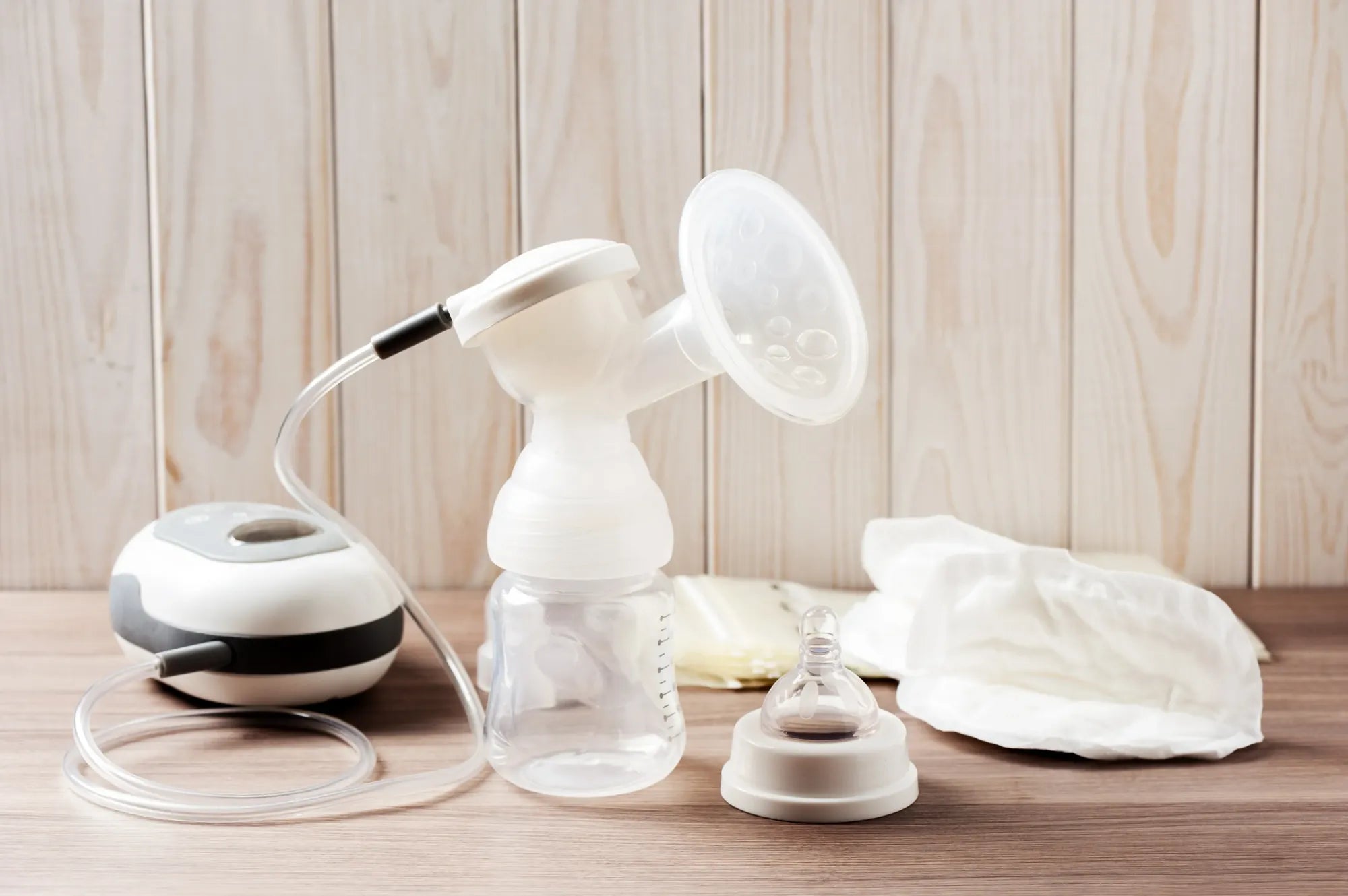
Can I Carry Breast Pump in Flight? The Complete Travel Guide for Nursing Moms
If you're a breastfeeding parent planning to travel, the question "Can I carry a breast pump in flight?" is likely at the top of your mind. The simple answer is a resounding yes. Not only is it allowed, but your breast pump is also protected as a medical device under federal regulations. This guide provides a detailed, step-by-step roadmap covering airline policies, TSA procedures, smart packing, and practical in-flight strategies. We'll equip you with everything you need to know to navigate airports and air travel with your pump and expressed milk confidently and without stress.
Understanding Your Rights: Federal Regulations and Airline Policies
Before you pack your bag, it's crucial to understand the legal framework that protects your right to travel with breastfeeding equipment. In the United States, the Friendly Airports for Mothers (FAM) Act requires all large and medium hub airports to provide private, clean, and accessible lactation spaces. More importantly for your carry-on, breast pumps are classified as medical devices.
This classification is your strongest ally. The Transportation Security Administration (TSA) and airlines recognize breast pumps and related supplies as medically necessary. This means your pump does not count as one of your standard carry-on or personal items on any U.S.-based airline. You are entitled to bring it on board in addition to your allotted bags.
While federal law provides this baseline, individual airline policies provide the specific details. It is a best practice to check your airline's website for their "medical equipment" or "special assistance" policy page. Having a screenshot or printout of this policy on your phone can be helpful if you encounter an uninformed gate agent, though this is increasingly rare.
For international travel, research is key. Most international carriers and airports are accommodating, but policies can vary. A quick call to the airline's customer service or a review of their published policies can prevent surprises. Remember, the principle of a breast pump as a medical necessity is widely recognized globally.
Navigating TSA Security Checkpoint: A Step-by-Step Guide
The security checkpoint is often the source of the most anxiety for traveling pumping moms. Knowing what to expect can transform this experience from stressful to straightforward. The core rule: breast milk, formula, and toddler drinks are exempt from the standard 3-1-1 liquids rule.
When you approach the security belt, you will need to separate your pump and any liquids (milk, ice packs) from the rest of your carry-on. Place your pump in its own bin. For any breast milk, whether fresh or frozen, inform the TSA officer that you are carrying "exempt liquids" before the screening process begins.
Procedures for Your Pump and Milk
Your breast pump itself can typically remain in its carrying case. It will go through the X-ray machine. The TSA officer may decide to swab the outside of your pump or case for explosive trace detection, which is a standard and quick procedure.
For breast milk and ice packs, you have options. The officer may ask you to open containers for inspection. You have the right to request that your milk not be X-rayed. If you make this request, the TSA will conduct an alternative inspection, which usually involves a visual check and potentially testing the liquids with a vapor analysis. This process is your right and is designed to protect the integrity of your expressed milk.
Handling Ice Packs and Cooler Bags
Ice packs and freezer packs required to cool breast milk are also exempt, whether they are frozen, partially frozen, or completely melted. Clearly state that they are for medically necessary milk. Using a cooler bag dedicated solely to your milk and ice packs simplifies this process, as the officer can easily identify its purpose.
Crafting Your Perfect In-Flight Pumping Kit
Packing strategically is half the battle for a smooth travel day. Your goal is to have everything you need for at least one full pumping session (and a backup) easily accessible in your carry-on, without having to dig through your main luggage.
Start with the pump itself. Ensure all parts are clean, dry, and assembled. Pack a small, separate bag within your carry-on dedicated solely to your pumping kit. This keeps parts organized, clean, and easy to grab during a flight or in an airport lactation pod.
Essential Items Checklist
- Breast Pump: Your primary device, plus charger or charged power bank.
- Milk Storage: More bottles or storage bags than you think you'll need.
- Cooling System: Insulated cooler bag and ice packs (pre-frozen).
- Cleaning Supplies: Quick-clean wipes or spray, paper towels, and a small wet/dry bag for used parts.
- Comfort & Discretion: A hands-free pumping bra and a nursing cover or large scarf.
- Critical Spares: Extra valves, backflow protectors, membranes, and duckbills.
- Hydration & Snacks: A large water bottle and lactation-friendly snacks to maintain your supply.
Why a Wearable Pump is a Game-Changer for Travel
For air travel, a wearable, cordless breast pump like the MomMed S21 Double Wearable Pump offers unparalleled advantages. Its compact, all-in-one design means fewer parts to manage and pack. Being completely cordless and battery-operated eliminates the hunt for a power outlet at crowded gates.
Most importantly, its ultra-quiet operation and discreet profile allow for pumping under your clothing. This means you can pump comfortably at your seat with a nursing cover, in an airport lounge, or even while walking to your gate, without drawing attention. This level of freedom and discretion is transformative for the traveling mom.
In-Flight Pumping: Strategies for Comfort and Discretion
Once on board, the next step is executing your pumping session comfortably. Timing your session for during cruise altitude, not during the hectic ascent or descent, is ideal. If you're on a longer flight, you may need to pump more than once to maintain your supply and comfort.
Communication can be simple. You are not required to explain yourself, but a brief, confident comment to a seatmate like, "I'll be using a medical device for a few minutes," is often enough. Most people are understanding. Using a window seat provides a natural visual barrier on one side.
Managing Milk Storage and Hygiene
Immediately after pumping, label your milk storage bag or bottle with the date and volume. Place it directly into your cooler bag in the overhead bin. If your ice packs are in a separate freezer bag, you can ask a flight attendant for a cup of ice to supplement cooling, though most are happy to assist.
Cleaning parts mid-flight can be a challenge. The best practice is to use approved pump wipes or a quick-clean spray and paper towels to clean parts immediately after use, then store them in a clean, separate wet/dry bag. A full sanitize can wait until you reach your destination. This method balances hygiene with practicality at 30,000 feet.
International Travel and Layovers: Extended Considerations
International journeys add layers of complexity, primarily regarding milk storage during long flights and navigating foreign airports. For flights longer than 8 hours, plan your pumping schedule to mimic your baby's feeding pattern or your typical routine to avoid engorgement and a drop in supply.
Research your layover airports in advance. Major international hubs like London Heathrow, Dubai, and Singapore Changi have excellent nursing suites and family facilities. Knowing their locations on a terminal map saves precious time. Some even offer rental fridge space for storing milk.
When going through customs in another country with expressed milk, it's rarely an issue. However, having your pump visibly with you and, if asked, stating it is for "personal medical use" or "baby nutrition" is sufficient. Always check the specific import regulations for baby food and liquids if you are carrying a very large quantity of frozen milk.
Breast Pump Comparison: Travel-Friendly Features
Choosing the right pump can make a dramatic difference in your travel experience. Below is a comparison of common pump types focusing on travel-specific features.
| Pump Type | Portability & Packing | Power Source | Noise Level | Discretion Factor | Best For Travel? |
|---|---|---|---|---|---|
| Wearable (e.g., MomMed S21) | Excellent. All-in-one, fits in a purse. | Rechargeable battery, cordless. | Ultra-quiet | High. Pump under clothing. | Yes, Ideal |
| Portable Double Electric | Good. One main unit, tubes, bottles. | Battery pack or outlet. | Moderate | Moderate. Requires set-up at seat. | Yes |
| Hospital-Grade Rental | Poor. Large, heavy, not designed for travel. | AC outlet only. | Loud | Low | No |
| Manual Pump | Excellent. Tiny and simple. | Hand-operated | Silent | High, but tiring for full sessions. | Good Backup |
Frequently Asked Questions (FAQs)
Q: Can I carry breast milk on a plane if my baby isn't with me?
A: Absolutely. TSA regulations explicitly allow you to carry breast milk in reasonable quantities through security and on the plane, regardless of whether your child is traveling with you. It is considered an exempt liquid for medical necessity.
Q: Should I check my breast pump or carry it on?
A> Always carry it on. Checking your pump risks loss, damage, or delays that could leave you without a critical medical device. It is exempt from carry-on limits, so there is no advantage to checking it.
Q: What if a TSA agent or gate agent doesn't know the rules?
A> Remain calm and polite. Politely refer them to the TSA website guidelines on breast milk and medical devices or show them your airline's policy. Ask to speak to a supervisor if necessary. Knowledge is your best tool.
Q: How can I keep my milk cold during a long international flight?
A> Use high-quality ice packs pre-frozen solid. A well-insulated cooler bag (like a small soft-sided lunch bag) is key. You can also ask flight attendants to refill a ziplock bag with ice from the galley. Some moms use frozen milk bags themselves as initial ice packs.
Q: Is it safe to pump in an airplane bathroom?
A> It is not recommended. Airplane bathrooms are cramped, lack clean surfaces, and are unhygienic for handling pump parts and milk. It is also uncomfortable. Pumping at your seat with a cover or using an airport lactation room before/after the flight is a far better option.
Q: Can I use my breast pump during takeoff and landing?
A> Electronic devices must typically be stowed during takeoff and landing. You should plan your pumping session for when the plane is at cruising altitude and the seatbelt sign is off. A manual pump could be used if desperately needed, but comfort and safety are best during stable flight.
Final Preparations and Mindset for Success
In the days before your trip, do a "dry run" packing of your pump kit. Pump a session using only the items in your travel bag to ensure you haven't forgotten a crucial part. Charge all batteries fully. Review the airport maps for your departure and arrival terminals to locate lactation rooms.
Mentally, give yourself grace. Travel is unpredictable. A delayed flight or a less-than-ideal pumping spot does not define your journey. Your primary goals are to maintain your milk supply, avoid discomfort, and feed your baby. Any pumping you accomplish while traveling is a success.
Remember that you are far from alone. Thousands of pumping moms navigate air travel every day. Airlines and airports are continually improving their facilities and training to support you. By being prepared and knowing your rights, you shift from feeling anxious to feeling empowered.
Your breastfeeding journey is important, and it doesn't have to pause for travel. With the right gear, like a reliable and discreet MomMed wearable pump, and the knowledge in this guide, you can move through the world with confidence. You are providing for your baby, and that is a powerful reason to travel prepared and proud.
Shop the MomMed collection at mommed.com for innovative, travel-ready breast pumps like the S21 and all your breastfeeding and pregnancy needs, designed to support you wherever life takes you.